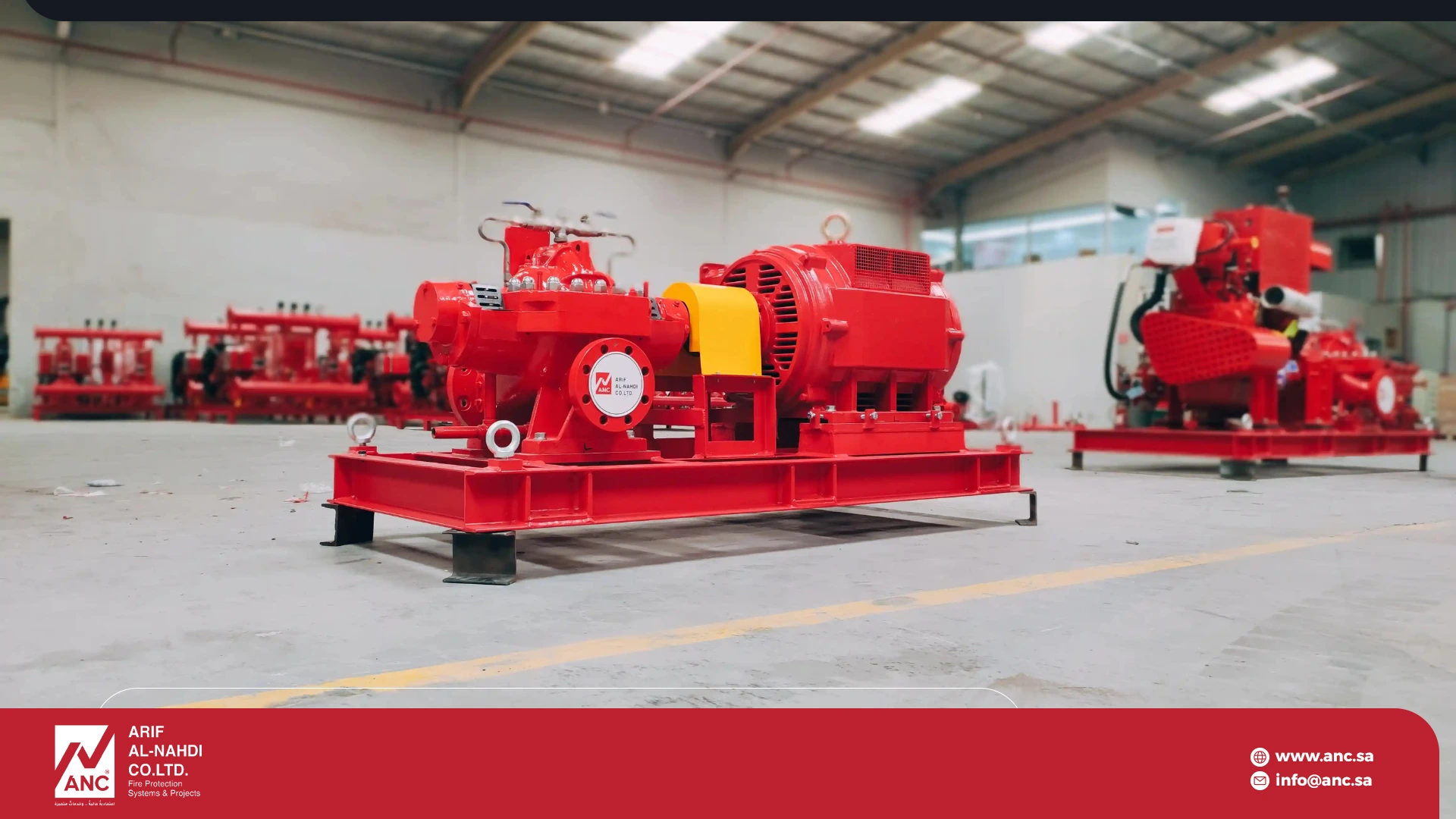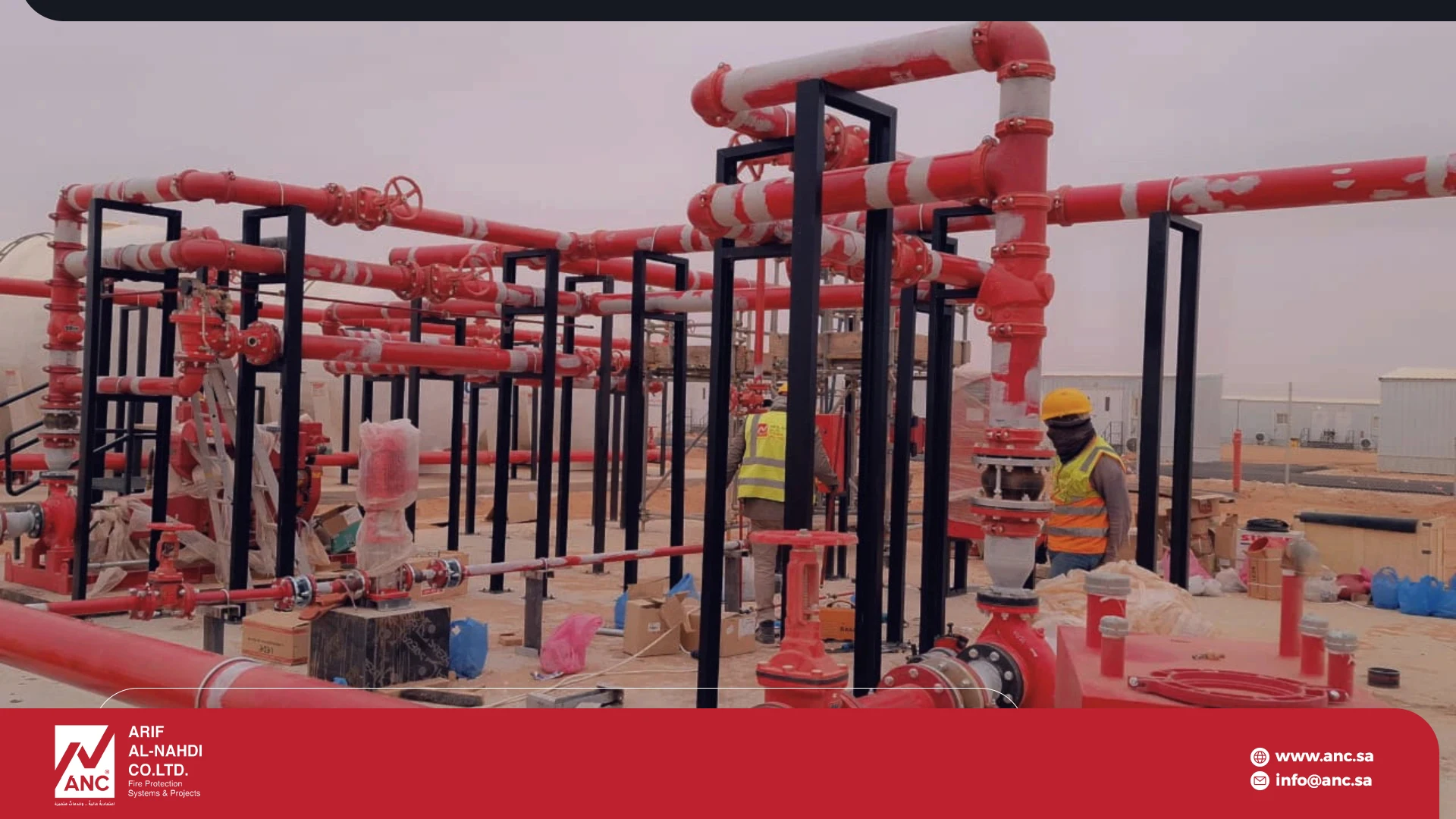

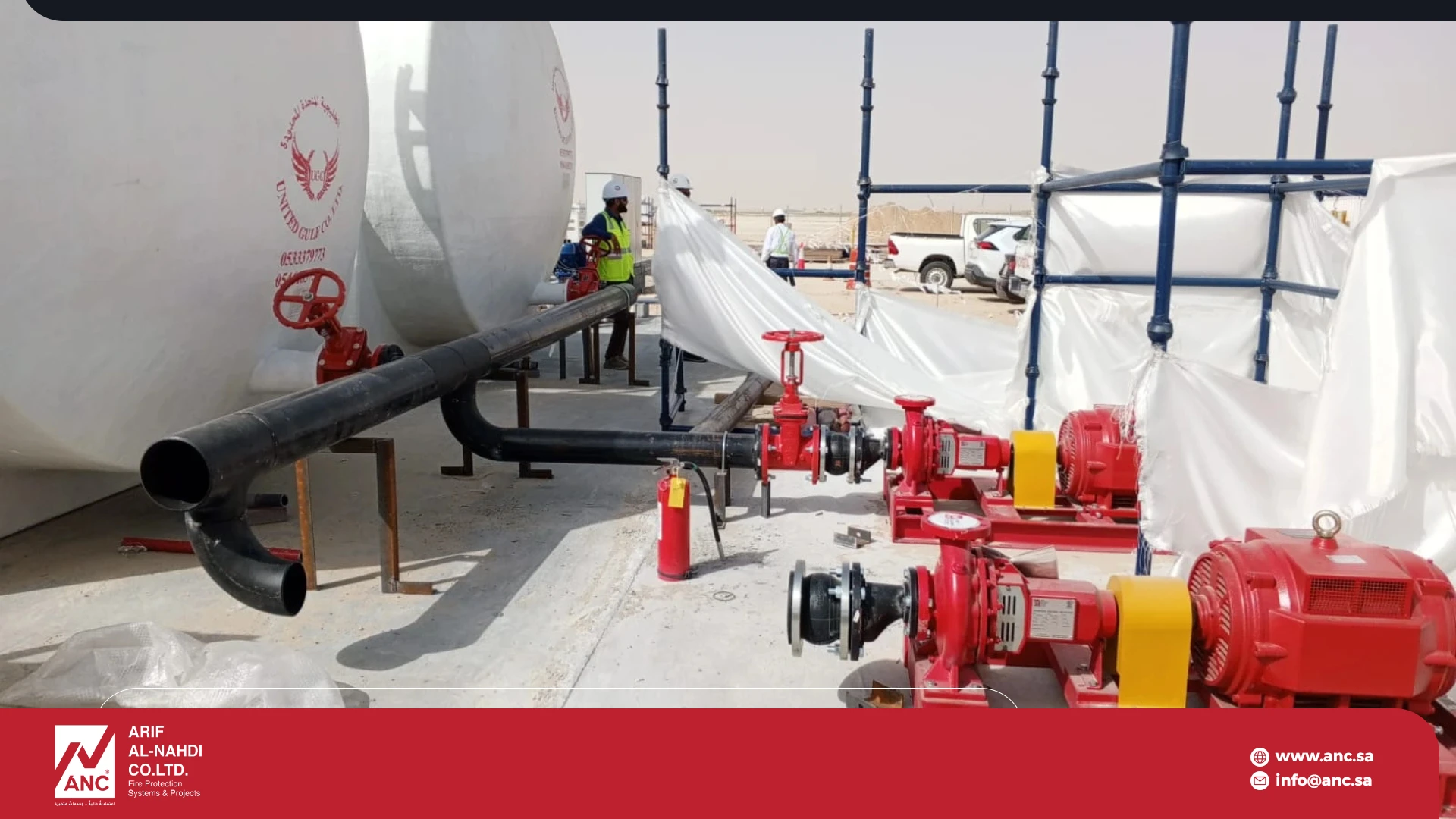
Fire pumps are a critical component of fire protection systems, as they are responsible for supplying the necessary water pressure to sprinklers and fire suppression lines during emergency situations.
These pumps are categorized, based on their power source, into two main types: electric fire pumps powered by an electric motor, and diesel fire pumps powered by an internal combustion engine (diesel). Each type has its own advantages and drawbacks that influence performance, efficiency, cost, and suitability for different environments.
In this article, we provide a comprehensive comparison between the two, focusing on performance and operational efficiency, cost differences, reliability in the Saudi market, technical requirements, compliance with international standards such as NFPA, UL, and FM, and recommendations based on facility type.
Performance and Operational Efficiency: Electric vs. Diesel Fire Pumps
The performance efficiency of a fire pump depends on its ability to deliver the required pressure and flow rate immediately when needed. Electric fire pumps are known for their fast and almost instantaneous response, as they start operating immediately upon receiving the activation signal from the control panel.
In contrast, diesel fire pumps require a short startup delay due to the ignition process and initial combustion, resulting in a slightly longer activation time compared to electric fire pumps.
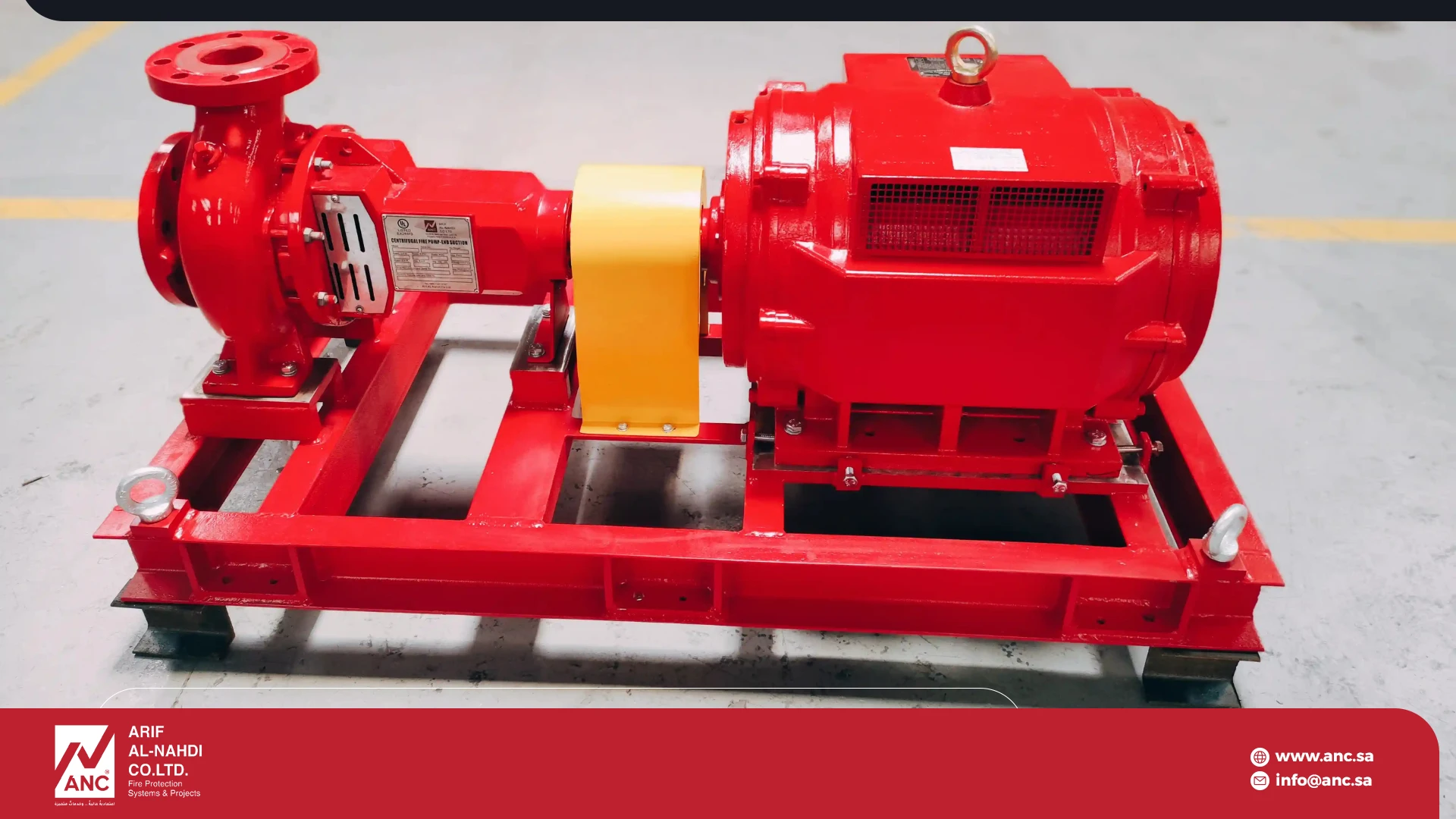
Diesel fire pumps operate completely independently from the electrical power supply, as they rely on a self-powered diesel engine. This makes them highly reliable during power outages and emergency situations.
On the other hand, electric fire pumps depend entirely on the site’s available power source. Therefore, any power interruption will affect their operation unless a backup generator is installed to ensure continuous power supply.
Energy Efficiency and Noise Levels: Electric vs. Diesel Fire Pumps
Electric fire pumps are generally more energy-efficient and significantly quieter during operation. They produce no harmful emissions and minimal noise compared to diesel engines.
In contrast, diesel fire pumps are known for their powerful performance and ability to operate in harsh environments. However, they generate higher levels of heat and noise during operation and produce exhaust emissions such as carbon dioxide and nitrogen oxides, requiring proper ventilation to disperse them safely.
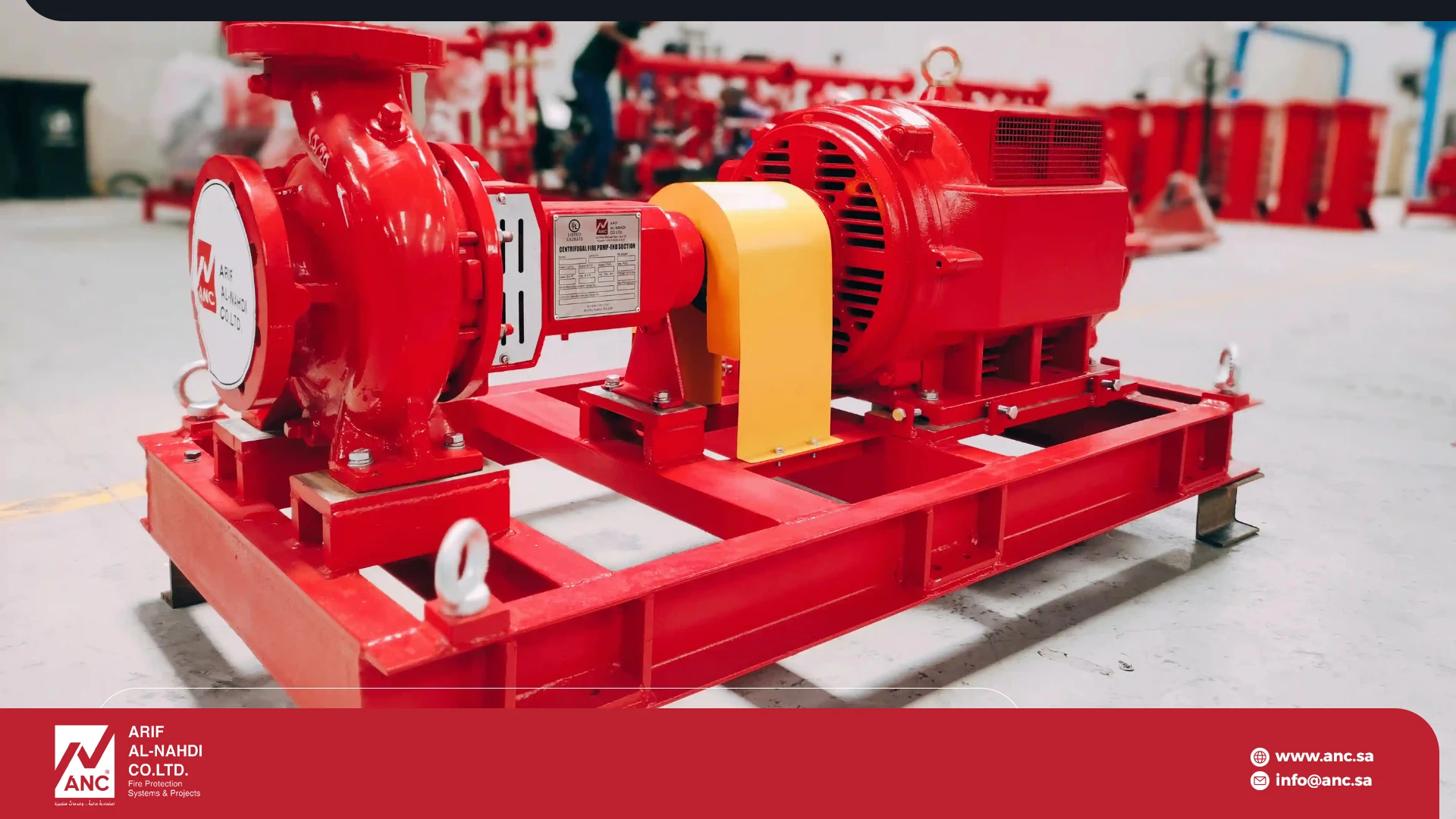
Operational Continuity: Electric Fire Pumps vs. Diesel Fire Pumps
An electric fire pump can operate as long as a continuous power supply is available, meaning it can run for extended periods when supported by backup generators or a reliable electrical grid.
A diesel fire pump, however, is limited by the amount of fuel stored in its tank and can operate only until the fuel is depleted.
NFPA 20 standards recommend that the fuel tank capacity should be sufficient to run the pump for at least one and a half hours at full load.
Overall, electric pumps excel in fast response, efficiency, and quiet operation, while diesel pumps excel in independence and reliability in remote or off-grid locations.
Cost of Purchasing and Installing Electric vs. Diesel Fire Pumps
Electric fire pumps typically have lower initial purchase and installation costs compared to diesel fire pumps. This is because they do not require a fuel tank, exhaust system, or dedicated ventilation, making the installation process simpler and more cost-effective.
Diesel fire pumps, however, come with higher upfront costs due to their internal combustion engines and additional components such as fuel tanks, piping systems, and ventilation fans, all of which increase installation complexity and total cost.
Operating Costs: Electric Fire Pumps vs. Diesel Fire Pumps
Electric fire pumps are generally less expensive to operate because electricity is cheaper than diesel fuel, and their overall energy conversion efficiency is higher, resulting in better pumping performance for less energy consumed.
In contrast, diesel fire pumps require a continuous supply of fuel, and their operational costs are affected by fluctuating fuel prices. They also require periodic test runs to ensure readiness, which leads to additional fuel consumption over time.
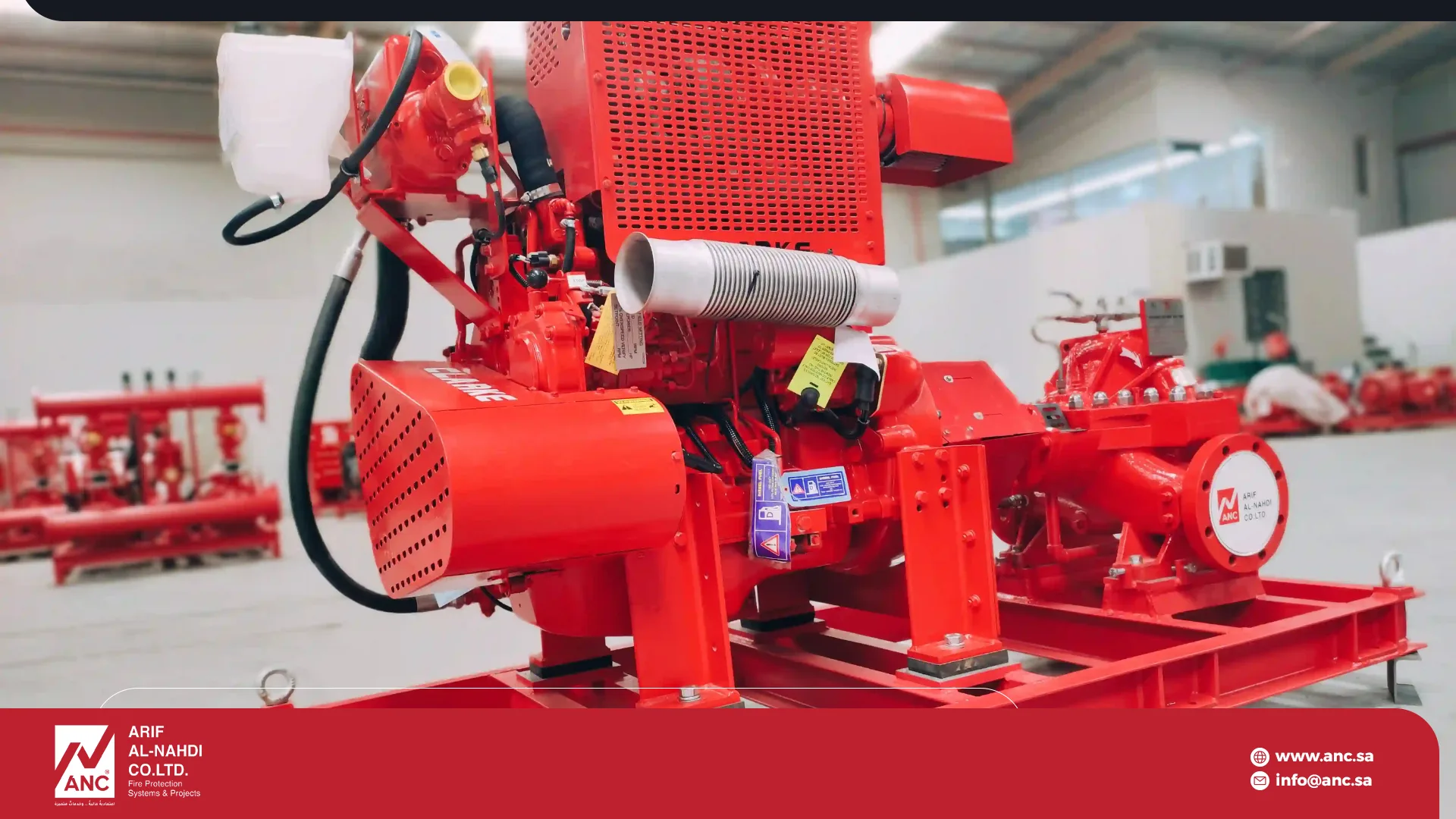
Maintenance of Electric Fire Pumps Compared to Diesel Fire Pumps
Electric fire pumps have a clear advantage in terms of maintenance, as they contain fewer moving parts, making their upkeep simpler and less costly. Their maintenance typically includes checking electrical connections, inspecting the control panel, and lubricating bearings.
In contrast, diesel fire pumps require a structured maintenance program that includes oil changes, filter replacements, coolant inspection, battery checks, and monitoring fuel quality. Due to the larger number of mechanical components, the likelihood of needing spare parts is higher, which increases long-term maintenance costs.
Long-Term Cost Perspective: Electric vs. Diesel Fire Pumps
Over a period of 10 to 20 years, electric fire pumps generally offer lower total ownership costs when a stable electrical infrastructure is available. Diesel fire pumps, however, may be economically beneficial in industrial or remote projects that require complete operational independence.
Therefore, organizations should evaluate all aspects—purchase, installation, operation, and maintenance—as part of the total cost of ownership equation before making the final decision.
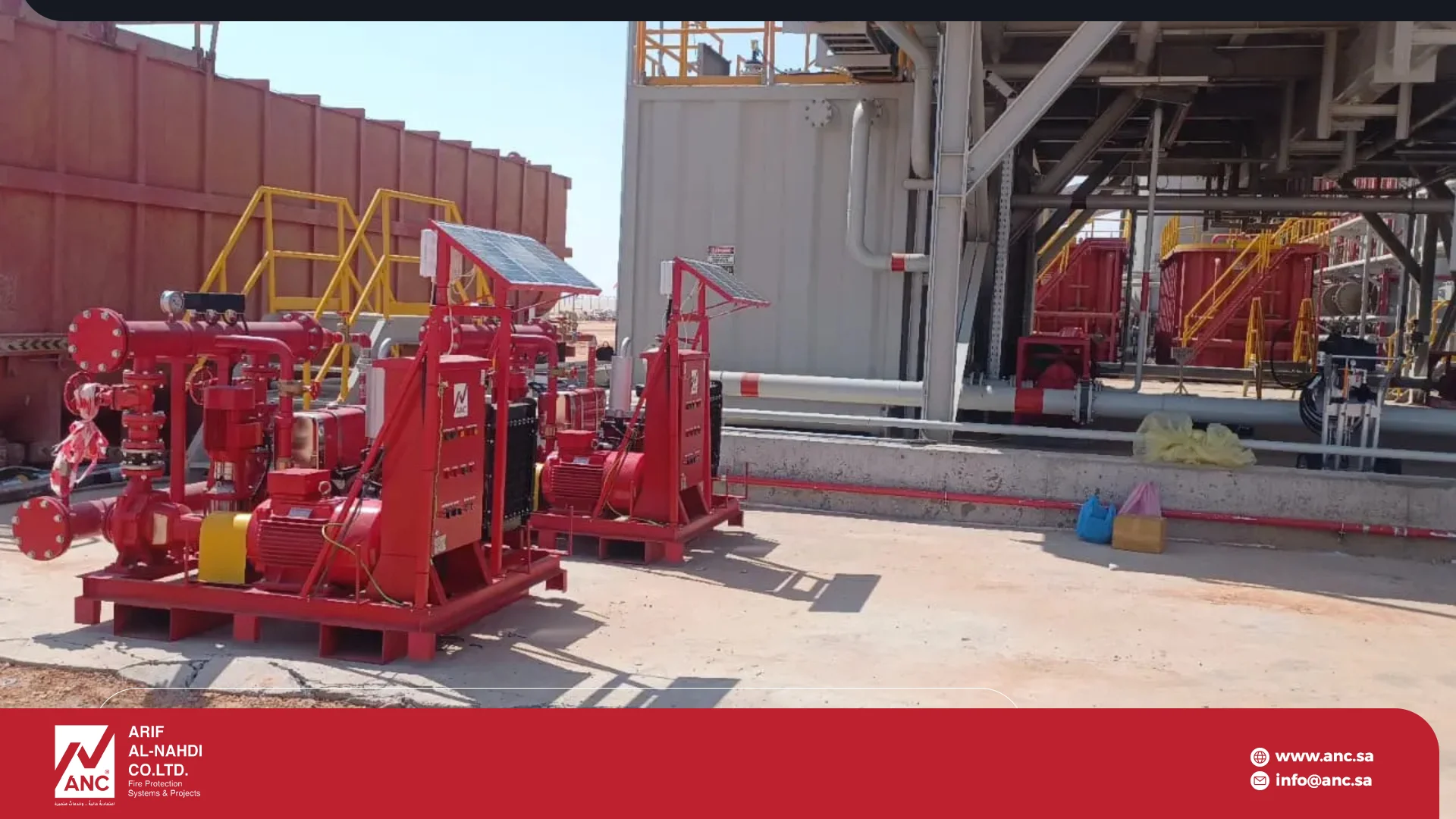
Comprehensive Comparison Between Electric and Diesel Fire Pumps
| Feature | Electric Fire Pump | Diesel Fire Pump |
| Power Source | Electric motor (power from the grid or backup generator) | Diesel engine independent of electrical supply |
| Startup Speed | Almost instantaneous | Moderate (a few seconds for engine startup) |
| Initial Installation Cost | Lower – simpler setup without fuel tank or exhaust system | Higher – requires additional components (fuel tank, ventilation, exhaust) |
| Operating Cost | Low (electricity is cheaper) | High (diesel fuel costs are higher) |
| Maintenance Requirements | Low – fewer components and simpler maintenance | High – routine maintenance for the engine, fuel system, and battery |
| Noise and Emissions | Very low – quiet operation with no emissions | High – engine noise and exhaust emissions |
| Reliability During Power Outages | Weak without an alternative source (requires a backup generator) | Excellent – operates independently during power outages |
| Space and Infrastructure | More compact – no need for fuel tank or exhaust openings | Larger footprint (engine, fuel tank, ventilation, exhaust system) |
| Ideal Applications | Urban and commercial buildings with stable electricity | Industrial and remote locations or sites with frequent outages |
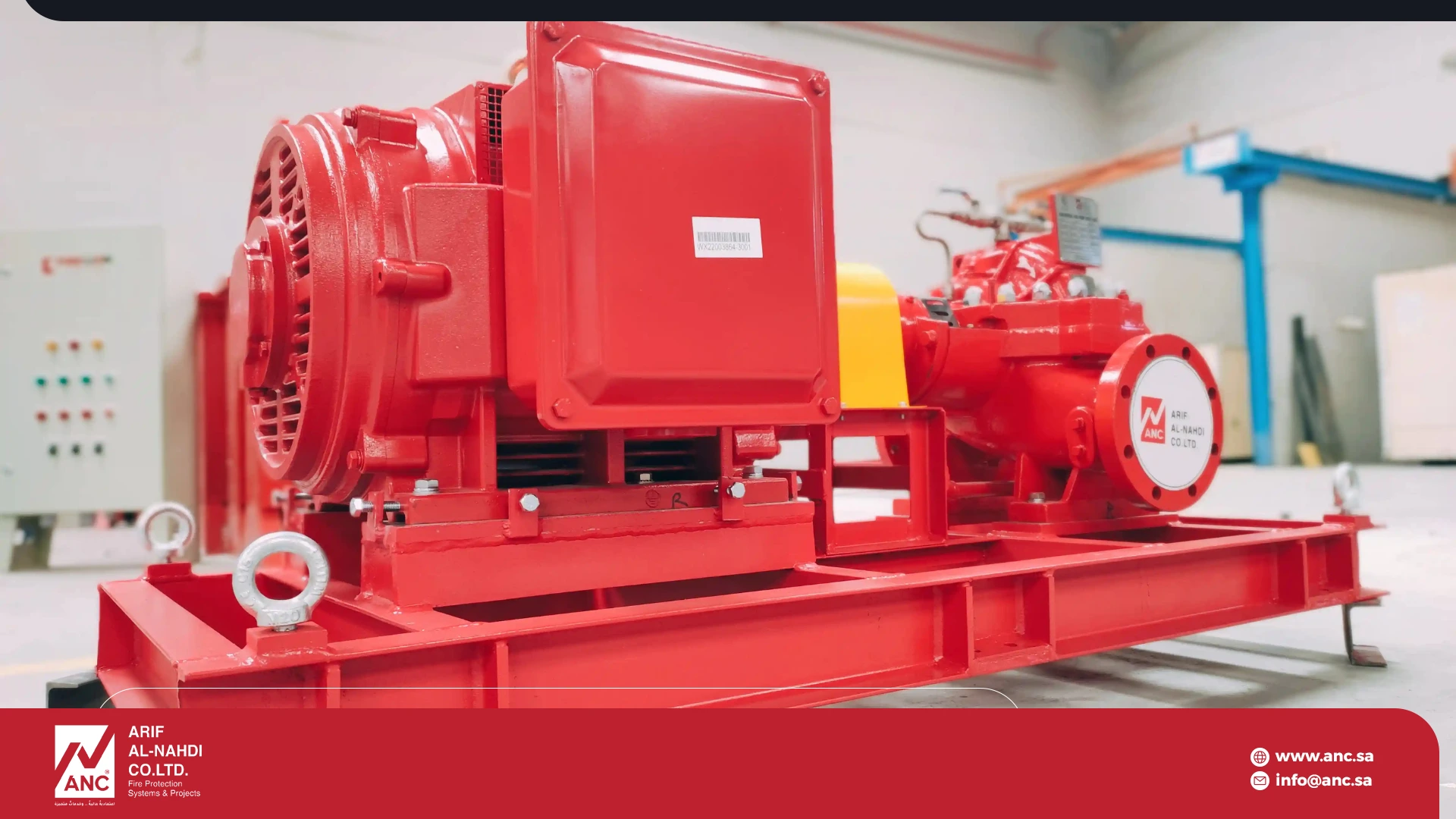
Fire Pumps from Arif Al-Nahdi Company (ANC) in Saudi Arabia
At Arif Al-Nahdi Company (ANC), we believe that protection starts with reliability. That’s why we provide a range of fire pumps engineered according to the highest international and local standards to ensure optimal performance under all conditions.
Our solutions are designed to meet the needs of all types of facilities—from residential towers to large industrial complexes—while fully complying with NFPA 20, SASO, and UL/FM standards, making ANC a trusted choice in the Saudi market.
We offer three main fire pump models to suit different application needs:
1. Electric Fire Pumps
The ideal choice for facilities with a stable electrical supply. They provide instant startup, high energy efficiency, and low noise levels, along with simple maintenance and lower long-term operating costs.
2. Diesel Fire Pumps
Designed to operate with complete independence from the electrical grid. They are commonly used in industrial sites and remote locations and deliver high pumping power and exceptional reliability during emergencies and power outages.
3. Hybrid Fire Pumps (Electric + Diesel)
A combination of both technologies, where the electric pump serves as the primary unit and the diesel pump operates as a backup to ensure continuous operation under any condition. This dual-pump configuration is the optimal solution for hospitals, airports, and critical facilities requiring maximum readiness and uninterrupted performance.
At the end of this comparison, it becomes clear that choosing the right fire pump—whether electric, diesel, or hybrid—depends primarily on the facility type and its operational needs.
Electric pumps offer high energy efficiency, quiet operation, and lower maintenance, while diesel pumps provide complete independence and unmatched reliability in emergency situations. Hybrid systems combine both advantages to deliver a fully integrated and continuous fire protection solution.
At Arif Al-Nahdi Company (ANC), we are committed to providing our clients with the best globally and locally certified solutions, ensuring the highest levels of performance and safety. Whether you are looking for an electric pump, a diesel unit, or a fully integrated hybrid system, our team is ready to provide free technical consultations and help you choose the most suitable system for your project.
Contact us today and take your first step toward intelligent protection with Arif Al-Nahdi’s advanced fire pump solutions in Saudi Arabia—where quality meets reliability!
Frequently Asked Questions About Electric and Diesel Fire Pumps in Saudi Arabia
1- Do fire pumps need electricity?
Yes, electric fire pumps rely on an electrical power source to operate the motor that drives water through the fire protection system. These pumps are ideal for urban buildings, such as those in Riyadh, where the electrical grid is stable and can be supported by a backup generator to ensure operation during power outages.2- Do fire pumps require a generator?
In systems that rely solely on electric fire pumps, it is recommended to install a backup generator to ensure uninterrupted operation during power failures. However, systems equipped with diesel fire pumps do not require a generator since the diesel pump operates independently using fuel.3- What is a diesel fire pump?
A diesel fire pump is a fire pump driven by a self-powered diesel engine, designed to maintain fire protection operation during electrical outages. It is ideal for industrial or remote locations and is capable of operating for extended periods without the need for an external power source.4- How often should a diesel fire pump be tested?
It is recommended to operate the diesel fire pump at least once a week for a routine readiness test, in accordance with NFPA 25 standards for inspection, testing, and maintenance of fire protection systems. This test helps verify proper pump performance, fuel condition, battery health, and cooling system readiness.5- Is it necessary to warm up a diesel fire pump engine?
Yes, it is recommended to warm up the diesel fire pump engine before full operation, especially in cold weather. Warming up the engine helps improve performance, ensure smoother startup, and reduce wear caused by operating the engine while cold—ultimately extending its service life.6- How is a fire pump selected?
Choosing the right fire pump depends on several key factors, including:- Flow rate (GPM) required to cover the entire fire protection network.
- Required pressure (PSI) based on system design and building height.
- Available power source (electric or diesel).
- Compliance with international standards such as NFPA, UL, and FM.