


A fire fighting system is the backbone of building safety—protecting people, property, and business continuity.
When detection, alarm, suppression, and monitoring work together, risk drops and response becomes faster.
This guide from Al Nahdi (ANC) explains what a fire fighting system is, the main system types, essential components, and how fire protection systems are designed for buildings.
Need help selecting the right solution for your project? Contact ANC for a technical consultation and a compliant submittal package.
What Is a Fire Fighting System?
What is fire fighting system in a way that matters to owners and operators? It’s an integrated safety system designed to detect fire early, alert occupants immediately, and suppress or control the fire before it spreads.
A modern fire fighting system typically serves many environments, including residential buildings, commercial facilities, industrial plants, hospitals, hotels, warehouses, and infrastructure projects where downtime and risk exposure are expensive.
At a high level, fire fighting systems are built around four building blocks
- Detection devices (smoke, heat, aspirating detection, gas detection where needed)
- Fire alarm control panels that receive signals and activate responses
- Suppression equipment (water, gas clean agents, foam systems depending on hazard type)
- Monitoring and control platforms to visualize events and support fast action
If you’re unsure which suppression approach fits your risk profile, request a system selection review based on occupancy and hazards.
Why Fire Fighting Systems Are Essential in Buildings
A fire fighting system in building environments is essential because every second matters. Early detection and rapid alarm activation reduce evacuation time and support faster emergency response. The result is simple: fewer injuries, less damage, and a higher chance of containing the incident in its earliest stage.
From an operational view, effective fire protection also reduces downtime. Even small fire incidents can lead to costly interruptions due to smoke contamination, electrical room shutdowns, and extended recovery work. A properly designed system helps protect not just the structure—but the business inside it.
Many building regulations, insurance requirements, and engineering practices also require compliant fire protection systems. That’s why owners and facility managers treat fire protection as a core risk-management investment, not a “nice-to-have.”
Types of Fire Fighting Systems
There are multiple fire fighting system types, and the right choice depends on building occupancy, hazard profile, and the nature of assets being protected. The most common types of fire fighting system fall into these categories: water-based systems, gas suppression, foam systems, and fire detection and alarm systems that coordinate the entire response.
Water-based suppression is the most widely used category of fire fighting systems. These systems control or extinguish fires using water delivered through engineered networks and discharge devices. They are common in residential buildings, offices, hotels, shopping centers, and warehouses because they provide strong coverage for general fire risks.
Common water-based solutions include:
- Fire sprinkler systems for automatic suppression in protected areas
- Standpipe systems for firefighting access in multi-story buildings
- Fire hydrant systems for external firefighting support around the facility
When designed correctly, water-based systems deliver reliable suppression capability for a broad range of building applications.
Gas Fire Suppression Systems
Gas suppression systems use clean agents to extinguish fires without leaving residue or causing water damage—making them ideal for critical spaces and sensitive equipment. They are commonly used where downtime is expensive and assets must stay protected.
Typical applications include:
- Data centers and server rooms
- Telecommunications rooms
- Electrical rooms and switchgear areas
- Control rooms and mission-critical operations spaces
Gas suppression is often selected when water-based discharge could damage electronics or disrupt operations significantly.
Foam Fire Fighting Systems
Foam systems are designed for fires involving flammable liquids. They work by forming a blanket that suppresses vapors, separates fuel from oxygen, and supports rapid control in high-risk environments.
You’ll typically find foam systems in:
- Fuel storage facilities and tank farms
- Oil and gas installations
- Aircraft hangars
- Refineries and chemical plants
Foam is not “one-size-fits-all”; selecting the correct foam type and system architecture depends on the fuel hazards and the facility’s risk profile.
Fire Detection and Alarm Systems
Detection and alarm are not optional add-ons—they are core to performance and response speed. Detection devices identify early indicators of fire, while the fire alarm system coordinates evacuation signals, notifications, and integration actions across the building.
Common detection technologies include:
- Smoke detectors for early-stage fire signatures
- Heat detectors for high-temperature environments or specific risks
- Aspirating smoke detection systems for high-sensitivity detection
- Gas detection where hazardous or flammable gas risk exists
The fire alarm control panel receives signals, activates alarms, and can trigger safety actions such as controlling smoke management interfaces or initiating suppression sequences (as required by the design).
Also Read: Why Do Home Fires Increase in Winter? And How ANC Helps You Prevent Them
Key Components of a Fire Fighting System
Understanding fire fighting system components helps owners evaluate bids, specifications, and long-term maintainability. A complete fire fighting system typically includes detection devices, control panels, suppression equipment, and monitoring tools that provide visibility and accountability.
Fire Detection Devices
Detection devices are responsible for identifying early warning signs such as smoke, heat, or hazardous gases. Selecting the right detection approach reduces false alarms while increasing speed of response. Early detection is one of the most cost-effective ways to limit fire growth and improve evacuation outcomes.
Common device options include:
- Smoke detectors
- Heat detectors
- Aspirating smoke detection systems
- Gas detectors (when applicable)
Fire Alarm Control Panels
The fire alarm control panel is the command center of the system. It receives inputs from detection devices, activates audible and visual alarms, and can interface with other safety systems.
Modern addressable systems add major operational value because they can identify the exact location of the alarm event—helping teams respond faster with less confusion and less time wasted.
Fire Suppression Equipment
Suppression equipment is what physically fights the fire. In water-based systems, this includes the distribution network and the key assets that ensure water is available at the required conditions during an emergency.
Typical suppression elements include:
- Fire sprinklers and discharge devices
- Fire pumps (as part of the water supply strategy)
- Water storage tanks (when needed)
- Piping networks and fittings
- Control valves and isolation valves
- Standpipes and fire hose systems
These components work together to deliver the suppression agent to the fire source in a controlled, engineered way.
Monitoring and Control Systems
Monitoring platforms help facility teams see what’s happening across the site—fast. They provide system status visibility, alarm event tracking, and fault notifications so maintenance teams can act before a system becomes unreliable.
In many facilities, graphical monitoring tools display building layouts, highlight alarm points, and reduce response time—especially in large sites with multiple zones and critical areas.
CTA: Want clearer visibility and fewer surprises during inspections? Ask ANC about monitoring-ready system architectures and documentation support.
How Fire Fighting Systems Are Designed for Buildings
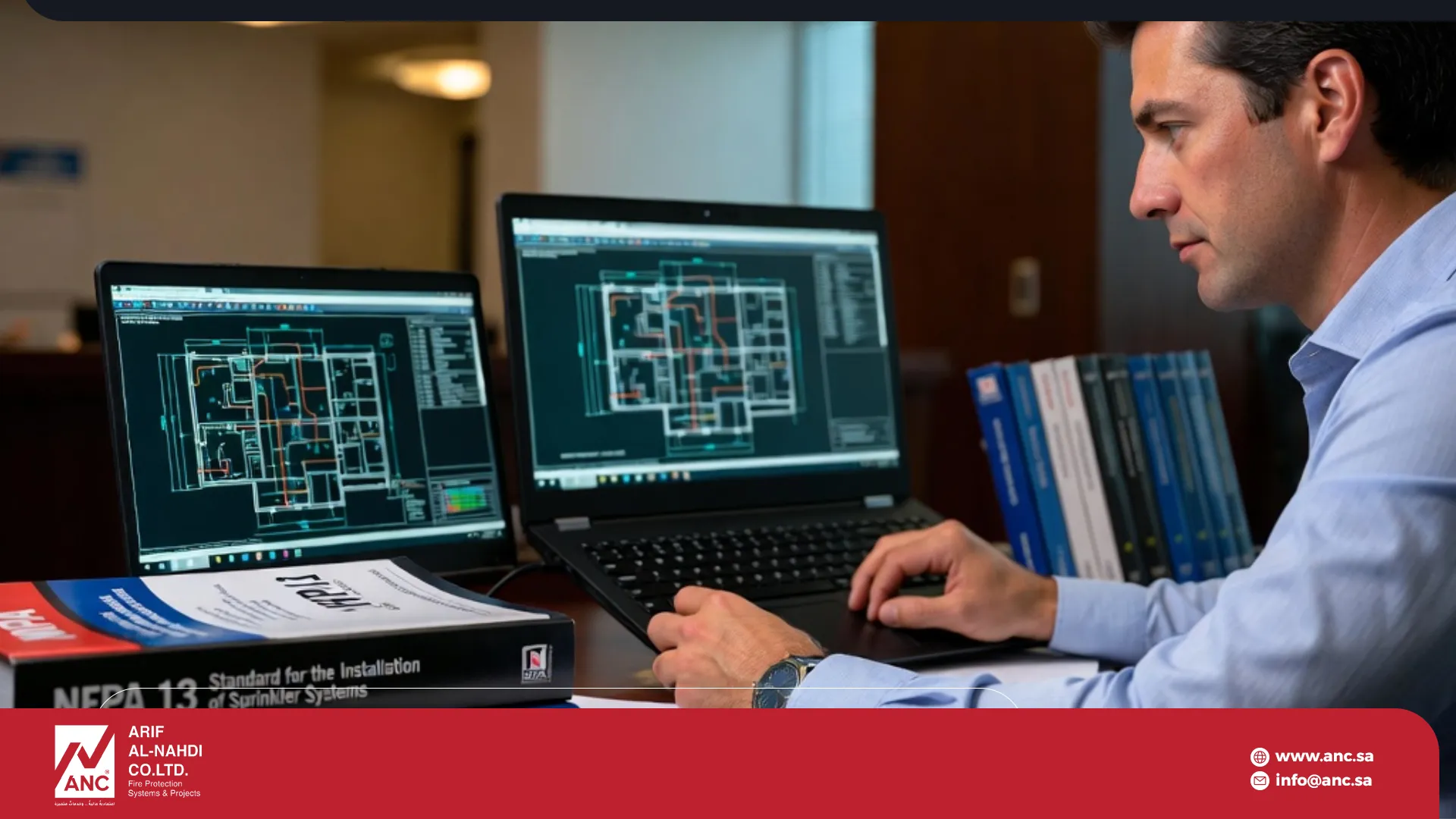
A fire fighting system in building design is not just about selecting equipment—it’s an engineering process focused on risk, compliance, and performance. Fire protection engineers typically follow a structured path that aligns with recognized practices and project requirements.
Risk Assessment
Design starts with understanding the building’s risk profile. Engineers assess occupancy type, fire loads, ignition sources, building layout, and operational processes. This step shapes everything: system type selection, coverage priorities, and performance expectations.
System Selection
After risk assessment, engineers select the most suitable technology based on the facility’s needs. A warehouse may prioritize water-based suppression, while a data center may require clean-agent gas systems to avoid equipment damage. In facilities with flammable liquids, foam becomes essential.
This step answers critical project questions such as:
- What hazards are present (ordinary combustibles, flammable liquids, sensitive equipment)?
- What is the operational priority (life safety, asset protection, continuity)?
- What compliance or insurer requirements apply?
Hydraulic and Engineering Design
For water-based systems, engineering design includes hydraulic calculations, pump capacity planning, pipe routing, and equipment placement to ensure sufficient flow and pressure during emergencies. The focus is performance under fire conditions—not just the physical presence of equipment.
System Integration
Fire protection works best as a coordinated response. That’s why fire fighting systems are often integrated with other building safety systems such as alarms, smoke control interfaces, ventilation control logic, and emergency evacuation procedures—based on project requirements and approved design intent.
Fire Protection Standards and Codes
Fire fighting systems are typically designed using widely referenced standards and codes. Commonly referenced NFPA standards include:
- NFPA 13 for sprinkler systems
- NFPA 14 for standpipe systems
- NFPA 20 for fire pumps
- NFPA 72 for fire alarm systems
- NFPA 25 for inspection, testing, and maintenance
Compliance supports reliable operation, improves inspection outcomes, and helps ensure systems perform as intended when needed most.

Checklist Before Installing a Fire Fighting System
Before installing or upgrading fire protection, use this practical checklist to reduce risk and avoid approval delays:
- Confirm building type, occupancy, and risk classification
- Identify fire hazards and critical assets (electrical rooms, IT rooms, storage areas)
- Select the appropriate suppression approach (water, gas, foam) based on hazards
- Verify the water supply strategy (source availability and project requirements)
- Confirm required codes and approval pathway with the relevant authority/AHJ
- Ensure documentation readiness: drawings, datasheets, calculations, and submittals
- Plan inspection, testing, and maintenance programs from day one (not after handover)
To avoid redesign and re-submittal cycles, contact ANC early for pre-submittal technical guidance and documentation alignment.
When to Consult Fire Protection Experts
You should consult fire protection specialists when:
- Designing fire protection for new construction projects
- Upgrading existing safety systems to meet new occupancy or insurer requirements
- Protecting complex industrial facilities with higher hazard profiles
- Addressing recurring inspection findings or reliability concerns
- Preparing submittals and compliance documentation for approvals
Experienced providers help streamline system selection, coordinate interfaces, support testing and commissioning readiness, and build a maintenance roadmap that keeps the system reliable long-term.
A fire fighting system plays a critical role in protecting people, infrastructure, and business operations. The most effective fire protection approach combines detection devices, alarm systems, suppression equipment, and monitoring technologies that work together—so response is faster and damage is minimized.
Choosing the right fire fighting system types, understanding essential fire fighting system components, and designing the fire fighting system in building projects according to recognized standards are the keys to dependable protection and smoother approvals.
Contact Al Nahdi (ANC) to request a technical consultation, confirm compliance requirements, and build a fire protection solution tailored to your facility.
FAQs About Fire Fighting Systems
What is a fire fighting system?
A fire fighting system is an integrated safety system designed to detect fire, alert occupants, and suppress or control fire in buildings or industrial facilities.
What are the types of fire fighting systems?
Common types include water-based systems such as sprinkler and hydrant systems, gas suppression systems, foam fire suppression systems, and fire detection and alarm systems.
What are the main components of a fire fighting system?
The main components typically include fire detection devices, fire alarm control panels, suppression equipment such as sprinklers and pumps, and monitoring systems.
How is a fire fighting system designed for buildings?
Design usually involves risk assessment, selecting appropriate suppression and detection technologies, performing hydraulic calculations, and ensuring compliance with fire protection codes.
What NFPA codes apply to fire fighting systems?
Commonly referenced NFPA standards include NFPA 13 for sprinkler systems, NFPA 14 for standpipes, NFPA 20 for fire pumps, NFPA 72 for fire alarm systems, and NFPA 25 for inspection and maintenance.
