
Water pressure is the most critical element in any fire protection network, as it ensures that water reaches sprinklers and fire hoses with the required force and flow during emergencies. Any sudden drop in fire system pressure is a serious warning that can lead to complete system failure, putting lives and property at risk.
Pressure drops are often linked to factors such as pump malfunctions, pipe leaks, jockey pump issues, or water supply problems. Understanding these causes and addressing them properly ensures system readiness and effectiveness when needed.
In this article, we highlight the main causes of pressure drops in fire networks, how to diagnose and resolve them effectively, and the role of Arif Al Nahdi ANC in providing professional solutions to maintain continuous pressure according to NFPA standards.
How Fire Networks Work and What Is the Ideal Pressure?
Fire networks operate by supplying a steady water flow at a specified pressure to ensure water reaches all firefighting points, including automatic sprinklers and fire hoses. Maintaining design pressure is one of the key factors for network success during emergencies.
Role of Main Fire Pumps and Jockey Pumps
Pumps play a critical role in stabilizing network pressure:
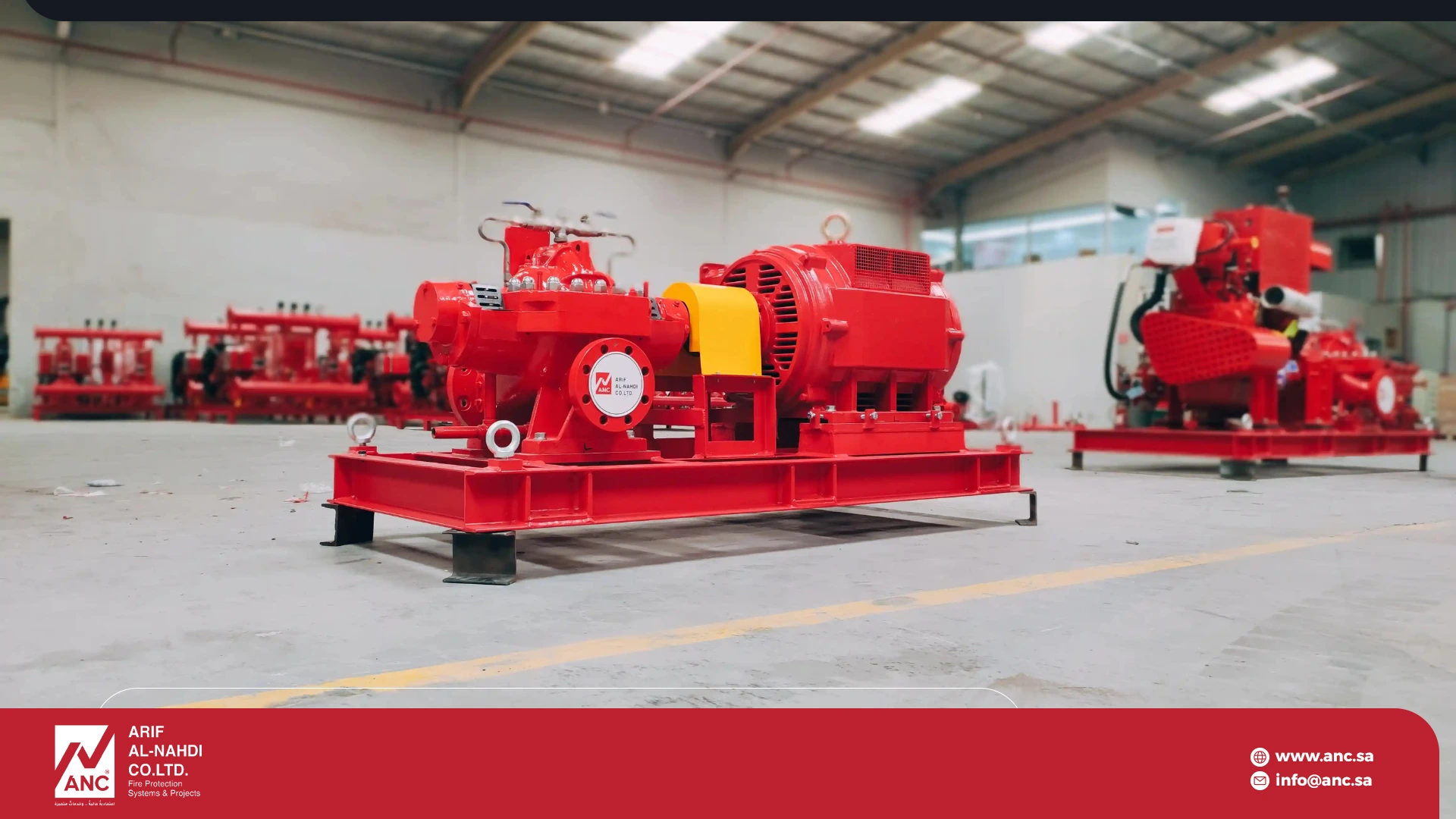
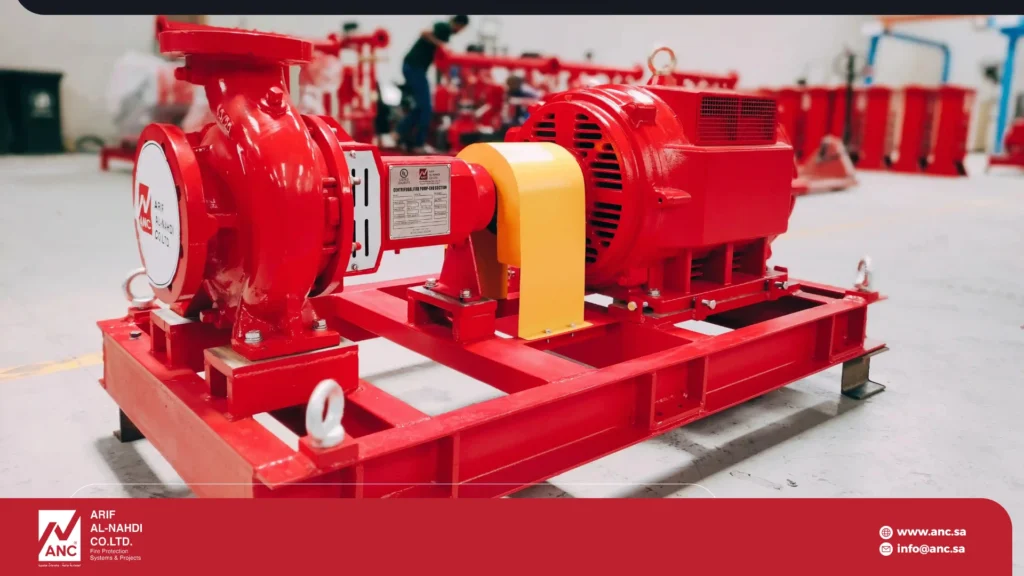
Main fire pump: Provides full pressure and flow during an actual fire.
Jockey pump: Compensates for minor pressure drops caused by small leaks or natural changes within the pipes, preventing unnecessary operation of the main pump.
This collaboration keeps the network in a state of constant readiness without wasting energy or equipment failure.
Concept of Design Pressure According to NFPA
NFPA 13 and NFPA 20 define the design pressure, which is the minimum pressure required at the farthest sprinkler or firefighting point in the building.
This pressure typically ranges between:
7 to 12 bar for commercial and industrial buildings
Higher values for tall buildings
The required pressure depends on building height, the number of active sprinklers, and the pipe network length.
How Pressure Affects Sprinklers and Hoses Performance
Ideal pressure ensures the network can:
Operate automatic sprinklers at full efficiency
Provide strong, steady flow for fire hoses
Deliver water to upper floors without significant loss
Low pressure may result in:
Weak or non-operational sprinklers
Reduced hose reach and force
System failure to control fire in time
Therefore, monitoring pressure and diagnosing sudden drops is a critical part of fire system maintenance.
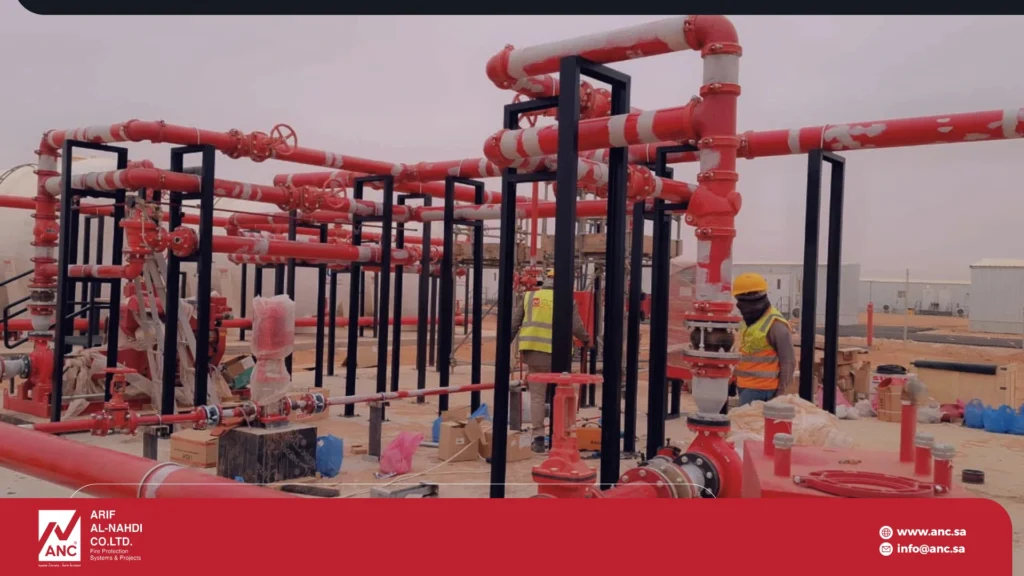
Common Causes of Water Pressure Drop in Fire Networks
Sudden pressure drops usually occur due to operational or mechanical issues, including:
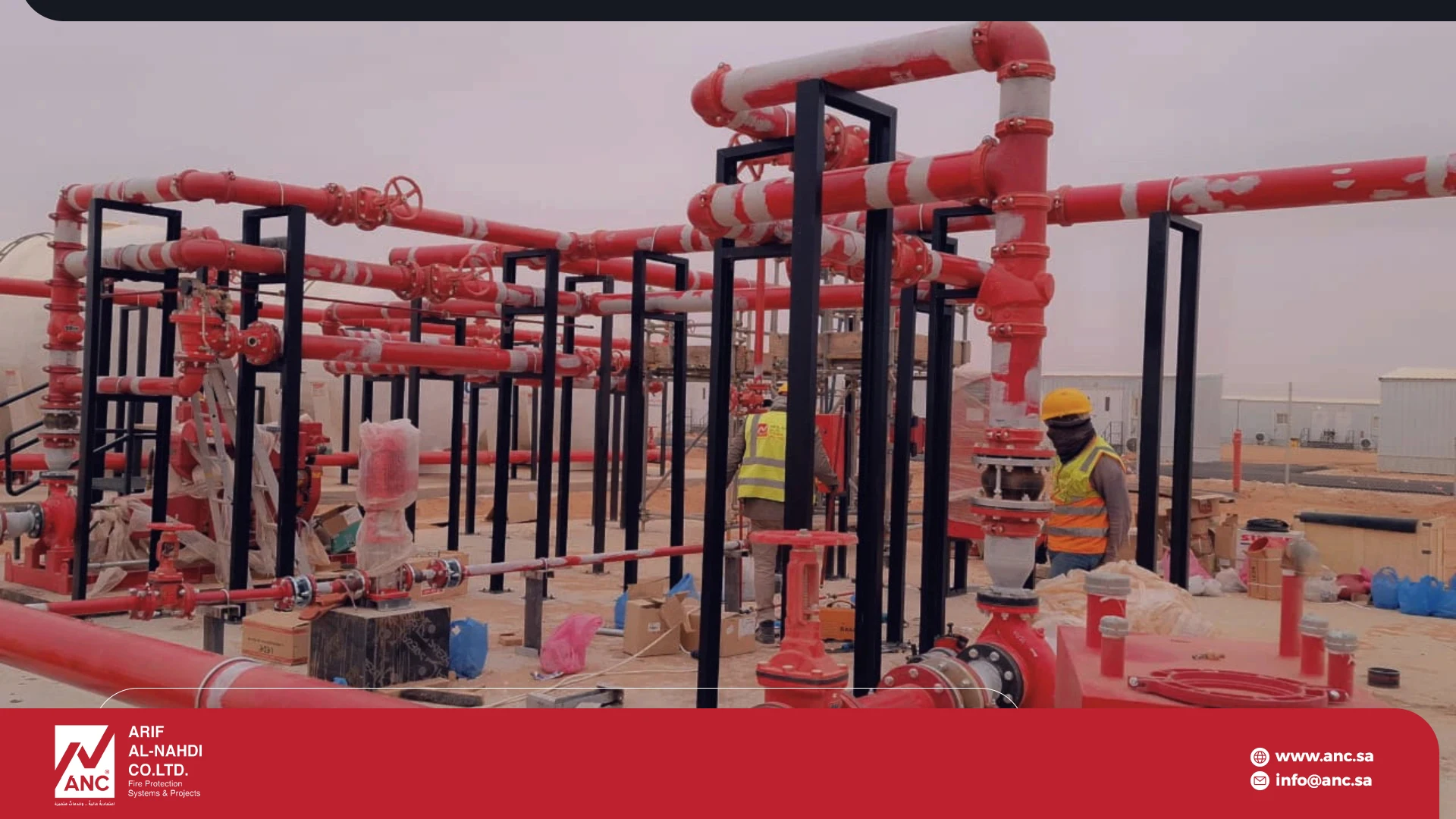
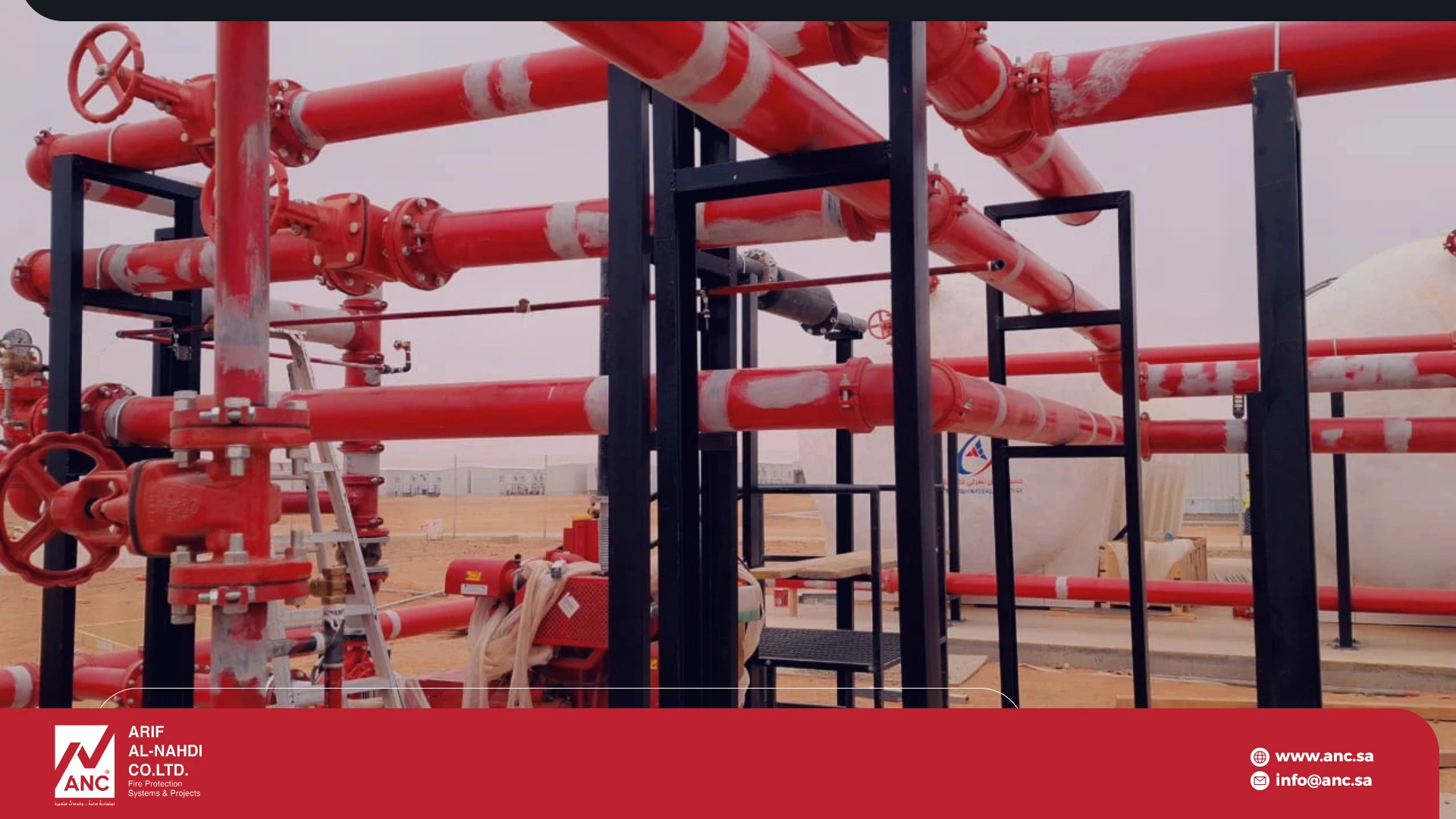
Pipe network leaks: Corrosion, old piping, or mechanical damage can cause gradual pressure loss.
Main fire pump failures: Issues such as motor faults (electric or diesel), impeller wear, or suction filter clogging.
Jockey pump malfunction: Incorrect operation, loss of pressure calibration, or electrical failure leading to continuous pressure drop.
Low water tank levels: Can result in air suction instead of water due to float damage or supply shortage.
Clogged lines or filters: Sediments, salts in coastal areas, or foreign objects in suction lines.
Using fire network water for non-emergency purposes: Such as irrigation or cleaning, which consumes emergency pressure.
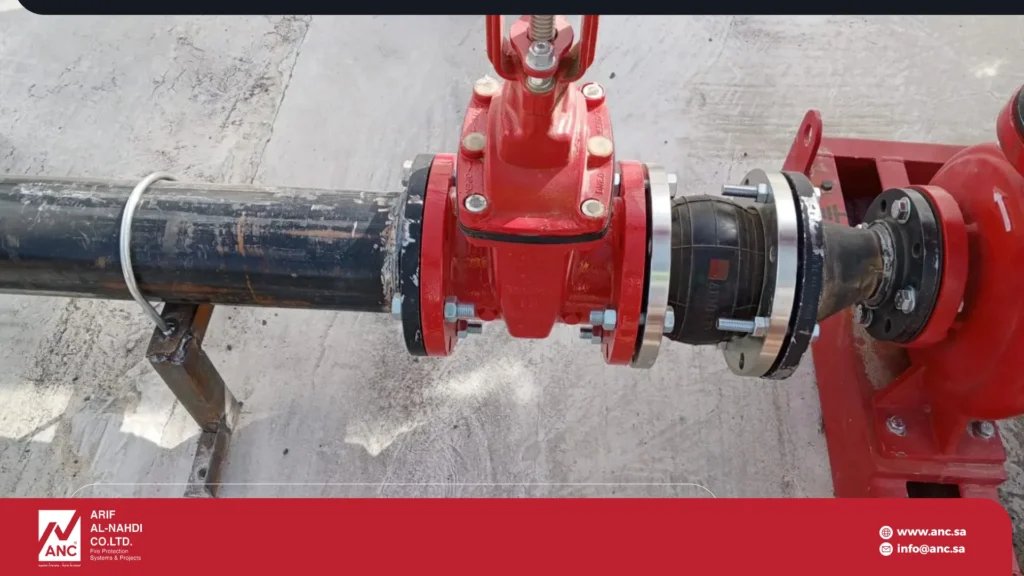
Control valve problems: Closed valves, faulty check valves, or incomplete valve openings.
Sudden operation of multiple firefighting points: Activating many sprinklers or hoses during tests or drills.
How Low Pressure Affects Fire System Efficiency
Low water pressure is one of the most critical failures, directly impacting firefighting effectiveness:
Reduced sprinkler coverage: Weak flow prevents sprinklers from adequately covering fire areas.
Water not reaching upper floors: Tall building networks rely on proper pressure for effective coverage.
System failure to control fire: Insufficient pressure hinders early containment.
Delayed response and increased property damage: Weak pressure slows firefighting, increasing fire spread and losses.
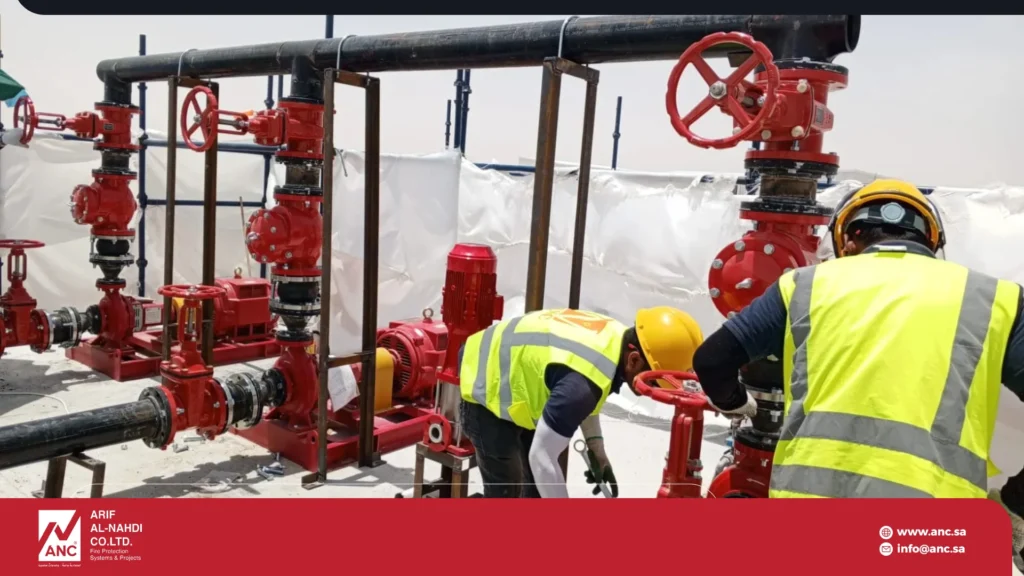
Steps to Diagnose Water Pressure Drop in Fire Systems
Inspect the control panel for fault indications
Measure pressure at various network points
Test the jockey pump
Check water tank levels
Inspect main and branch valves
Perform a flow test
Effective Solutions for Pressure Drop Issues
Repair or replace damaged pump components
Recalibrate the jockey pump to correct pressure
Clean filters and pipelines, removing sediments
Fix leaks and replace faulty pipes
Ensure all valves are fully open
Add a booster pump if necessary
Also Read: How to Reduce Fuel Consumption in Diesel Fire Pumps? Tips from ANC Experts
How Arif Al Nahdi ANC Helps Solve Pressure Issues
Arif Al Nahdi ANC provides comprehensive engineering solutions to stabilize fire network pressure and enhance efficiency per international standards. Their professional services include:
Full network inspection with detailed report: Specialized teams analyze network performance, identify causes of pressure drop, and provide technical recommendations.
Professional pump maintenance: Covers electric, diesel, and jockey pumps, including pressure adjustment, filter cleaning, early fault detection, and pump rehabilitation for stable NFPA-compliant operation.
Coastal environment solutions: Protection against corrosion from high salinity using rust-resistant materials, particularly in cities like Jeddah, Dammam, and Al Khobar.
Supply and replacement of certified pumps: UL/FM-certified pumps replace old or unsuitable units to ensure consistent pressure and high flow during emergencies.
Free consultation for network improvement: ANC offers advisory support to address recurring issues, optimize design, and develop the network according to facility needs and Saudi Civil Defense requirements.
Best Practices to Prevent Future Pressure Drops
Monthly and quarterly maintenance
Pump testing according to NFPA 25
Electronic pressure monitoring via BMS
Keep tanks above minimum levels
Train operational staff on proper system management
Low water pressure in fire networks is one of the most dangerous failures, potentially causing total system breakdown when maximum readiness is required. Early diagnosis, regular maintenance, and correct pump and design pressure settings per NFPA standards are essential for protection.
With Arif Al Nahdi ANC, your fire network operates at peak efficiency, and pressure issues are resolved at their root through professional inspection, maintenance, supply, and engineering consulting solutions.
Maintain your facility’s fire system readiness—the fastest response starts with steady pressure and a flawlessly operating system!
Also Read: Hotel Fire Systems: NFPA Requirements and Saudi Compliance
FAQs About Fire Network Pressure Drops
1- What causes water pressure drops in fire networks?
Causes include pipe leaks, main pump failures, jockey pump malfunction, or clogged filters and lines.
2- Can low pressure cause firefighting system failure?
Yes, low pressure may prevent water from reaching sprinklers or upper floors, leading to fire control failure.
3- How do I know if the jockey pump is malfunctioning?
Indicators include frequent main pump activation or persistent low pressure despite no water usage.
4- What if high salinity affects pipes and pressure?
ANC provides coastal solutions using corrosion-resistant materials and specialized maintenance.
5- When should a fire pump be replaced?
Replacement is recommended for continuous low performance, repeated failures, or non-compliance with required standards.