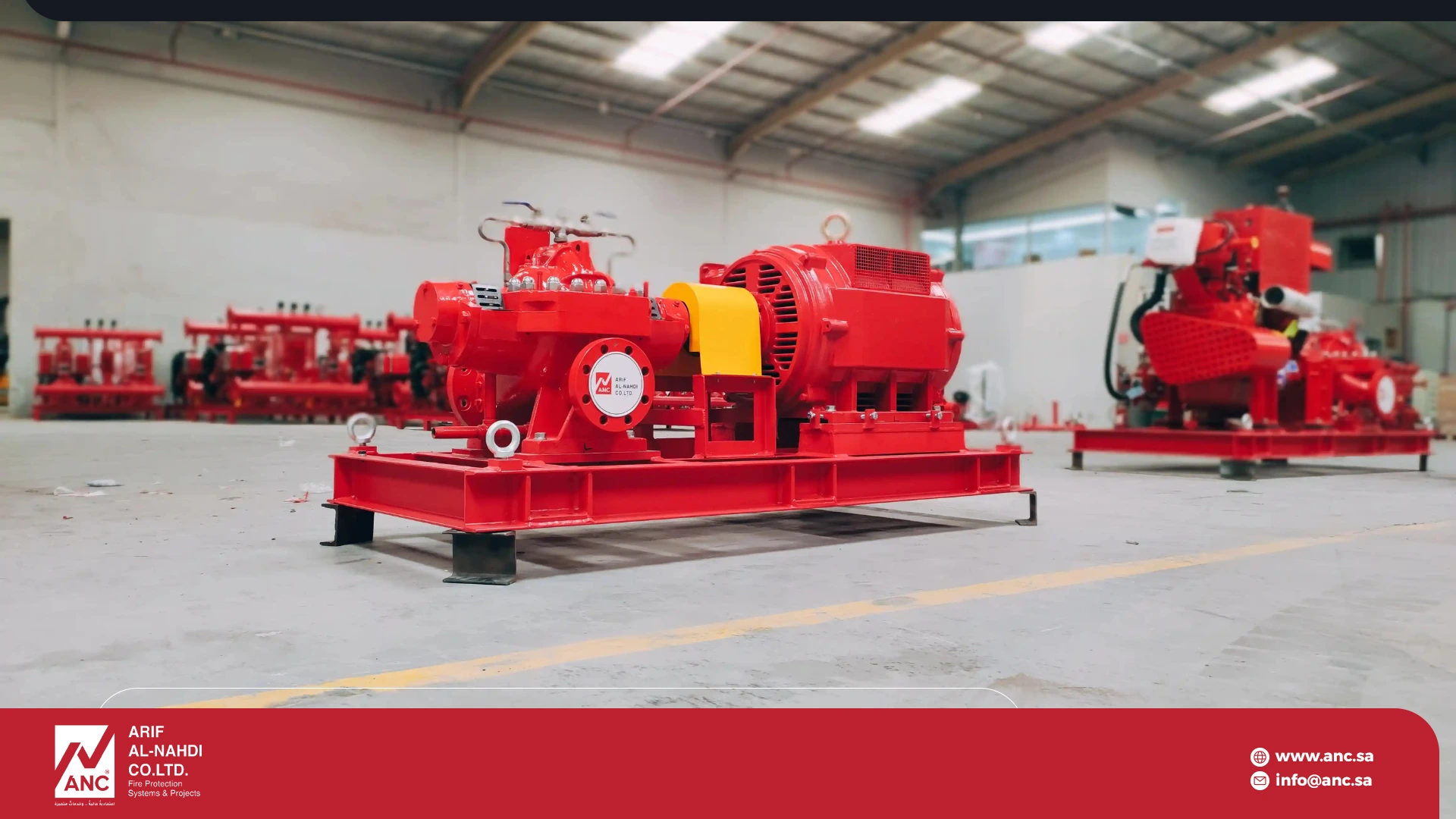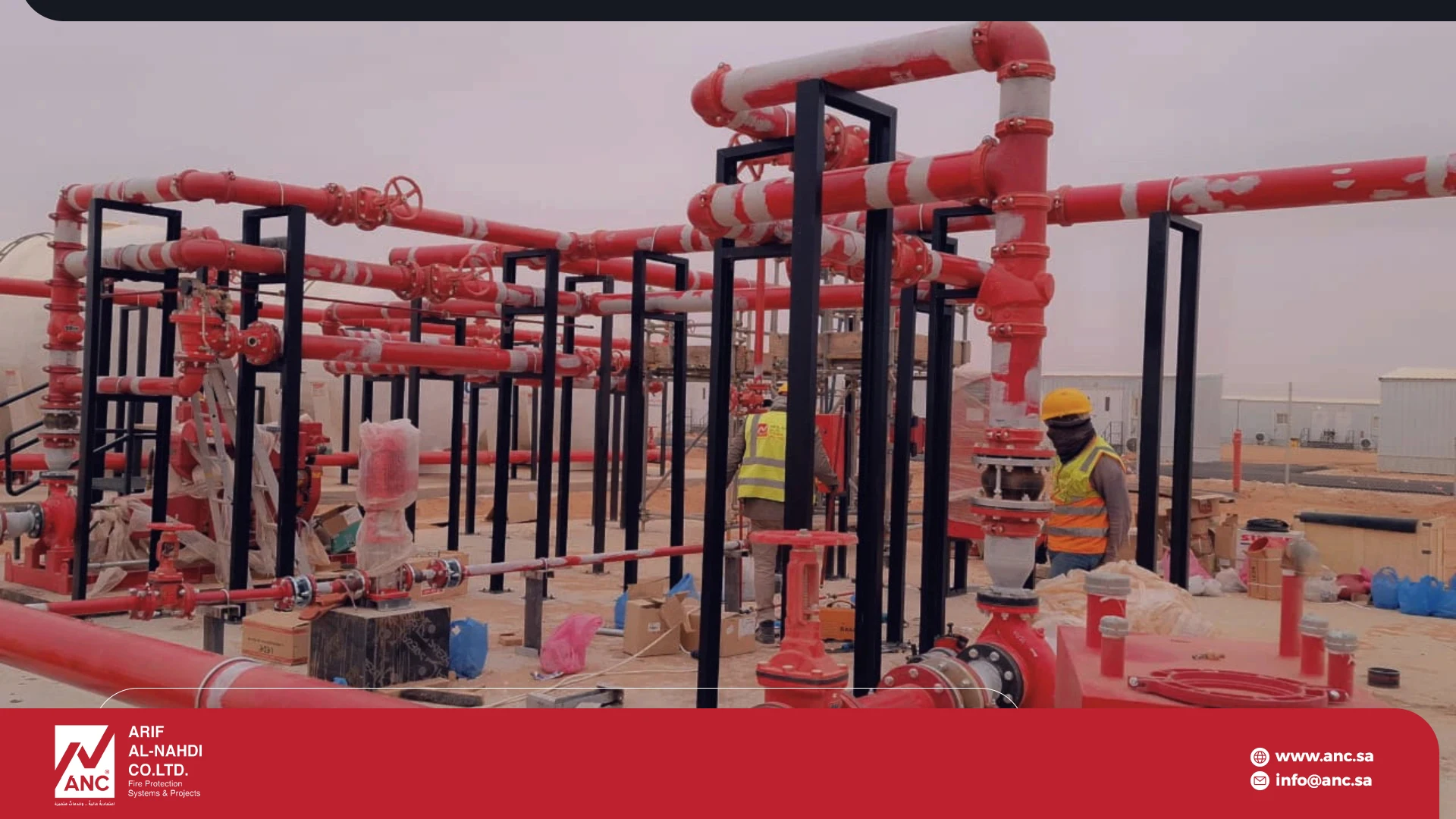

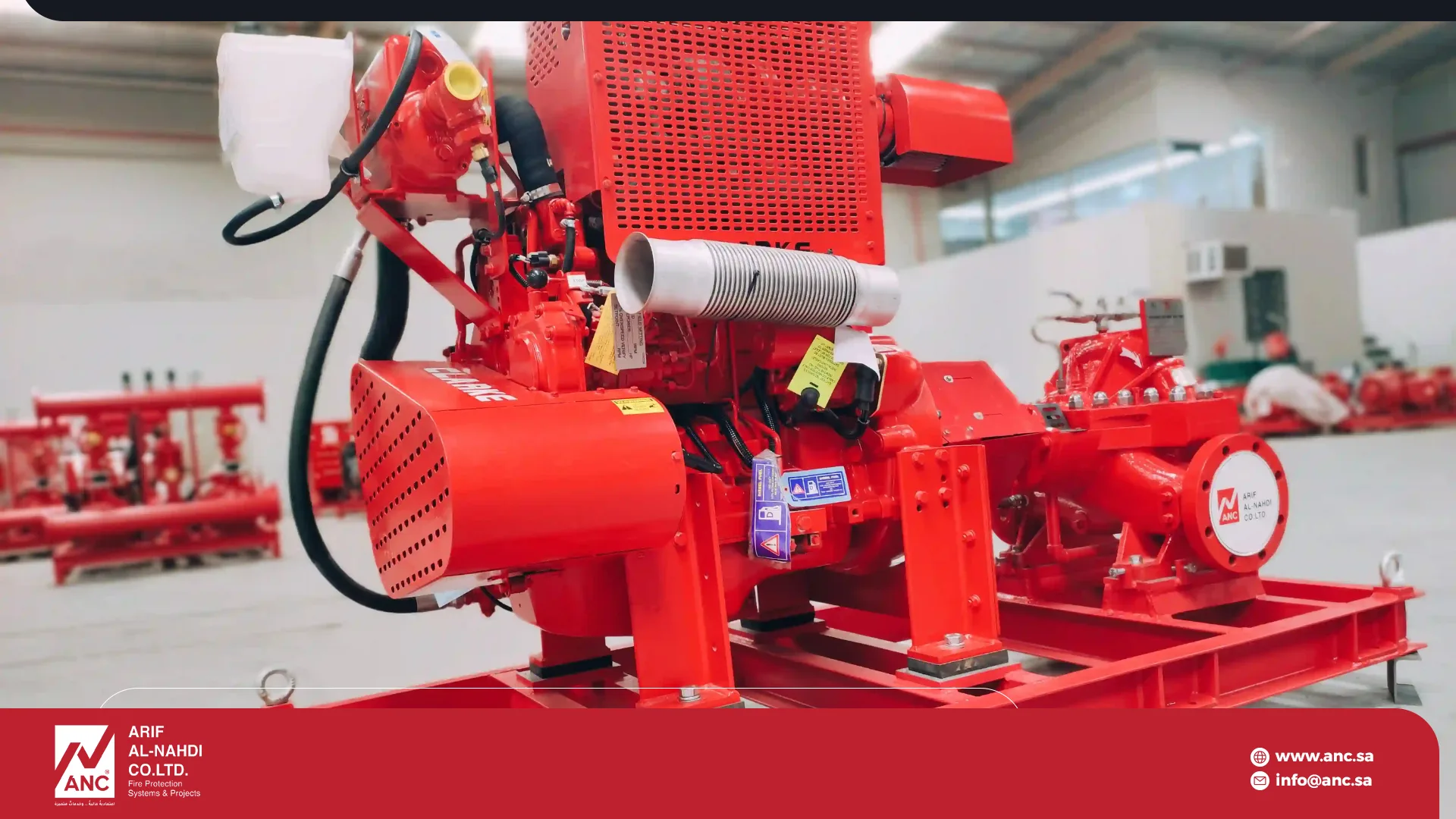
The readiness of your fire pump is the frontline defense that determines the outcome in the moment when there is no room for error. Over time, however, some fire pumps begin to lose their operational efficiency, showing clear warning signs that your fire suppression system is no longer performing as it should. At that point, an outdated fire pump becomes more of a liability than a protection asset.
In this article from Arif Al-Nahdi Company (ANC), we highlight the key signs that indicate the need to replace your fire pump, the factors that influence the replacement decision such as operational lifespan, maintenance cost, and modern technologies, as well as the practical benefits your facility gains when replacement is done at the right time.
Continue reading to discover how ANC helps you select the best UL-certified fire pumps that comply with Saudi standards—and download our official fire pump catalog containing all approved models and technical specifications.
Signs That Indicate It’s Time to Replace Your Fire Pump
A fire pump can operate efficiently for many years when maintained correctly, but over time, technical indicators begin to appear. At ANC, we help you identify these early signs before they evolve into a complete fire system failure, ensuring the continuous safety and readiness of your facility.
Failure of the Pump to Operate During Emergencies
During an actual fire event, the fire pump must activate automatically as soon as system pressure drops.
If the pump fails to respond—or requires frequent manual intervention—this is a serious indicator of declining reliability. Such failures may be caused by worn components, issues in the control panel, or malfunctioning backup diesel fire pumps.
In these situations, we recommend a full system inspection to determine whether repairs are sufficient or if complete pump replacement is the safer option.
Reduced Performance: Low Pressure and Insufficient Flow
A noticeable drop in water flow rate or discharge pressure compared to the original design values is a major warning sign.
This performance decline may result from internal component wear, clogged filters, or reduced motor efficiency.
Operating at reduced performance means your fire network will not deliver the required water supply during emergencies.
At ANC, we perform precise performance tests to compare the pump’s current output with its design capacity—helping you decide whether repair or full replacement is the best choice.
Leaks or Abnormal Vibrations
Continuous leaks from the pump casing or pipe connections indicate deteriorated mechanical seals or internal casing corrosion.
Meanwhile, abnormal vibrations often signal shaft misalignment or worn bearings. Ignoring these signs can lead to severe mechanical damage and major operational risks.
ANC provides dynamic inspection services using advanced vibration and pressure testing equipment to pinpoint the source of the issue before it leads to complete system failure.
The Pump Is Very Old and No Longer Meets Modern Standards
Every fire pump system has a defined operational lifespan. Once exceeded, pump efficiency declines even if it appears to be functioning.
With continuous advances in pump technology, modern UL-listed fire pumps and jockey pumps offer much higher reliability, greater energy efficiency, and improved operational safety.
If the fire pump in your facility has been running for over 15 years without upgrades, it is highly likely no longer compliant with Saudi performance codes or international certification standards.
At this stage, ANC helps you select the best SASO- and UL-certified replacement fire pumps, ensuring your system continues to operate with the highest safety standards.
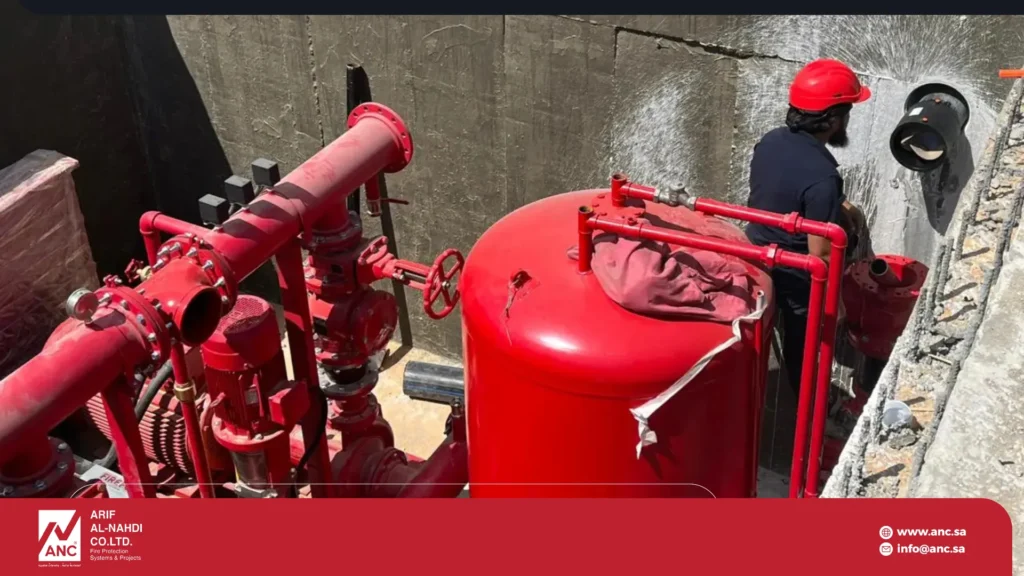
Factors That Influence the Decision to Replace a Fire Pump
The decision to replace a fire pump is not made randomly—it is based on a comprehensive technical and financial analysis aimed at ensuring maximum protection with the highest operational efficiency and lowest long-term cost.
At Arif Al-Nahdi Company (ANC), we help you evaluate the condition of your pump based on three key factors that form the foundation of a correct replacement decision.
1. Pump Age
Operational age is the first indicator that replacement may be necessary.
Most fire pumps begin to lose efficiency after 10 to 15 years of continuous operation, especially in high-temperature environments or facilities with intensive usage. At this stage, failure rates increase and maintenance becomes more frequent—making an old fire pump less reliable during emergencies.
ANC conducts professional assessments of the pump’s actual lifespan based on operating hours, internal component condition, and performance records to determine whether replacement is more beneficial than repair.
2. Maintenance Cost vs. Total Replacement Cost
In many cases, maintenance appears to be an economical short-term solution—yet over time, it can become a recurring financial burden.
When accumulated repair costs exceed 50% of the price of a new fire pump, replacement becomes the more cost-effective and safer long-term option.
We help you perform a precise comparison between current operational costs and the investment required for a new UL Listed or SASO Approved fire pump, while calculating the real return achieved from reducing failures and improving energy efficiency.
With this data-driven approach, we provide you with a decision based on numbers—not assumptions.
3. Outdated Technology vs. Modern Systems
Fire pump technology has advanced significantly in recent years. Modern models offer higher energy efficiency, greater operational reliability, and support advanced digital control systems that allow precise monitoring of pressure and flow.
If your pump is an older model that lacks these features or does not comply with Saudi codes and NFPA standards, replacement becomes a necessity rather than a choice.
At ANC, we provide the latest UL-certified fire pumps, diesel fire pumps, and jockey pumps—locally manufactured in Riyadh—ensuring your fire protection system stays up to date with the newest innovations and is officially certified by the relevant authorities.

The Benefits of Replacing Your Fire Pump at the Right Time
Replacing your fire pump at the right time is a direct investment in your facility’s safety and operational continuity. When this decision is made based on accurate technical evaluation, you avoid operational risks and achieve long-term financial and technical advantages.
- Ensuring immediate and reliable operation of fire protection systems during emergencies—without delays or failure to respond.
- Enhancing hydraulic performance by using high-quality fire pumps certified under UL and SASO standards, providing stable pressure and flow.
- Reducing maintenance and repair costs caused by frequent breakdowns in old or low-efficiency pumps.
- Improving energy efficiency in newer pump models compared to older ones, especially with modern diesel fire pumps and jockey pumps.
- Strengthening compliance with the Saudi Fire Protection Code, ensuring continued approval and licensing without technical remarks.
- Increasing facility safety and minimizing operational downtime or losses resulting from fire pump failure during emergencies.
- Boosting long-term system reliability by installing a certified fire pump engineered specifically for the operational environment in Saudi Arabia.
At Arif Al-Nahdi Company (ANC), we help you make the right decision at the right time through comprehensive pump condition assessment and data-driven technical recommendations—because investing in a new fire pump today may be what protects your facility tomorrow.
Why Choose Arif Al-Nahdi (ANC) for Fire Pump Replacement?
Choosing the right partner for fire pump replacement is a decision directly tied to safety, compliance, and operational continuity. That’s why Arif Al-Nahdi Company (ANC) offers strong, proven reasons that make us a trusted choice across Saudi Arabia.
- Local industrial expertise since 2013, supported by our manufacturing facility in Riyadh specializing in fire pump production under an accredited and well-established brand.
- A certified range of fire pump models including E.D.J, E.J, and D.J with SASO Approval, in addition to UL Listed Split Case and End Suction fire pumps.
- Fully integrated services under one roof, including supply, installation, testing, commissioning, and both periodic and annual maintenance for fire pumps and suppression systems.
- Qualified engineering and technical teams equipped with advanced diagnostic tools, testing equipment, and fire pump controller programming capabilities.
- Documented certifications and standards including the Saudi Quality Mark, UL, FM, ISO, GCC Lab, High Commission for Industrial Security recognition, Saudi Made, and Local Content compliance.
- Successful execution of major projects across the Kingdom, giving you solid, real-world references when replacing your fire pumps.
- Nationwide coverage with branches in Riyadh, Jeddah, Dammam, Madinah, Qassim, Khamis Mushait, Jazan, and Tabuk—ensuring fast and efficient support wherever your facility is located.
If you’re ready to move to the next step, we assist you in matching the required pressure and flow capacity, choosing the right UL or SASO Approved fire pump model, and providing a detailed proposal covering supply, replacement, and warranty—fully tailored to your facility’s needs.
Fire Pumps Available at Arif Al-Nahdi (ANC)
At Arif Al-Nahdi Company (ANC), we offer a complete range of certified fire pumps engineered according to the highest local and international quality standards. Our models cover a wide variety of project requirements across the Kingdom in terms of flow rate, pressure, and application.
Below is an overview of our key SASO- and UL-certified models.
D.J Model – SASO Approved
The D.J fire pump is one of the most widely adopted models in the Saudi market, designed to meet the needs of medium to large-scale projects.
It features a flow capacity ranging from 50 to 2000 GPM and an operating pressure of 8 to 15 bar, making it suitable for fire suppression systems in commercial and industrial facilities.
This pump is officially SASO Approved and manufactured at ANC facilities with strict quality control to ensure durability and long-term performance.
E.J Model – SASO Approved
The E.J fire pump is known for its compact design and high operational efficiency. It operates within the same performance range—50 to 2000 GPM and 8 to 15 bar.
It is widely used in automatic sprinkler systems and mid-size hydraulic fire protection networks.
With certification from the Saudi Standards, Metrology and Quality Organization (SASO), it guarantees stable performance and full compliance with the Saudi Fire Protection Code.
E.D.J Model – SASO Approved
The E.D.J fire pump combines robust engineering with operational flexibility, making it ideal for applications requiring both high pressure and stable flow.
Its flow capacity ranges from 50 to 2000 GPM with an operating pressure of 8 to 15 bar.
The pump is officially SASO Approved and engineered to withstand demanding operating conditions in the Saudi environment.
End Suction – UL Approved
The End Suction fire pump is one of the most commonly used types worldwide due to its simple construction and ease of maintenance.
It operates at 50 to 2000 GPM and 8 to 15 bar, and is UL Listed, confirming its compliance with global performance and safety standards.
ANC offers it as an ideal solution for commercial and industrial facilities seeking reliable performance with low operating costs.
Split Case – UL Approved
The Split Case fire pump features a durable horizontal design that ensures stable flow, even in large-scale projects requiring high pressure and substantial water volume.
It covers a flow range of 50 to 2000 GPM with an operating pressure of 8 to 15 bar, is UL Listed, and is widely used in vital sectors such as factories, residential complexes, and airports.
ANC provides these pumps within a full-service package that includes supply, testing, installation, and after-sales support.
Request the ANC Fire Pump Catalog today to explore full technical specifications and choose the most suitable model for your project.