
When you search for a fire alarm system diagram, you are usually not looking for a drawing alone. In most cases, you want to understand the system more clearly, review the available documents, and connect the drawing to what your project actually needs before supply, installation, testing, handover, or maintenance.
Sometimes, you may be looking for a simple fire alarm system diagram just to understand the basic concept. In other cases, you may need a more detailed fire alarm system drawing to support coordination, technical review, or procurement. You may also need to understand a fire alarm system circuit diagram to see how the system is connected logically and how the panel, devices, and interfaces relate to one another.
In this article, you will learn what each drawing type shows, how to read it more effectively, and what changes when you compare an addressable fire alarm system wiring diagram with a conventional fire alarm system wiring diagram.
Important notice: This article is for awareness and decision support only. Final design, installation, testing, and approval must follow the approved project documents, manufacturer instructions, applicable standards, and the requirements of qualified authorities and professionals.
Fire alarm system diagram: what it shows and why it matters?
When you read a fire alarm system diagram correctly, it becomes much easier for you to understand the system components, the way they are organized, and whether the available documents are sufficient for review, quotation, coordination, or handover.
A drawing is not just a visual aid. It is a working project document that helps reduce misunderstanding between the owner, consultant, contractor, procurement team, and facility management team.
It is also important to remember that the word “diagram” may refer to more than one type of document. You may have a simple fire alarm system diagram that only explains the basic concept.
You may have a fire alarm system drawing that shows device placement. Or you may have a fire alarm system circuit diagram that focuses on logical or wiring relationships. Each one supports a different purpose, so reading the right document in the right way matters.
If you have several fire alarm documents and you are not sure which ones matter most for review or pricing, you can request a technical review before moving forward!
Common fire alarm drawing types you should recognize
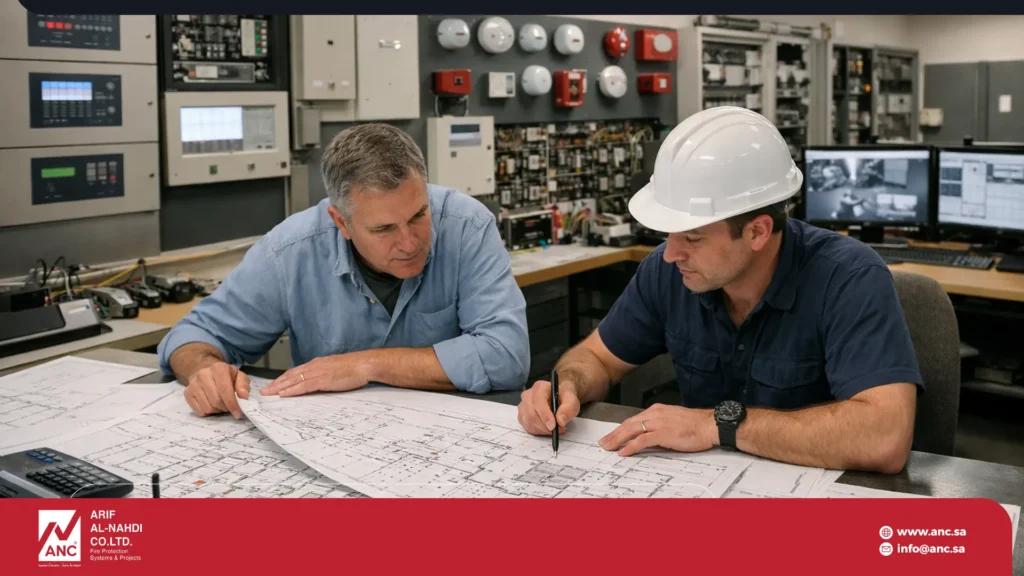
1- Schematic diagram
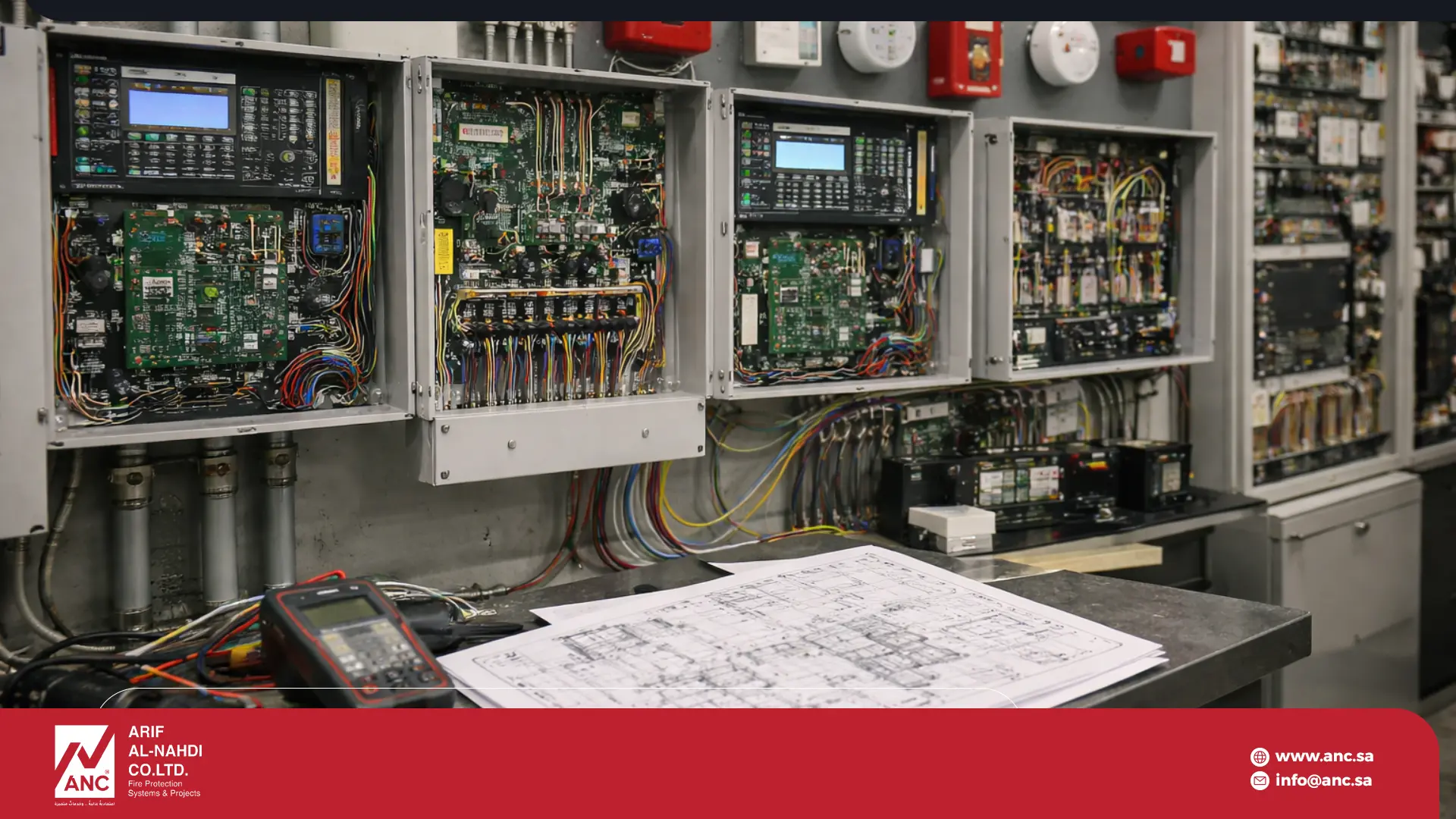
A schematic diagram shows you the logical relationship between the main parts of the system. It usually focuses on how the fire alarm control panel, detectors, manual call points, modules, sounders, and outputs relate to each other functionally.
This is often what you are actually looking for when you search for a fire alarm system circuit diagram.
It helps you understand how the system works logically, even though it does not necessarily show exact device positions or detailed cable routing in the building.
You should use a schematic when you need to understand:
- how the system works logically
- how components relate to each other
- how signals and outputs are organized
- how to discuss the system during technical coordination
A schematic is useful, but it does not tell you everything. It does not replace layout drawings, schedules, or approved documentation.
If you need help interpreting the logic behind your fire alarm documents, you can request technical guidance from our team before proceeding with procurement or execution.
2- Layout drawing
A layout drawing shows you the physical placement of devices on the building plan. This type of fire alarm system drawing helps you see where smoke detectors, heat detectors, manual call points, horn/strobes, panels, annunciators, and interfaces are located in relation to rooms, corridors, exits, and building services.
This drawing is useful when you want to check how the fire alarm system fits the space and whether the placement works with architectural and MEP coordination. However, it does not always explain the system logic or how circuits are grouped.
You should use a layout drawing when you need to understand:
- where devices are intended to be installed
- how the system appears on the floor plan
- whether there may be coordination issues
- how the device distribution supports the building layout
If you want a clearer understanding of your device layout before installation or scope review, you can request a technical consultation.
3- Riser / one-line diagram
A riser or one-line diagram gives you a system-level view across floors or major building sections. It is especially useful if your project includes multiple floors, repeaters, multiple panels, or broader building-wide coordination.
Instead of showing every device in detail, this drawing helps you understand vertical organization, major circuit paths, and how the system is distributed across the building. That makes it valuable during technical review, coordination meetings, and handover checks.
A riser diagram is helpful because it gives you a quick summary of the system architecture. At the same time, it does not replace detailed layout drawings, schedules, or cause-and-effect documents.
If you need support reviewing a riser or one-line diagram as part of your project package, you can send your drawings for review.
How to read a fire alarm wiring diagram step by step?
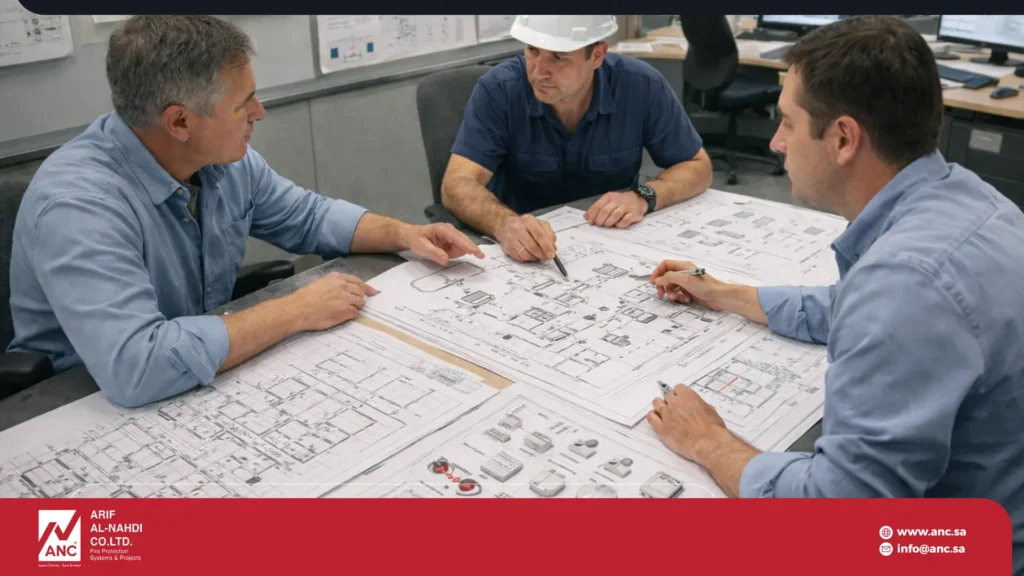
Reading a fire alarm system circuit diagram becomes much easier when you follow a structured sequence. Instead of trying to read the whole drawing at once, you can work through it step by step.
1. Start at the control panel
Begin with the fire alarm control panel. This gives you a reference point for the rest of the drawing and helps you understand where the system logic starts.
2. Identify the circuit type
Check whether the drawing shows initiating circuits, notification circuits, signaling line circuits, monitored interfaces, or output/control functions.
Common labels may include:
- FACP / FACU
- IDC
- NAC
- SLC
- PSU
- module
- annunciator
3. Trace the devices in order
Follow the sequence from the panel through the connected devices. This helps you understand how the system is grouped and how the drawing presents its logic.
4. Read labels and notes carefully
A line by itself is never enough. You need to read terminal references, loop numbers, zone labels, device tags, and note text carefully to interpret the diagram correctly.
5. Check how supervision is shown
On a conventional fire alarm system wiring diagram, you will often see grouped circuits and area-based references. On an addressable fire alarm system wiring diagram, you will usually see loop references, device addresses, and module identifiers instead.
6. Review outputs and interfaces
Do not focus only on detectors and sounders. A fire alarm drawing may also include interfaces with lifts, doors, HVAC shutdown, remote annunciation, suppression links, or other control functions.
7. Compare with related documents
You should always read the wiring drawing together with the layout, riser, schedules, and cause-and-effect document if available. No single drawing gives you the complete picture.
If you want help interpreting a fire alarm wiring package before review or quotation, you can request a technical consultation.
Symbols, zones, loops, and labels explained
Common symbols used on fire alarm drawings
One reason you may find a fire alarm system drawing difficult to read is that symbol styles vary from one consultant, project, or manufacturer format to another.
Common symbols may represent:
- smoke detector
- heat detector
- manual call point
- horn or horn/strobe
- control panel
- repeater or annunciator
- monitor module
- control module
- interface to doors, HVAC, elevators, or suppression systems
The safest approach is simple: always check the drawing legend first. A generic example may help you understand the idea, but the project legend is the real reference for interpretation.
If your symbol set or drawing legend is unclear, you can ask for a technical review before making assumptions.
How zones are represented?
A zone is usually an area-based grouping used to organize part of the fire alarm system. On the drawing, zones may be shown by floor, building area, panel reference, or circuit grouping.
This matters especially when you are reading a conventional fire alarm system wiring diagram, because the panel often identifies the alarm by zone rather than by the exact device. In other words, you may know the area of the alarm, but not the exact initiating point until further checking is done.
This is why zone labels are useful, but they should not be confused with device-level identification.
If you need help understanding zone-based alarm representation in your project documents, you can request technical support.
Loops, addresses, and device labels
In an addressable fire alarm system wiring diagram, the notation usually becomes more detailed. Instead of only showing grouped areas, the drawing may show loop numbers, device addresses, module labels, and location text.
These terms are not the same:
- Loop means the signaling path or circuit grouping
- Address means the identity of a specific device or module
- Location text describes where the device is installed
- Module label identifies the related monitor or control point
This extra detail can give you better visibility during troubleshooting, testing, maintenance, and future expansion. However, that benefit depends on the documentation being clear and properly updated.
If you want help reviewing loop and address notation before product selection or system modification, you can request a consultation.

Addressable vs conventional wiring: what changes on the diagram?
One of the most common reasons you may search for a fire alarm system diagram is to understand the difference between addressable and conventional representation.
At a practical level:
- a conventional fire alarm system wiring diagram usually shows grouped circuits and area-based identification
- an addressable fire alarm system wiring diagram usually shows device-level identity, loop references, and more detailed labeling
Addressable vs Conventional Fire Alarm Wiring at a Glance
System Type | Circuit Concept | What the Panel Identifies | Typical Drawing Style | Expansion Flexibility | Troubleshooting Visibility |
Conventional | Zone-based | Usually the alarm zone | Grouped areas and simpler circuit references | More limited | Area-level visibility |
Addressable | Loop / device-based | Often the specific device or module | Loops, addresses, modules, detailed labels | Higher | Device-level visibility |
This does not mean one system is always better than the other. The right choice depends on your building size, operational needs, future expansion plans, coordination complexity, and documentation requirements.
From a document-review perspective, the difference affects how you read alarms, faults, labels, maintenance records, and expansion possibilities.
If you are comparing system options and need help matching the right approach to your facility, you can request a technical consultation or ask for a quotation.
Also read: Conventional vs Addressable Fire Alarm System: A Decision Guide for Saudi Projects

Cause-and-effect matrix: the document behind system response
A fire alarm system diagram may show you devices, circuits, and relationships, but it does not always tell you how the system is supposed to respond when a specific event occurs. That is the role of the cause-and-effect matrix.
In simple terms:
- Cause = the initiating event
- Effect = the required response
For example, a detector event may trigger:
- notification devices
- lift recall
- door release
- HVAC shutdown
- signal transfer to another system
- release or monitoring actions
This document matters because it connects the drawing to actual system behavior. It helps you review the intended logic, understand interface requirements, and reduce confusion during testing, commissioning, and handover.
If you have drawings but no clear cause-and-effect reference, the documentation may still be incomplete for proper review.
If you need help checking whether your documentation is complete enough for review or project execution, you can request a document assessment.
Common mistakes when interpreting fire alarm schematics
Many mistakes happen not because the drawings are impossible to understand, but because small assumptions lead to bigger misunderstandings later.
Common mistakes include:
- confusing a layout drawing with a wiring diagram
- assuming all symbols are universal
- reading zone labels as exact device identity
- ignoring interfaces and auxiliary controls
- relying on a generic internet example instead of project documents
- skipping cause-and-effect review
- assuming a simple fire alarm system diagram is enough for execution
Another common issue is outdated documentation. A drawing may once have been correct, but later changes, retrofits, or red-line revisions can make it unreliable if the records were not updated properly.
If you want to avoid misinterpretation before installation, handover, or maintenance planning, you can send your drawings for technical review.
Also check: Fire Alarm System Components: Panels, Detectors, Modules, and Wiring Explained

How ANC Supports Your Project in Saudi Arabia?
We support clients across different stages of fire alarm projects, from early drawing review to technical coordination, system selection, testing, and long-term maintenance support.
Our role is to help you evaluate fire alarm drawings and related project requirements in a more structured way, so your decisions are based on actual project conditions rather than assumptions.
1- Fire Alarm Drawing and Document Review
We help you review available fire alarm drawings and supporting documents so you can understand what the package actually shows and what may still be missing.
This includes support in reading layout drawings, schematics, risers, wiring-related documents, and other supporting records that affect project coordination, quotation readiness, and technical review.
Our goal is to help you move from fragmented documents to a clearer project picture before the next stage begins.
2- Fire Alarm System Understanding and Scope Clarification
Many projects include drawings without enough clarity around what each document is meant to communicate.
We help you understand the difference between drawing types, how they relate to one another, and which details matter most for system review, procurement planning, and coordination.
This makes it easier for you to assess the actual fire alarm scope with fewer misunderstandings and fewer delays later in the process.
3- Support for Fire Alarm System Selection
Once the available documents are clear enough, we help you align the project requirement with the most suitable fire alarm system path.
This support is not limited to listing components. We help you look at the wider requirement, including project type, system architecture, coordination needs, operational expectations, and future expansion considerations.
That way, the selected scope is more closely matched to the real application.
4- Technical Coordination Support
Fire alarm projects often involve coordination challenges between drawings, interfaces, field requirements, and project expectations.
We support you during this stage by helping clarify what needs to be reviewed before procurement, implementation, or final technical decisions move forward.
This is especially useful when the available documents are incomplete, when different stakeholders interpret the same drawings differently, or when the scope needs better alignment before execution.
5- Testing and Commissioning Support
A drawing package becomes more valuable when it can be linked clearly to how the system is expected to perform during testing and handover.
We support this stage by helping you review the documented system against expected operational logic, interface requirements, and project handover needs.
This helps you approach testing and commissioning with a clearer understanding of what should be verified and what should already be documented.
6- Maintenance and Long-Term Support
Our role does not stop at early review or system selection. We also support clients who need ongoing maintenance-related guidance, technical follow-up, and a clearer understanding of how the installed system should be reviewed over time.
This is especially important when facilities face recurring issues, unclear documentation, or the need to move from initial project delivery into a more structured maintenance and support phase.
7- Support for Conventional and Addressable Fire Alarm Systems
Different projects require different levels of system visibility, flexibility, and future expandability.
We support both conventional and addressable fire alarm system requirements, helping you understand how each architecture affects documentation, device identification, coordination, troubleshooting visibility, and long-term service planning.
This gives you a more practical basis for deciding which system direction is more suitable for your facility and project conditions.
Our products:
1- Intelligent Addressable Gas Detection and Alarm System – BR.022
2- Maxlogic Intelligent Addressable Smoke Damper Control Module – MM.BRS.YD.001
3- Maxlogic ML-122X Intelligent Addressable Fire Alarm Control Panel – MM.BRS.YD.007
4- Maxlogic Intelligent Addressable Aspirating Smoke Detector – MM.BRS.YD.052
5- Conventional Gas Detection & Alarm System – MM.BRS.YD.061
6- Conventional Fire Extinguishing Control Panel – MM.BRS.YD.004
7- Conventional Fire Detection and Alarm Systems – MM.BRS.YD.058
8- Approved Marine Type Fire Detection and Alarm Systems – MM.BRS.YD.037
9- Intelligent Smoke Damper Control Modules – MM.KTL.YD.005
10- Industrial Gas Detection & Alarm System – MM.BRS.YD.064
11- Maxlogic SPRVSR+ System- Graphical Monitoring System – MM.BRS.YD.031
If you want support with drawing review, system selection, technical coordination, testing, or maintenance planning, you can request a consultation or ask for a quotation.
What to check before review, handover, or quote request?
Before you request a review, quotation, or technical support, it helps to prepare the information that allows a technical team to understand your requirement clearly.
Checklist: before you request a fire alarm drawing review or quotation
- facility type
- project location
- new project or retrofit
- preferred system type, if known
- available drawings and schedules
- panel and device information, if available
- required interfaces
- testing or commissioning scope
- maintenance expectations
- owner or consultant requirements
Fire Alarm Drawing Review Request Template
You can structure your request like this:
- Project name:
- Location:
- Facility type:
- New installation or retrofit:
- Available documents:
- Preferred system type:
- Required interfaces:
- Main issue or objective:
- Support needed:
- Timeline:
This makes it easier for you to explain whether you need help understanding a fire alarm system drawing, reviewing a fire alarm system circuit diagram, comparing an addressable fire alarm system wiring diagram, or checking a conventional fire alarm system wiring diagram before the next project step.
If you are ready to move forward, you can request a quotation or book a technical consultation based on your project documents.
Conclusion
A fire alarm system diagram becomes much more useful when you read it as part of a full documentation set. Schematics help you understand logic, layout drawings show placement, risers summarize architecture, and a fire alarm system circuit diagram helps you understand circuit relationships more clearly.
At the same time, a simple fire alarm system diagram may help you understand the concept, but it is not enough for real project execution. You also need to understand how documentation changes between an addressable fire alarm system wiring diagram and a conventional fire alarm system wiring diagram, because that difference affects visibility, troubleshooting, maintenance, and future coordination.
When you read the right drawing in the right way, you reduce confusion, improve communication, and make better technical decisions for your project.
If you need support with fire alarm drawings, system understanding, scope review, or quotation, you can contact us for a technical consultation or request a quote.
FAQs About Fire Alarm System Diagram & Wiring
1- What is a fire alarm system diagram?
A fire alarm system diagram is a document that shows how the fire alarm system is arranged, connected, or intended to operate. Depending on the document type, it may show layout, circuit logic, system architecture, or response relationships.
2- What is the difference between a simple fire alarm system diagram and a detailed project drawing?
A simple fire alarm system diagram helps you understand the concept at a basic level. A detailed fire alarm system drawing is more useful for real project review because it includes clearer labels, device references, interfaces, and coordination information.
3- How do you read a fire alarm system circuit diagram?
You start from the control panel, identify the circuit type, trace the connected devices, read the labels and notes, and compare the drawing with the layout, riser, and cause-and-effect documents where available.
4- What is shown in an addressable fire alarm system wiring diagram?
An addressable fire alarm system wiring diagram usually shows loop references, device addresses, module identities, and more detailed notation that supports clearer monitoring and troubleshooting.
5- What is shown in a conventional fire alarm system wiring diagram?
A conventional fire alarm system wiring diagram usually shows grouped circuits and alarm zones, where the alarm is commonly identified by area or circuit group rather than by exact device.
6- Why is the cause-and-effect matrix important?
It shows what response should happen after a specific event. Without it, the drawing may show the system connections but still leave the operational logic unclear.