
When you search for fire alarm system maintenance, you are usually trying to answer several practical questions at once.
You may want to know:
- what maintenance actually includes
- how often it should be done
- what a proper checklist should cover
- why trouble signals keep coming back
- what affects maintenance cost
- what you need before requesting service
For a commercial fire alarm system, these questions affect more than routine operations. They influence system readiness, documentation quality, fault response, and long-term reliability.
This guide helps you understand the topic in a practical way. It is written to support decision-making, service planning, and scope review without turning into a repair manual or a pricing page.
If you want help reviewing your current maintenance scope, you can request a technical consultation.
Important notice: This article is for awareness and decision support only. Your actual maintenance procedure, frequency, and reporting requirements depend on the installed system, manufacturer instructions, adopted standards, project requirements, and authority expectations.
What fire alarm system maintenance includes?
When you think about fire alarm system maintenance, it is important not to reduce it to one simple question: “Does the alarm still work?”
In practice, maintenance is a wider process that helps you keep the system visible, testable, documented, and ready for use.
Fire Alarm System Maintenance usually includes five core areas
- Inspection: You review the visible condition of the panel, devices, wiring access points, and related equipment.
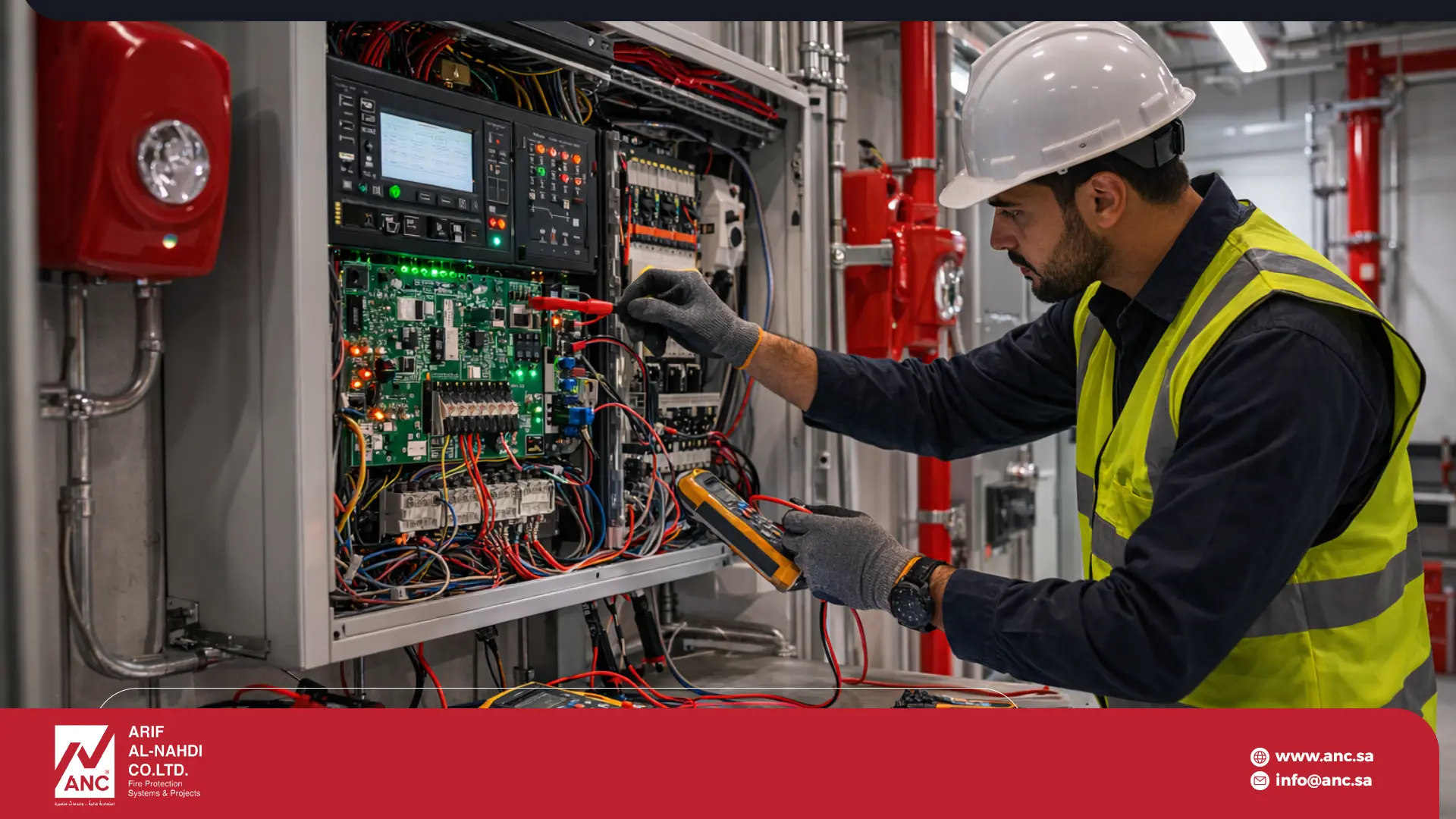
- Testing: You verify that selected parts of the system respond correctly during planned maintenance activities.
- Cleaning and condition review: You check whether contamination, obstruction, or physical deterioration may affect performance.
- Fault review and corrective follow-up: You review active troubles, recurring issues, and unresolved deficiencies.
- Documentation and reporting: You log findings, record corrective actions, and keep maintenance history usable for future review.
A practical way to understand Fire Alarm System maintenance
You can think of maintenance in four layers:
- Routine observation: Basic awareness checks such as panel status and visible abnormalities.
- Scheduled inspection and testing: Planned technical review of devices, power condition, interfaces, and reporting items.
- Fault response: Action taken when trouble signals, repeated faults, or abnormal conditions appear.
- Annual review and reporting: A broader maintenance cycle used to assess records, deficiencies, completed actions, and ongoing service needs.
For a commercial fire alarm system, this broader view matters because the system is rarely just a panel and a few devices. It often includes multiple circuits, interfaces, records, and service expectations.
If you need help defining the right maintenance scope for your facility, you can request a service review or ask for a quotation.
Read more: Fire Alarm System Diagram: A Practical Guide to Drawings, Wiring, Symbols, and Review
Who We Are and How We Support You?
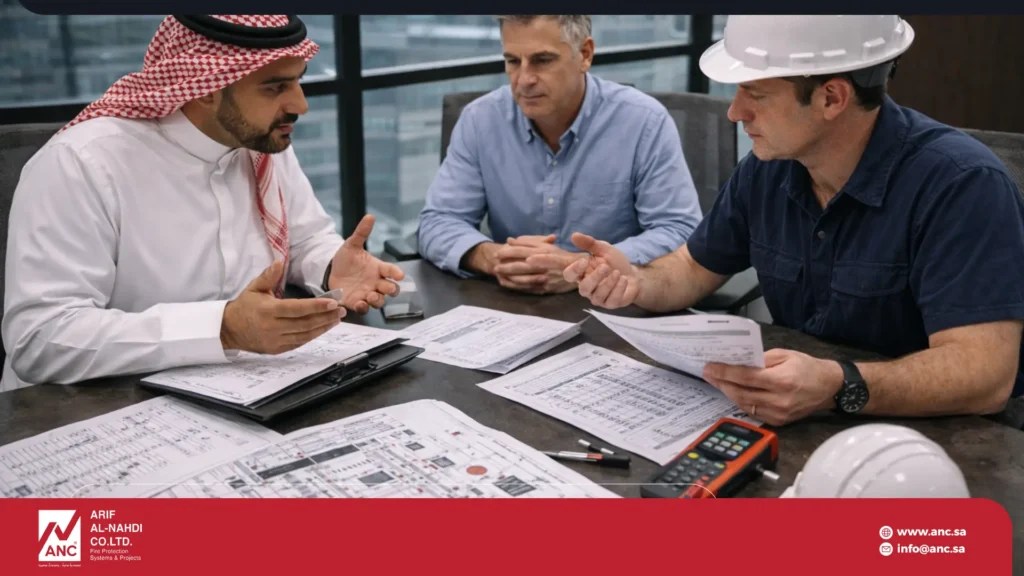
ANC supports clients in Saudi Arabia across different stages of fire alarm maintenance, from routine review and scheduled service planning to fault follow-up, reporting, and long-term system readiness.
Our role is to help you evaluate your fire alarm maintenance requirements in a more structured way, so your decisions are based on actual system condition, service scope, and site needs rather than assumptions.
1- Fire Alarm Maintenance Review
We help you review the current condition of your fire alarm system from a maintenance perspective, so you can understand what should be checked, what may already be affecting system readiness, and what level of service may be appropriate for your facility.
This is especially useful when your site has incomplete records, recurring issues, or uncertainty about the current maintenance status.
2- Routine and Annual Maintenance Support
We support both routine and annual maintenance needs as part of a broader fire alarm system readiness approach.
This includes helping you assess what should be included in the service scope, how maintenance activities relate to the condition of the installed system, and what type of follow-up may be needed after inspections, testing, or recorded deficiencies.
3- Operational Testing Support
A maintenance program is not only about visual review. It also depends on understanding how the system performs during testing and whether the documented system condition matches actual operation.
We support clients who need a clearer view of testing scope, expected system response, and the role of operational verification within maintenance planning.
4- Reporting and Documentation Support
Good maintenance depends heavily on usable records.
We help you organize the reporting side of fire alarm maintenance, including the review of service findings, deficiencies, follow-up actions, and maintenance history, so you have clearer technical visibility and better continuity over time.
This is especially important when your team needs records that support audits, reviews, renewals, or internal facility management processes.
5- Fault Follow-Up and Technical Review
Recurring faults should not be treated as isolated issues without context.
We support clients who need technical follow-up for recurring troubles, unclear fault patterns, or unresolved maintenance concerns, helping you understand what may need deeper review and how those issues affect the wider maintenance scope.
This is particularly valuable when repeated signals, intermittent problems, or incomplete past service records make decision-making more difficult.
6- Maintenance Planning Based on Actual Site Conditions
Not every facility needs the same maintenance approach.
We help you plan maintenance based on actual site conditions, including the installed system, the building type, the visible issues, the service history, and the level of support required going forward.
This helps you move toward a more suitable maintenance scope instead of relying on generic assumptions or one-size-fits-all expectations.
Our goal is to help you move forward with clearer technical visibility, better documentation, and fewer surprises later.
If you want support with annual maintenance, testing, reporting, or fault follow-up, you can book a technical consultation or request a quote.
Also check: Fire Alarm System Components: Panels, Detectors, Modules, and Wiring Explained
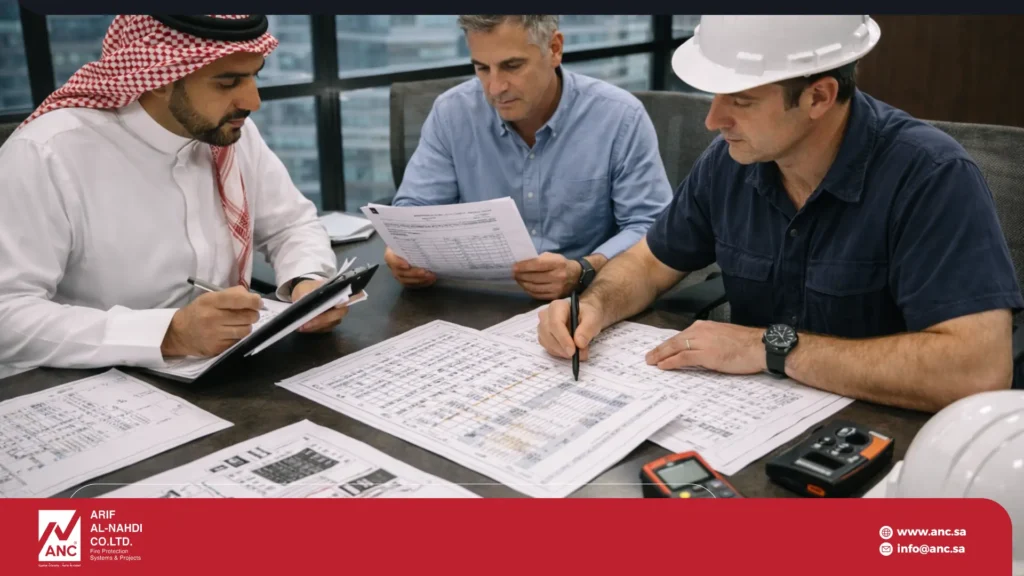
Recommended maintenance schedule: how often should a fire alarm system be maintained?
The practical answer is that Fire Alarm System maintenance does not happen at one single interval.
Instead, it usually includes:
- routine awareness checks
- periodic inspections
- scheduled functional testing
- annual review and documentation
That is why it is more useful to think in terms of maintenance layers rather than one universal frequency.
Daily / weekly / monthly awareness checks
These checks are usually simple status-awareness tasks.
They may include:
- confirming that the panel appears normal
- checking whether active trouble signals exist
- noticing visible physical damage
- spotting blocked or inaccessible devices
- identifying obvious AC power or battery concerns
These are not the same as formal testing. Their main purpose is to help you notice issues early.
Why do these checks matter?
Routine awareness checks help you:
- detect visible abnormalities sooner
- reduce the risk of ignored troubles
- support faster fault escalation
- avoid carrying simple issues forward for long periods
Periodic inspection and testing
Periodic maintenance is more formal.
It may include:
- visual inspection
- functional testing
- notification appliance checks
- interface verification
- power and battery review
- device condition review
The exact frequency depends on:
- system type
- component type
- manufacturer instructions
- adopted standard basis
- project requirements
- authority expectations
Fire Alarm Maintenance Schedule by Task Type
Task Area | Typical Activity | Typical Interval | Who Uses the Record | Why It Matters |
Routine status awareness | Panel status check, visible issue review | Daily / weekly / monthly depending on site practice | FM team, operations | Helps you identify obvious abnormalities early |
Visual inspection | Panel, devices, accessibility, visible condition | Periodic per maintenance plan | Service team, FM team | Helps identify deterioration and missing items |
Functional testing | Selected devices, circuits, and responses | Periodic per maintenance plan | Service team, owner representatives | Confirms system response in practice |
Power and battery review | AC condition, battery condition, charger indicators | Periodic and during service visits | Service team, FM team | Supports standby readiness |
Interface verification | Review of linked functions such as doors, HVAC, lifts | Periodic and during major reviews | Service team, consultants | Confirms connected responses still work as intended |
Annual review and documentation | Consolidated review, reports, deficiency tracking | Commonly annual within service workflow | Owner, FM team, service provider | Supports continuity and service planning |
Annual review and documentation
If you are asking whether annual maintenance matters, the answer is yes.
For many facilities, annual review is a normal part of the maintenance and compliance workflow. However, the exact scope is not identical from one site to another.
It usually depends on:
- occupancy type
- installed system type
- owner requirements
- adopted standards
- project-specific conditions
- authority expectations
If you want a clearer maintenance plan for your building, you can request a maintenance consultation.
Read more: Types of Fire Alarm Systems: A Comprehensive Classification
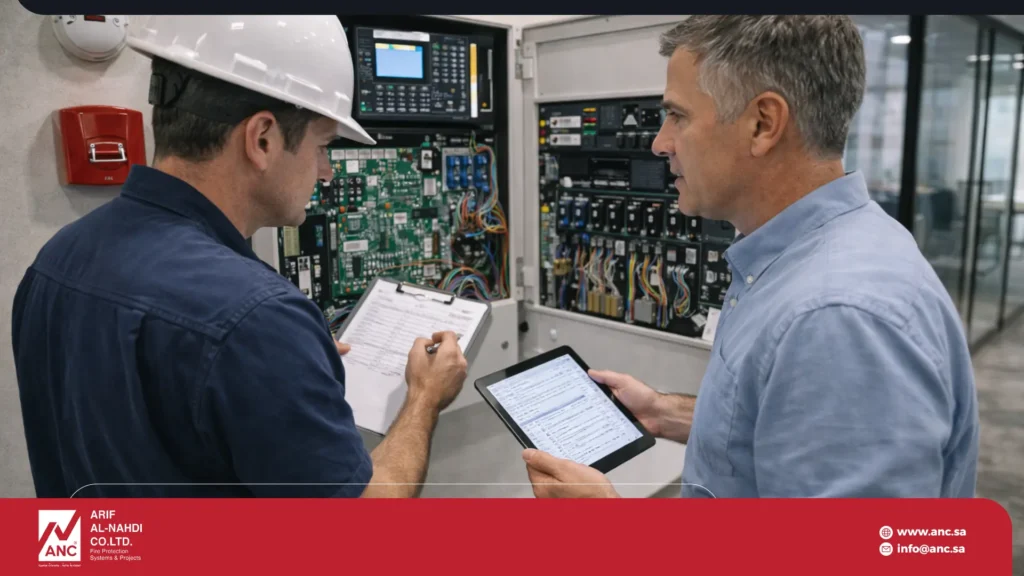
Fire alarm maintenance checklist for commercial facilities
If you want a practical fire alarm system maintenance checklist pdf, the most useful version is one that supports both technical review and service follow-up.
For a commercial fire alarm system, your checklist should help you confirm system condition, identify deficiencies, and prepare the right maintenance scope.
Panel, power, and battery checks
Start with the panel because it is the system’s main supervision point.
Your checklist should include:
- panel normal status
- active alarms or troubles
- AC power condition
- battery condition
- charger indicators
- event log review
- repeated or unresolved trouble history
Why this section matters?
Panel review helps you understand:
- whether the system shows normal operation
- whether faults are active or recurring
- whether power issues may affect reliability
- whether follow-up action is needed
Initiating devices and field equipment
This section should cover the field devices that affect detection and alarm response.
Include items such as:
- smoke detectors
- heat detectors
- manual call points
- monitor modules
- control modules
- connected field interfaces
Check for:
- obstruction
- contamination
- physical damage
- accessibility
- missing labels
- visible deterioration
- expected response during the relevant test activity
Notification appliances, interfaces, and records
A strong fire alarm system maintenance checklist pdf should also include outputs and documentation.
Check items such as:
- sounders
- strobes
- annunciation devices
- monitored outputs
- door interfaces
- HVAC interfaces
- lift interfaces
- logbooks
- deficiency records
- corrective-action tracking
Commercial Fire Alarm System Maintenance Checklist
Use this as a practical reference:
- Panel shows normal status or documented abnormal condition
- Active alarms, troubles, and supervisory signals reviewed
- AC power and battery condition checked
- Event logs reviewed for recurring issues
- Smoke and heat detectors checked for obstruction or damage
- Manual call points checked for access and condition
- Notification appliances reviewed
- Interfaces reviewed where applicable
- Visible wiring and accessible field condition reviewed
- Deficiencies logged clearly
- Corrective actions recorded and followed up
- Maintenance history updated
If you want a checklist that fits your building type and system condition, you can request a technical consultation or ask for a quotation.
Also read: Fire Detection System: Types, Technologies, How It Works, and How to Choose the Right Solution?
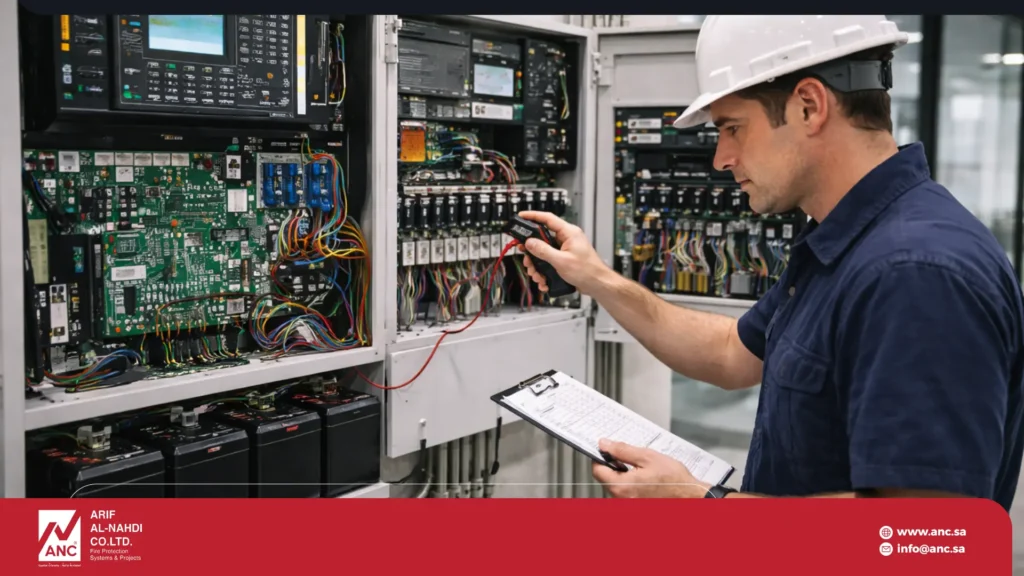
Ground faults and other common trouble conditions
A ground fault in fire alarm system circuits is one of the most common trouble conditions you may see.
In simple terms, it means there is an unintended electrical path from supervised system wiring to ground or building metal.
This may result in:
- persistent trouble signals
- intermittent trouble conditions
- unstable circuit behavior
- repeated service visits without full resolution
Common causes of a ground fault
A ground fault may be linked to:
- damaged cable insulation
- moisture ingress
- pinched wiring
- device or base issues
- outdoor or exposed circuits
- contamination inside a cabinet or panel
What you may notice on site?
You may first notice the problem through:
- recurring trouble signals
- faults after weather changes
- trouble after recent modifications
- repeated resets without lasting improvement
What you should not do?
Do not:
- ignore the trouble signal
- bypass supervision casually
- assume the control panel is always the only problem
- treat repeated faults as harmless nuisance events
Ground-fault investigation should be handled through qualified technical review and proper service practice.
If your site has recurring trouble signals or a suspected ground fault in fire alarm system wiring issue, you can request a fault assessment.
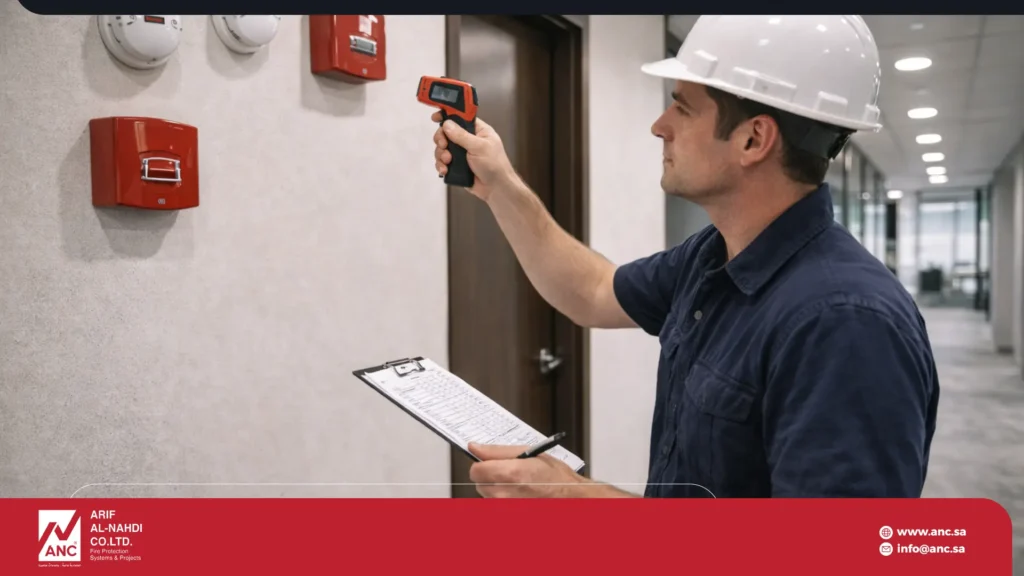
What affects fire alarm maintenance cost?
Many users search for fire alarm system price, but what they actually need is a better understanding of maintenance cost.
A maintenance quote is based on service scope, not only on whether a system is installed.
Main cost factors
Your maintenance cost may be affected by:
- building size
- number of devices
- addressable or conventional architecture
- accessibility of devices and panels
- required testing scope
- documentation and reporting expectations
- recurring faults
- spare-parts availability
- emergency callout expectations
- multi-site service requirements
Three cost categories you should separate
- Routine preventive maintenance
Planned visits intended to keep the system ready and identify issues early. - Corrective maintenance
Work required after faults, failures, or deficiencies are identified. - Annual contract scope
A broader agreement that may include periodic visits, testing, reports, and response expectations.
Why fixed pricing is misleading?
A fixed fire alarm system price for maintenance can be misleading because two buildings with similar systems may still need very different service scopes.
A useful quote usually requires:
- site location
- installed system information
- device quantity
- current issues
- required reports
- service frequency
- repair or spare-parts expectations
If you want a maintenance quote based on your actual site condition, you can request a quotation and share your project details.
Best practices that reduce downtime and nuisance faults
1- Build a maintenance program, not a reactive callout habit
The most effective way to manage fire alarm system maintenance is to build a planned program instead of waiting for problems to force action.
A stronger maintenance approach includes:
- scheduled service
- repeatable checklists
- documented findings
- trend review
- corrective-action follow-up
This helps you reduce hidden deterioration and avoid treating every problem as an isolated emergency.
2- Watch for repeated fault patterns
If the same trouble keeps returning, do not treat it as a one-time issue.
Repeated faults often indicate:
- unresolved root causes
- weak follow-up
- incomplete repair
- environmental or circuit-related stress
- outdated documentation
3- Protect circuits and sensitive electronics
If you are considering a surge protector for fire alarm system resilience, treat it as part of broader system protection planning.
This may matter more when your site has:
- unstable power quality
- lightning exposure
- long cable runs
- exposed outdoor circuits
- sensitive electronics prone to stress
Surge-related protection is not a universal add-on for every building, but it can be an important design and maintenance consideration in the right context.
4- Keep records usable for audits, reviews, and renewals
Record quality has a direct effect on maintenance quality.
Keep records such as:
- service reports
- test results
- deficiencies
- corrective actions
- date history
- updated system notes where needed
These records help you support:
- better continuity
- clearer technical review
- easier fault tracking
- more informed maintenance decisions
If you want a more structured preventive maintenance approach, you can book a technical consultation.
Also check: Fire Alarm System Control Panel (FACP) Guide for KSA: Types, Circuits, Annunciators, and How to Choose
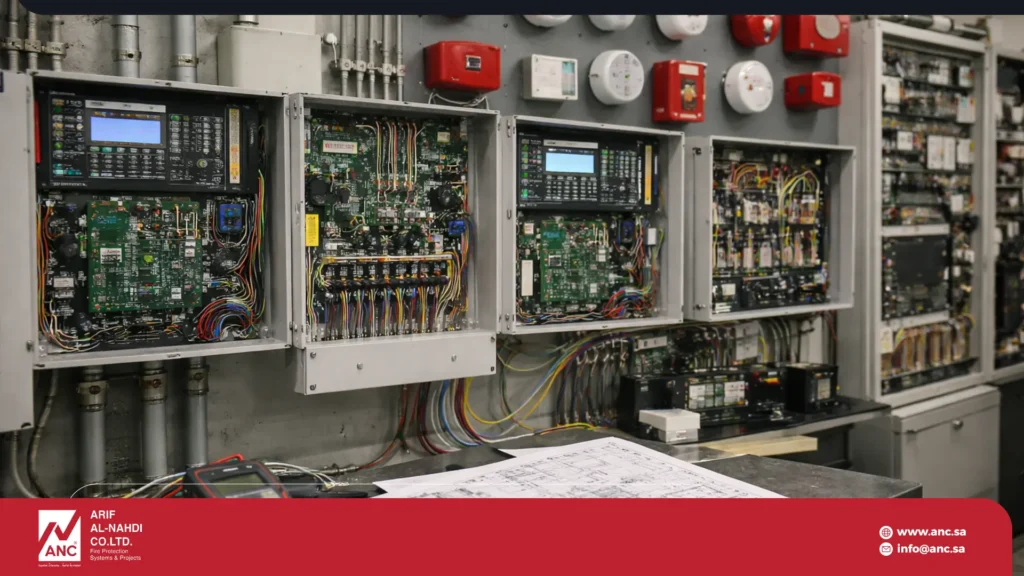
Annual maintenance in Saudi Arabia: what to expect before you request service?
If you are arranging fire alarm system maintenance in Saudi Arabia, it helps to prepare the key project and system details before requesting service.
What you should prepare?
Try to gather the following:
- facility type
- city and location
- installed system type
- panel brand or model, if known
- current faults or service concerns
- last maintenance date
- whether testing and reports are required
- whether repair parts may be needed
- whether interfaces such as lifts, HVAC, doors, or suppression are involved
What does annual maintenance usually mean in practice?
Annual maintenance is commonly part of the expected fire-system service workflow in Saudi projects.
However, the exact scope still depends on:
- facility type
- installed condition
- owner expectations
- documentation quality
- access conditions
- spare-parts availability
- project and authority requirements
Fire Alarm Maintenance Service Request Template
You can structure your request like this:
- Facility name
- City / location
- Facility type
- Installed system type
- Panel brand / model
- Current issues
- Last maintenance date
- Required service scope
- Interfaces involved
- Preferred visit timing
If you are ready to move forward, you can request service, book a technical consultation, or ask for a quotation.
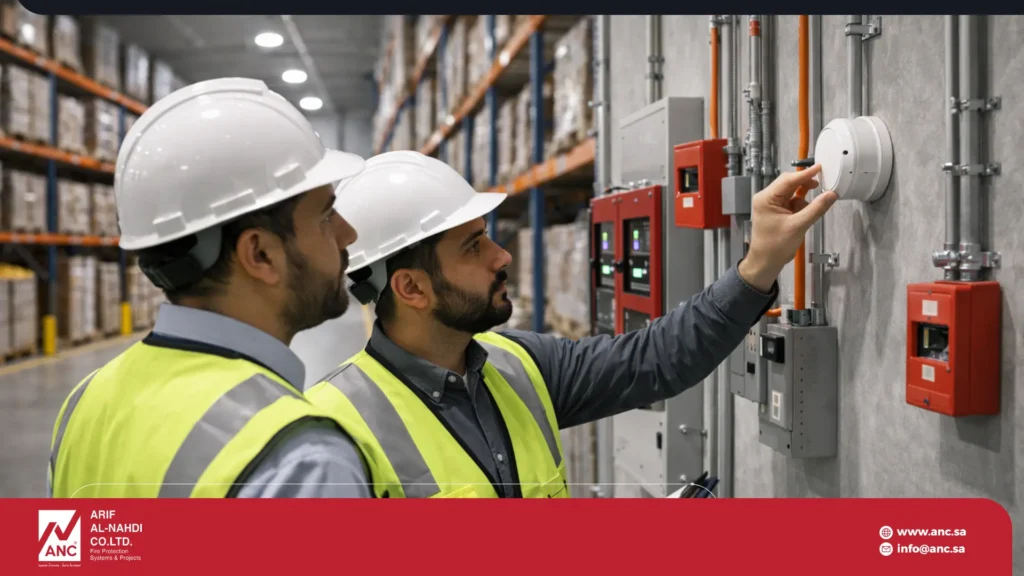
Why Many Facilities in Saudi Arabia Choose ANC for Fire Alarm System Maintenance?
Many clients in Saudi Arabia choose ANC for fire alarm system maintenance because they want more than a basic service visit. They want a maintenance partner that understands the full picture:
1- Broader maintenance support, not just reactive visits
ANC presents fire alarm maintenance as an ongoing readiness function, not only as a response to faults after they happen.
2- Support for routine and annual maintenance
ANC publicly states its role in routine and annual maintenance, which helps clients looking for structured service rather than one-off follow-up.
3- Operational testing and reporting focus
ANC highlights testing and reporting support, which is important when you need maintenance records, service visibility, and clearer follow-up on system condition.
4- Saudi market presence and project understanding
As a Saudi fire and safety company, ANC is positioned around local project support, which is valuable when your maintenance needs are tied to actual facility conditions and service expectations in Saudi Arabia.
5- Technical consultation and service coordination
ANC’s public service positioning includes technical support and customer service pathways, which helps when you need more than a simple maintenance visit.
6- Useful for facilities with recurring issues or unclear scope
If your site has repeated faults, incomplete records, or uncertainty around the right maintenance scope, ANC’s service model is more aligned with review, follow-up, and structured support.
7- Connected view of maintenance, testing, and long-term readiness
ANC’s public content links maintenance with inspection, testing, reporting, and ongoing support, which helps you manage system condition over time instead of treating each issue in isolation.
If you want support with fire alarm system maintenance, testing, reporting, or long-term service planning, you can request a technical consultation or ask for a quotation.
Conclusion
Fire alarm system maintenance is not just a routine checkbox. It is an ongoing readiness process that helps you keep your commercial fire alarm system visible, testable, documented, and easier to manage over time.
When you:
- separate routine checks from formal testing
- use a practical fire alarm system maintenance checklist pdf
- respond seriously to a ground fault in fire alarm system
- evaluate cost based on service scope rather than a generic fire alarm system price
you make better maintenance decisions for your facility.
The right plan depends on your installed system, building condition, documentation quality, and operational needs.
If you need support with annual maintenance, fault review, reporting, or quotation, you can contact us for a technical consultation or request a quote.
FAQs about Fire Alarm System Maintenance
1- How often should a fire alarm system be maintained?
You should think about maintenance as a mix of:
- routine awareness checks
- scheduled inspections
- periodic testing
- annual review
The exact frequency depends on your installed system, component type, manufacturer instructions, adopted standards, and project requirements.
2- What should a fire alarm maintenance checklist include?
A strong checklist should include:
- control panel review
- power supply and battery checks
- detectors
- manual call points
- notification appliances
- interfaces
- visible cable and device condition
- event logs
- deficiencies
- corrective-action records
3- What is a ground fault in a fire alarm system?
A ground fault in fire alarm system circuits is an unintended electrical path from the supervised circuit to ground.
It may be caused by:
- damaged insulation
- moisture
- pinched wiring
- contamination
- device or cable issues
4- How much does fire alarm maintenance cost?
Cost depends on:
- building size
- device count
- system type
- required testing scope
- accessibility
- reporting expectations
- recurring faults
- spare-parts needs
- emergency response expectations
5- Is annual fire alarm maintenance required in Saudi Arabia?
Annual maintenance is commonly part of the expected service workflow for many Saudi projects. However, the exact requirement and scope depend on the facility, installed system, owner requirements, and project conditions.