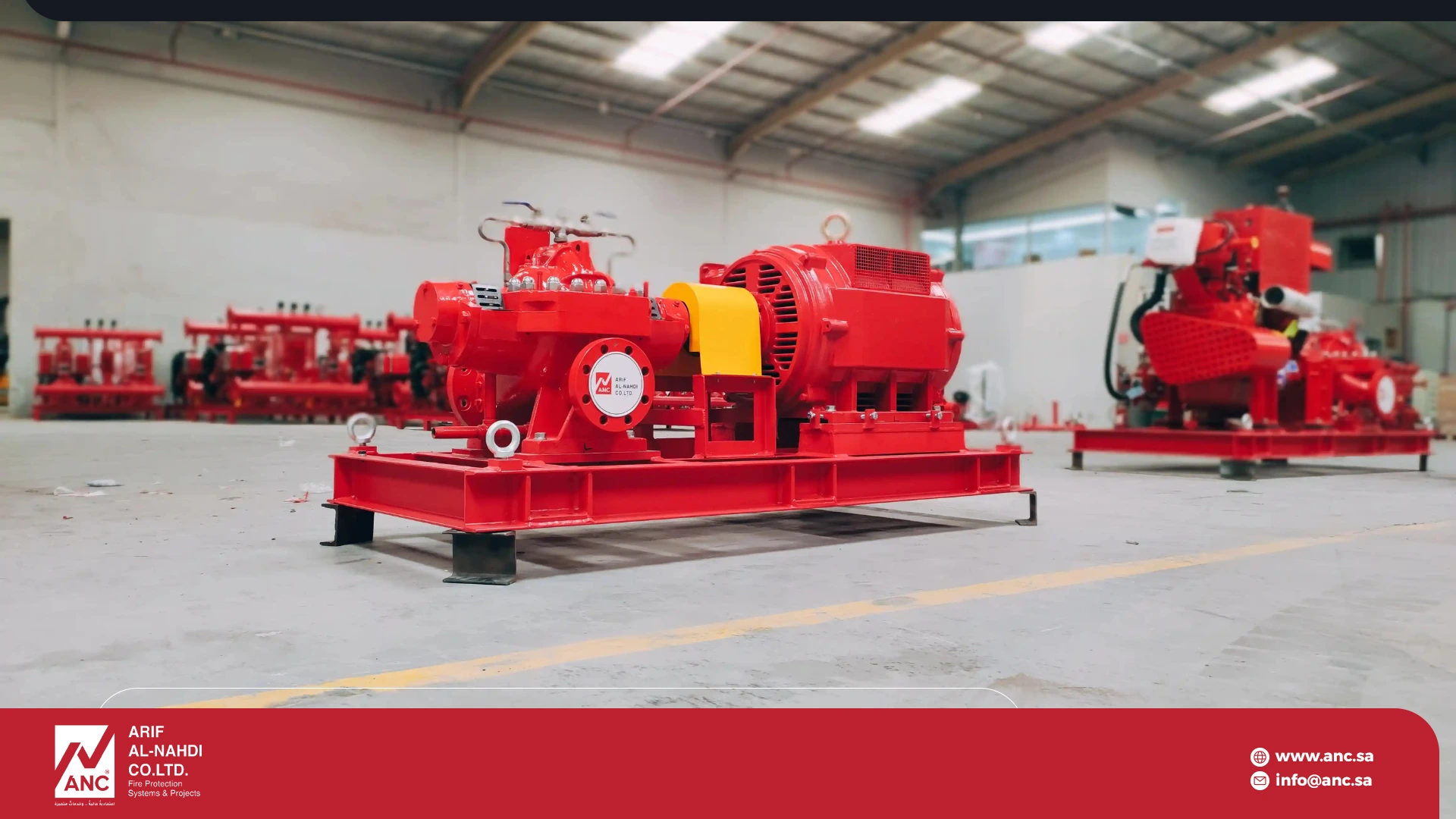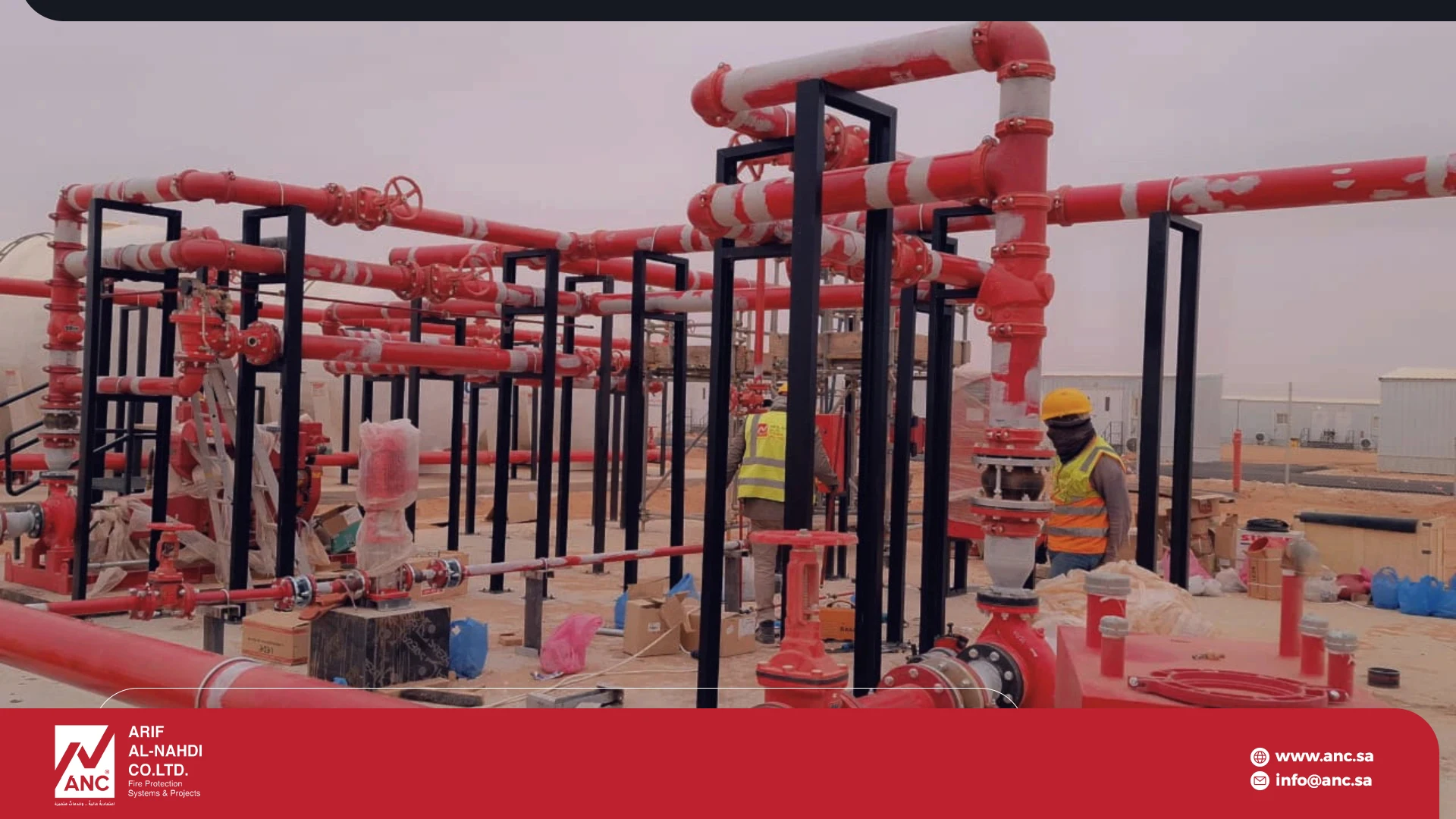


Does your fire pump look “ready” because it works in the routine periodic test—then winter cold arrives and reveals a fault that wasn’t visible? Low temperatures can affect the pump system in quiet ways: water freezing inside pipes, reduced diesel battery efficiency, and mechanical changes that cause pressure loss or unnoticed leaks.
Fire pump winter readiness isn’t measured in minutes during an emergency—it’s measured in facility safety and compliance with NFPA and Saudi Civil Defense requirements.
In this article, the key winter impacts on fire pumps become clear, and how risks drop through proper preparation, insulation, and preventive inspection that keeps readiness intact. Keep reading.
How do fire pumps operate under normal conditions?
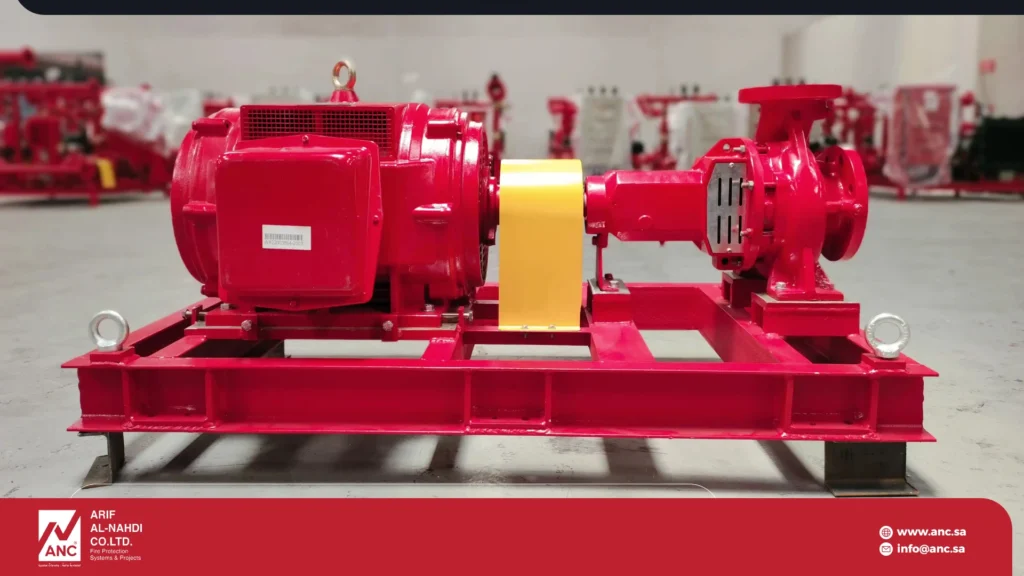
Fire pumps in normal conditions are a core element in ensuring water is available at the required pressure and flow when the fire suppression network is activated. The concept is built on immediate readiness and consistent performance without any delay when an emergency occurs.
The pump’s role in providing pressure and flow.
Dependence on immediate readiness.
The importance of steady performance without delay.
The impact of low temperatures on fire pumps
Low temperatures affect fire pumps because parts of the system depend on the fluidity of water and oils, plus stable mechanical and electrical properties, to ensure the pump starts immediately. When the weather cools noticeably, problems may surface that aren’t noticed until testing—or the moment of an emergency.
Water freezing inside piping and the pump
A temperature drop can slow water movement in sections exposed to cold, and this may develop into freezing at specific points in piping or within the pump body. As water expands when it freezes, it can crack pipes or damage valves and fittings. This type of failure is dangerous because it may remain hidden until the system is actually required to run.
Increased oil viscosity in diesel fire pumps
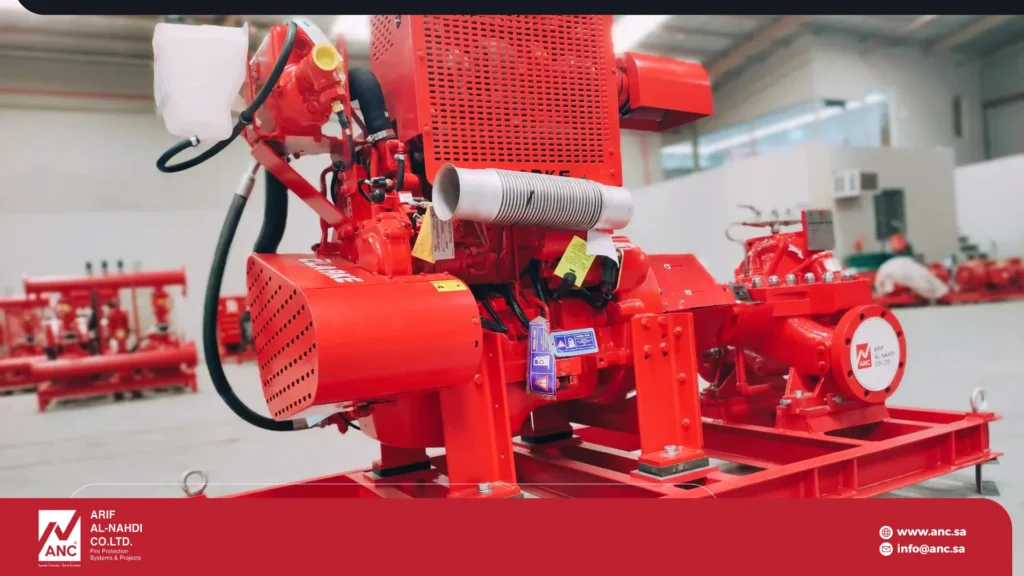
Oil viscosity increases in cold weather, making engine rotation heavier and affecting how quickly it reaches the required performance. This can lead to difficult starting or delayed emergency response—especially if the pump runs in intermittent hours and is suddenly required to start. Loads on certain components may also rise during cold start-up.
Reduced battery efficiency
Battery efficiency drops in cold conditions, reducing starting capability for diesel engines and making starting attempts less successful. This can appear as slow cranking or repeated start attempts—unacceptable in systems expected to operate immediately. For that reason, winter battery performance is directly linked to pump readiness.
Metal contraction and its effect on seals (Seals)
Metal contraction with cold can cause slight changes in mechanical clearances that affect seals and sealing areas. Small leaks may appear unnoticed at first, then over time cause pressure loss in the system or reduced efficiency. The issue becomes more sensitive in systems that are not inspected before and during the winter season.
Read also: Winter Electrical Loads in Winter: When Does a Heater Become a Risk at Home?
Risks of operating fire pumps without winter preparation
The likelihood of fire protection system failure increases when pumps are operated in winter without insulation, heating, and preventive inspection, because cold-related faults can prevent immediate startup or weaken performance at the moment of need. The impact shows up directly in facility safety and compliance with technical requirements.
Failure to start.
Pressure drop on demand.
System failure during an emergency.
Non-compliance with NFPA and Saudi Civil Defense requirements.
Which fire pump types are most affected by cold weather?
Some fire pump types are more affected by cold than others because direct exposure to cold air—or weak insulation—increases the chance of freezing, delayed startup, and pressure loss. This effect grows whenever external components or power sources (such as diesel and batteries) sit outside a safe temperature range.
Outdoor diesel pumps: Quickly affected by colder oil and weaker batteries, which may delay startup during an emergency.
Pumps in uninsulated rooms: Room temperature drops, increasing freezing risk, leaks, and reduced pressure stability.
Networks exposed to cold air: Points in pipes or valves can freeze, weakening response and potentially causing cracks or flow loss.
To identify the most cold-sensitive points in your system and equip them with the right insulation, heating, and inspection, Arif Al-Nahdi Co. Ltd (ANC) provides winter-prep solutions and preventive maintenance for fire pumps based on your facility’s needs.
Read also: Winter Fire Risks: How to Protect Your Home from Heater Fires
How do you protect fire pumps from winter impacts?
Protecting fire pumps in winter is achieved when the system is managed with an “always-ready” mindset, because cold can cause silent faults that only appear at the moment of demand. Risk drops clearly when insulation and heating are combined with periodic inspection and cold-weather-rated oils.
Insulating pump rooms and piping
Thermal insulation helps maintain a stable temperature inside the pump room and reduces piping exposure to cold air. This helps prevent freezing in sensitive points and limits changes in mechanical properties that may cause leaks or pressure loss. Insulation also reduces moisture condensation that can harm certain components over the long term.
Using suitable heating systems
Heating systems are used to ensure diesel fire pumps start easily and engine performance stays stable when temperatures drop. Preparations typically include engine heaters and heating for oil and water depending on system condition and site environment. This reduces response delay and helps the pump reach required performance quickly during emergencies.
Periodic inspections before and during winter
Early inspection uncovers weakness signs that do not appear in normal use, such as pressure decline, slow startup, or small leaks. This includes run testing, checking pressure and flow, and ensuring panels, breakers, and fault indicators operate correctly. The value increases when checks are repeated throughout winter to keep readiness steady without surprises.
Using fluids and oils suitable for cold weather
Choosing oils and fluids suitable for cold weather improves operating efficiency and reduces strain on the engine and moving components. Unsuitable oil thickens in cold conditions in a way that hinders startup and raises loads, while the right grade limits those effects and improves response. This also helps reduce wear and extend the service life of operating components.
Read also: Fixed Fire Pumps vs Portable Fire Extinguishers: Which Is Better?
NFPA requirements for fire pumps in cold weather
NFPA standards set clear requirements to ensure fire pump readiness in cold weather, because any freezing or temperature drop can prevent immediate operation or cause loss in pressure and flow. These requirements aim to maintain a safe operating environment within the system and the pump room.
Maintaining a safe operating temperature.
Preventing freezing inside the system.
Pump room requirements.
Read also: Arif Al-Nahdi Co. Ltd (ANC) at OMAINTEC 2026
The role of Arif Al-Nahdi ANC in winterizing fire pumps
Winter readiness for fire pumps requires an inspection, insulation, and heating plan executed to standards in a way that prevents failures before they appear. Arif Al-Nahdi Co. Ltd (ANC) provides specialized services that help protect pump systems from cold effects and maintain immediate response when needed.
Specialized winter inspection for pumps
Winter inspection focuses on diagnosing weak points that appear with low temperatures, such as slow startup, pressure decline, and the risk of unseen leaks. It includes checking performance indicators and running tests that show real readiness. Results are documented in technical reports that support early corrective actions.
Professional insulation and heating solutions
Insulation and heating solutions are implemented to maintain stable operating temperature and prevent freezing in sensitive parts of the system. These solutions include insulating pump rooms and piping, treating cold-air entry points, and adding suitable heating for diesel engines, oils, and water. Solutions are designed to align practically with site conditions and standards requirements.
Preventive maintenance that ensures readiness
Preventive maintenance improves stable performance by tuning pumps, verifying component integrity, and ensuring operation within required criteria. This includes load testing, checking pressure and flow, and confirming system response without delay. Routine maintenance helps reduce sudden failures and extend the operational life of the system.
For a winter inspection and technical report—or insulation, heating, and preventive maintenance for fire pumps aligned with NFPA requirements—contact Arif Al-Nahdi Co. Ltd (ANC) to assess your system and apply the most suitable solution for your site.
Common mistakes to avoid in winter to protect fire pumps
Fire pump failures increase in winter when the system is treated as if it “always works” without preparation, insulation, and inspection, because cold can cause hidden issues in startup and pressure. The same mistakes often repeat across sites, then show their impact during testing or at the moment of an emergency.
Neglecting insulation.
Operating the pump without inspection.
Relying on outdated systems.
Fire Pump Winterization ensures fire pumps respond without delay when preparation starts early through insulation, heating, and inspections before temperatures drop. Preventive maintenance remains the most important factor for maintaining pressure and flow and keeping performance steady without surprises during emergencies.
To evaluate your pump system and prepare it for winter per NFPA requirements, contact Arif Al-Nahdi Co. Ltd (ANC) for a specialized inspection and practical solutions tailored to your site.
FAQs about the impact of low winter temperatures on fire pumps
1. Can fire pumps freeze in Saudi Arabia?
Yes, this can happen in some regions or exposed sites and with uninsulated piping—especially when temperatures drop at night and the network is exposed to cold air.
2. What is the safe temperature for a pump room?
The safe approach is maintaining a temperature that prevents freezing and ensures readiness at all times per NFPA requirements; pump rooms are often managed to stay warm and stable (the exact number depends on room design, location, and system).
3. Are diesel fire pumps more affected by cold weather?
Yes, because they rely on batteries and engine oil, and both are affected by cold—causing slow startup or delayed response if suitable heating preparations are not in place.
4. Is a winter inspection mandatory?
It may be required under safety/Saudi Civil Defense expectations and facility compliance and maintenance requirements; at minimum it is an operational necessity to document readiness and avoid cold-season failures—contact Arif Al-Nahdi Co. Ltd (ANC) to schedule your winter inspection.