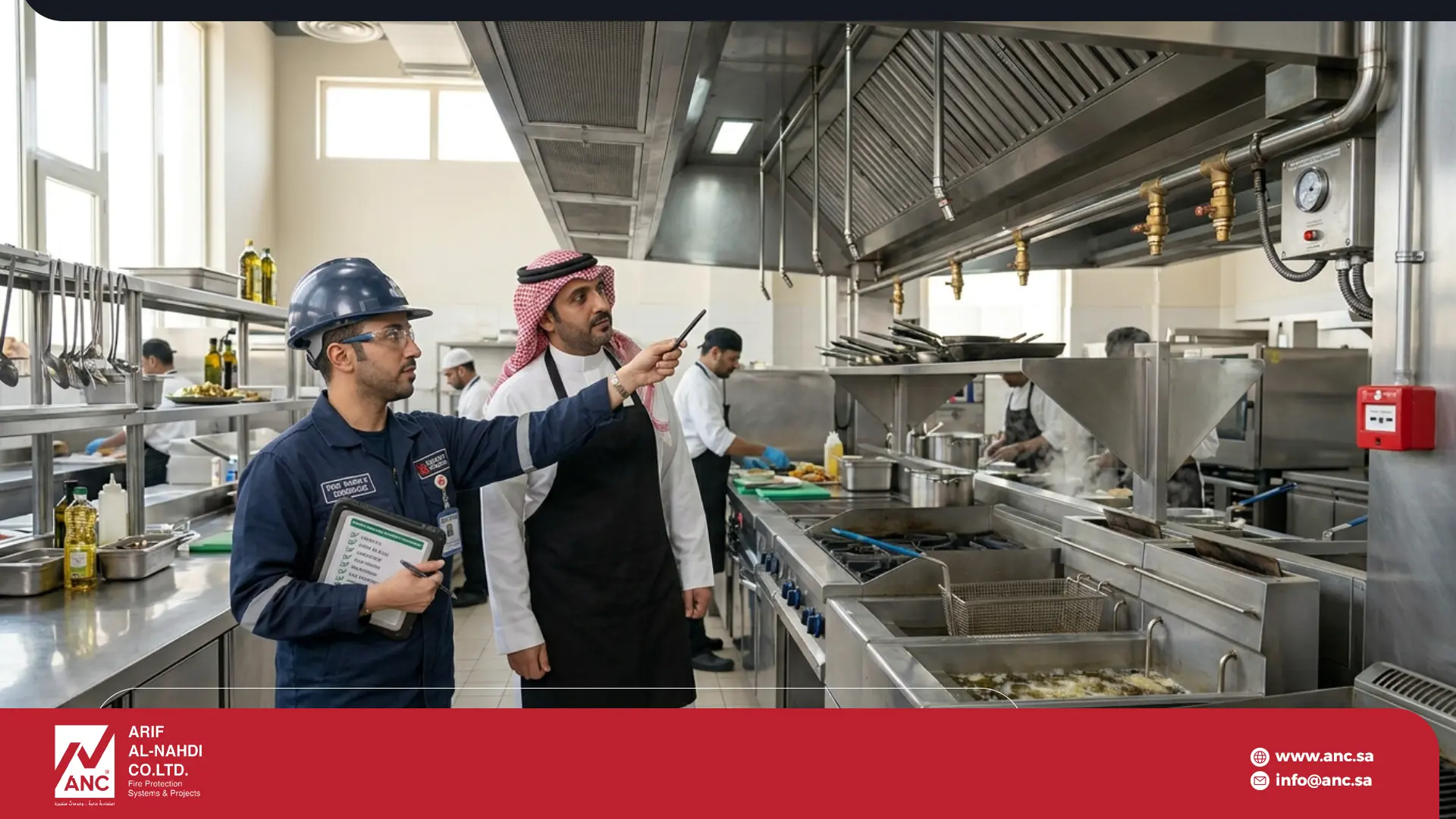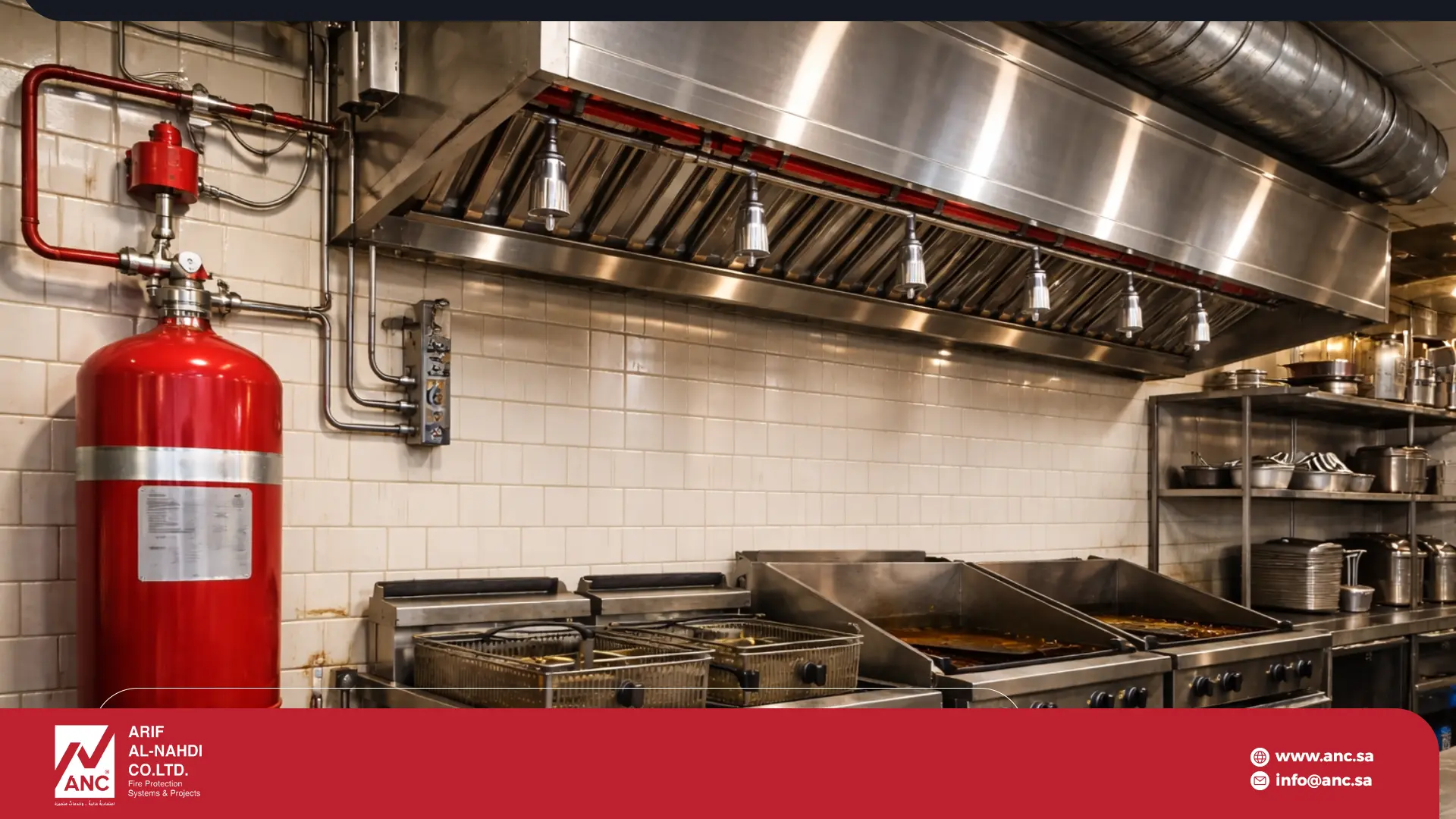

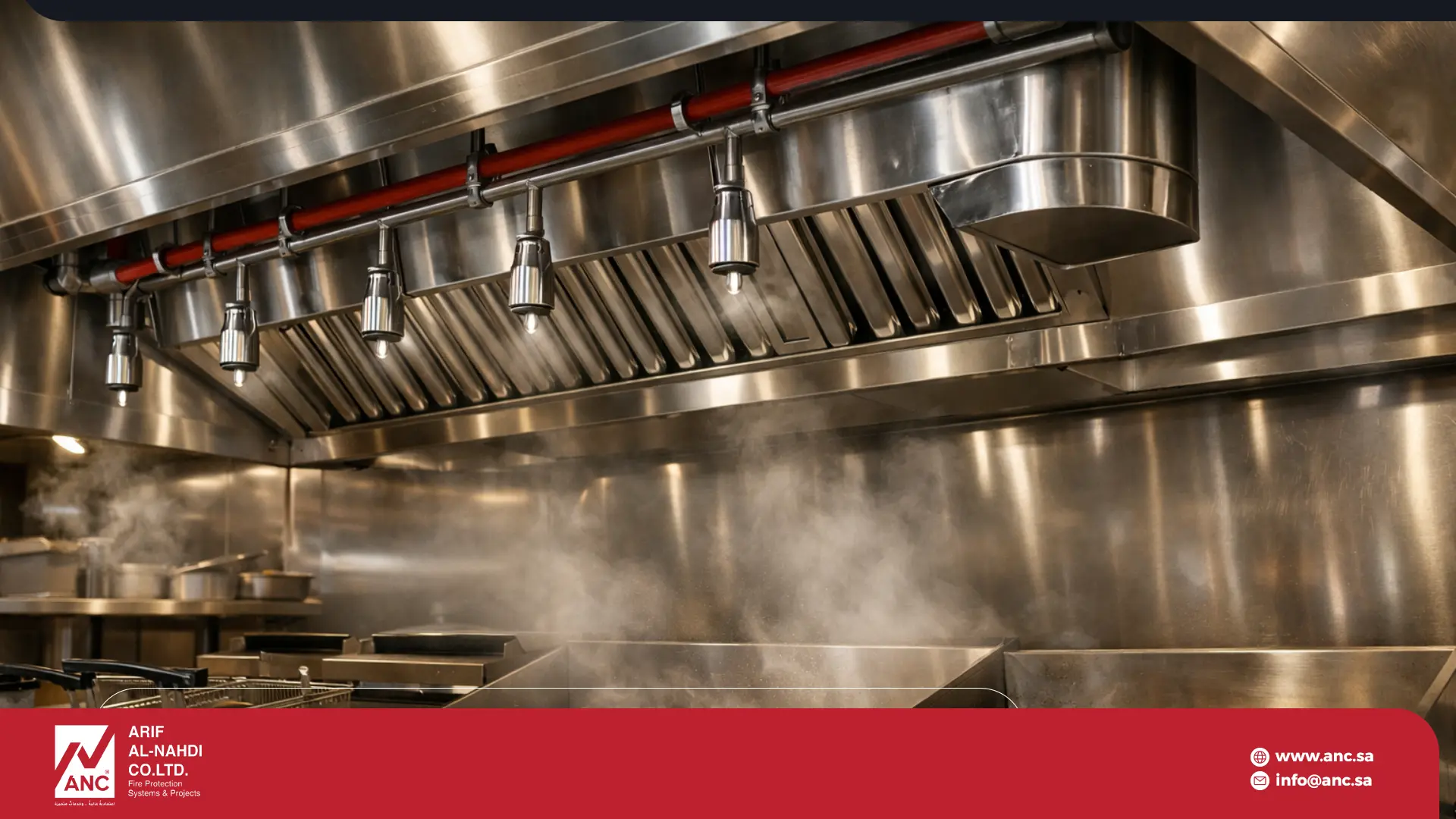
Kitchen hood fire suppression system requirements cover more than placing a cylinder and a few nozzles above a cooking line. In practice, the requirement path usually includes protection scope, release logic, shutdown coordination, documentation, testing readiness, and maintenance expectations. That is why the right question is not only “Do I have a system?” but “Does this system fit the kitchen, the cooking process, and the project requirements?”
For you as a buyer, this matters because a commercial kitchen presents a concentrated hazard environment. Hood plenum areas, appliances, grease vapors, and duct-related risk zones are not evaluated the same way as ordinary building spaces.
Exact requirements can change based on the cooking process, hood configuration, fuel type, control method, project documents, and the applicable code and authority pathway. So the best starting point is not guesswork. It is a technical review of your actual kitchen layout and scope.
If you are at that stage, we at ANC can review your hood layout, appliance line-up, and project documents before you move into quotation or procurement.
Safety Notice / Disclosure: This article is for awareness and purchasing decisions only. Final requirements vary by kitchen type, appliance profile, fuel source, shutdown needs, project specifications, and authority review. Design, installation, testing, and service should be carried out by qualified specialists according to the applicable standards, manufacturer guidance, and project requirements.
How Does Kitchen Hood Fire Suppression System NFPA Guidance Shape Design, Installation, And Maintenance?
When buyers search for kitchen hood fire suppression system nfpa, they are usually trying to answer a practical question: which standards shape the system through its lifecycle?
At a high level, NFPA 96 provides the fire-protection and ventilation-control framework for commercial cooking operations. NFPA states that the standard provides preventive and operative fire safety requirements for commercial cooking operations and covers design, installation, operation, inspection, and maintenance of commercial cooking equipment, exhaust systems, and related fire-suppression systems.
NFPA 17A matters because it addresses wet chemical extinguishing systems through the lifecycle of design, installation, operation, testing, and maintenance. NFPA describes it as the standard for wet chemical extinguishing systems and notes that its provisions are intended to improve the integrity and reliability of equipment that discharges wet chemicals from fixed nozzles and piping.
For you, the practical takeaway is simple: NFPA references should be read together, not as isolated checklists. One helps frame the commercial cooking hazard environment. The other helps frame the wet chemical system path commonly used under commercial hoods.
If you need help translating standards language into a project scope, we at ANC can review your kitchen type, control logic needs, and documentation path before you request final pricing.
Kitchen Hood Fire Suppression System NFPA Vs Commercial Kitchen Hood Fire Code Requirements
Requirement Area | Standard Or Code Source | What It Governs | What You Should Verify |
Commercial cooking hazard context | NFPA 96 | Ventilation control and fire protection of commercial cooking operations | Whether the kitchen type, hood arrangement, and cooking process are being reviewed correctly |
Wet chemical extinguishing system path | NFPA 17A | Design, installation, operation, testing, and maintenance of wet chemical systems | Whether the selected suppression path matches the system type and lifecycle expectations |
Commercial cooking equipment fire testing context | UL 300 | Fire testing of extinguishing systems for protection of commercial cooking equipment | Whether the system path is tied to the right commercial cooking application and supporting listing framework |
Saudi project code environment | Saudi Building Code / SBC 801 | Broader fire-protection code framework in Saudi Arabia | Whether the project documents, consultant basis, and authority process are aligned |
This distinction matters because technical standards and local code adoption do not do the same job. A supplier should be able to speak to both the technical standard path and the project’s code and approval environment.
What Commercial Kitchen Hood Fire Code Requirements Should Buyers Verify In Saudi Projects?
In Saudi projects, commercial kitchen hood fire code requirements sit within the wider Saudi Building Code environment. The official 2024 code library lists SBC 801 as the Saudi Fire Protection Code, and the SBC details page states that it provides methods of protection from fire and explosion hazards and minimum requirements for life safety and property protection.
That does not mean every kitchen follows one identical checklist. Project classification, consultant requirements, and authority processes can affect the documentation and review path. So for you as a buyer, the priority is verifying the basis of design, the required documents, and the review expectations before you compare offers.
A practical Saudi-focused review should confirm:
- the project code basis,
- the consultant or authority documentation path,
- the intended system type,
- shutdown expectations,
- and what submittals or technical documents are required before approval or installation.
If you are still unclear which requirement path applies to your kitchen project, send us your drawings and scope at ANC. We can review the project information and help you move toward a clearer compliance discussion.
What Makes A Kitchen Hood Fire Protection System Compliant In Practice?
A kitchen hood fire protection system is not judged by one visible component. In practice, compliance is about whether the full protection path works as a coordinated system.
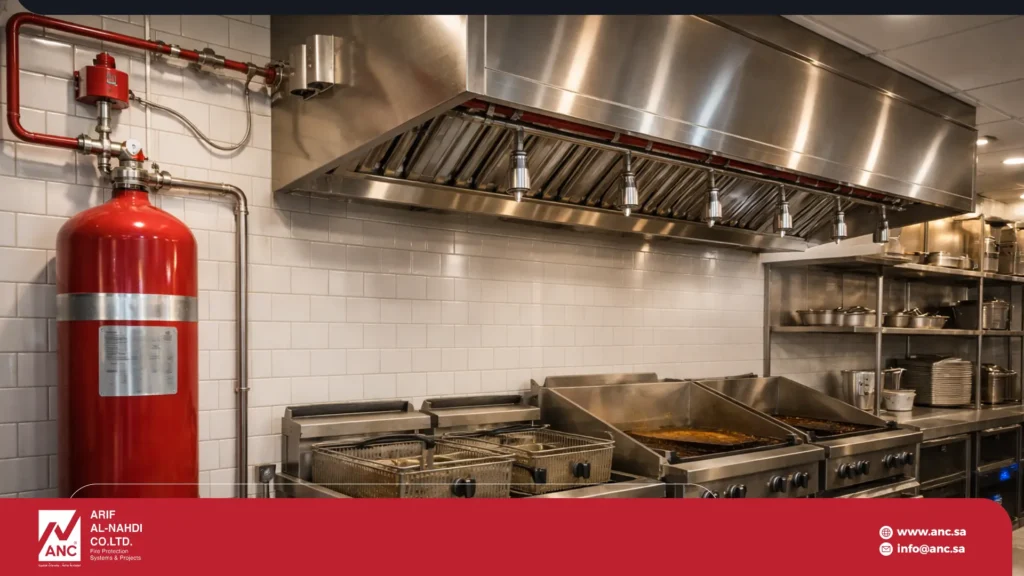
That usually means looking at protection coverage, release logic, agent discharge, shutdown measures, documentation, inspection readiness, and serviceability. ANC’s guide explains kitchen hood protection in terms of protecting cooking appliances, hood plenum areas, and associated duct sections, which is a more useful way to think about compliance than focusing only on the cylinder.
This matters because buyers often ask whether a system is “approved” before asking whether it actually covers the right zones and operating logic for the kitchen. A stronger question is whether the selected system path fits the actual hazard environment and whether the supplier can support the project through review, installation, testing, and service.
How Does Kitchen Hood System Fire Protection Differ By Hood Layout, Cooking Process, And Hazard Level?
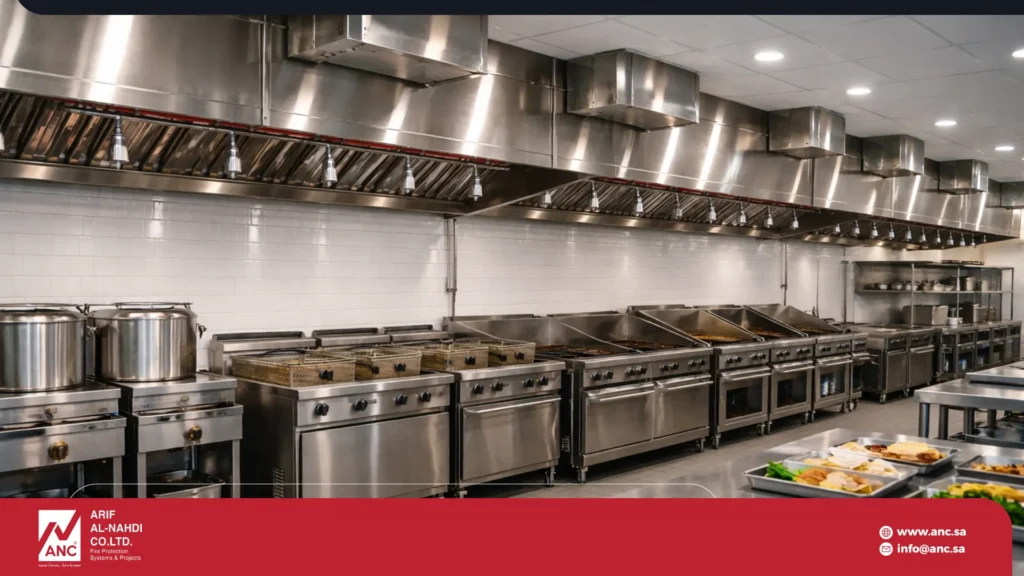
Kitchen hood system fire protection does not look the same across every commercial kitchen. A fast-food line, hotel kitchen, hospital kitchen, central production kitchen, and heavier-duty cooking environment can differ in appliance mix, grease load, operating profile, fuel source, and shutdown needs.
That is why fire risk reduction kitchen hood planning should begin with the kitchen profile, not with a standard product request. A project with simple direct actuation needs may lean toward one control path, while a project with broader shutdown coordination may need another. ANC’s product pages distinguish between mechanical control and electrical control specifically because operational context affects suitability.
the lesson is practical: do not apply the same supplier checklist blindly to every kitchen type. Start with the appliance line-up, hood arrangement, and shutdown requirements, then match the system and documentation path to that reality.
What Does Fire Protection For Kitchen Hood Include Beyond The Extinguishing Agent Itself?
When people talk about fire protection for kitchen hood, they often focus only on the extinguishing agent. That is too narrow.
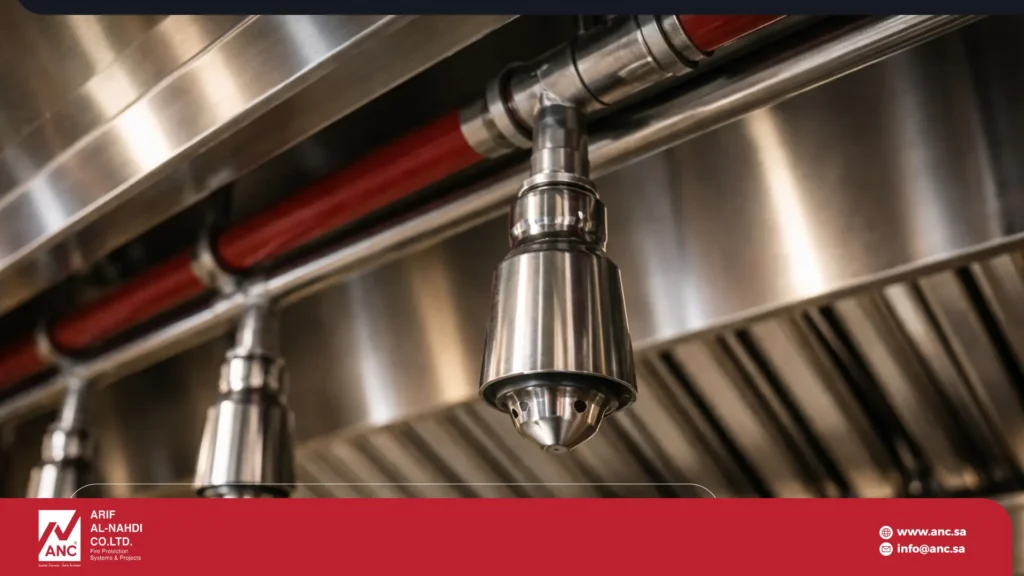
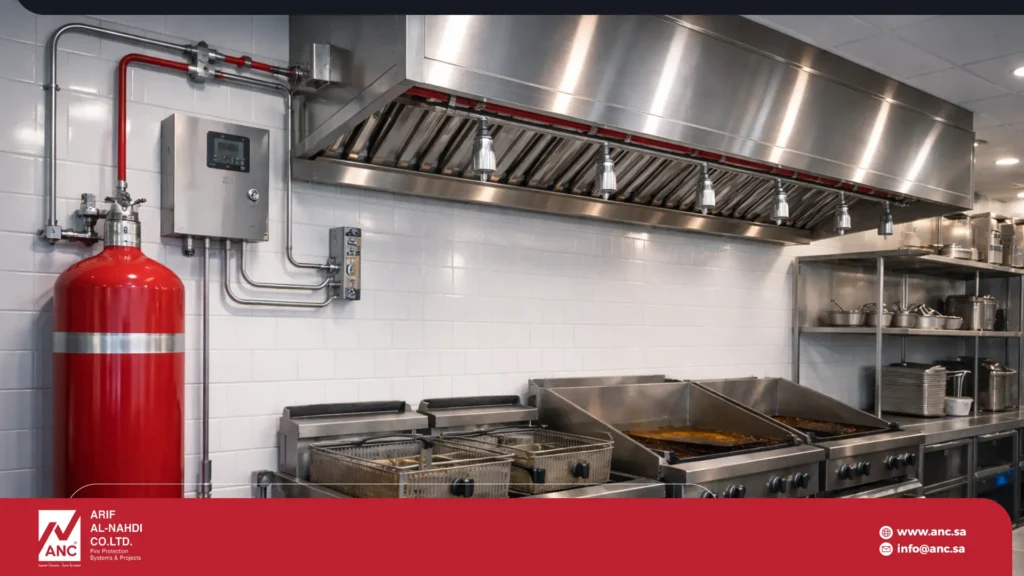
A full protection discussion usually includes detection or release elements, nozzles, distribution path, manual release, shutdown integration, and the related technical documents that explain how the system is meant to function. ANC’s kitchen hood guide and product pages show this broader logic by describing mechanical and electrical paths with their different actuation and shutdown features.
This is important because one component, one label, or one catalog sheet does not prove that the project scope is complete. For a buyer, completeness matters more than isolated parts.
How Does Fire Risk Reduction Kitchen Hood Planning Improve Compliance Before Fit-Out And Procurement?
Fire risk reduction kitchen hood planning is most valuable before fit-out decisions are locked in. If you leave the suppression discussion too late, you increase the chance of scope gaps, document changes, installation coordination issues, and approval delays.
Early planning helps the project team review hood layout, appliance list, fuel source, shutdown logic, and submittal expectations before procurement hardens around incomplete assumptions. That does not guarantee approval on its own, but it does reduce preventable coordination problems.
If your kitchen project is still in design or early procurement, this is the right time to involve us at ANC for a technical review.
How To Compare Kitchen Hood Fire Suppression Systems By Compliance Documents, Control Logic, And Supplier Support?
When you compare kitchen hood fire suppression systems, do not compare price alone. A more useful shortlist looks at three areas: compliance documents, control logic, and supplier support.
Use this checklist:
- Is the system type clearly defined?
- Does the supplier explain mechanical vs electrical control clearly?
- Are shutdown requirements understood?
- Are the protected areas identified properly?
- Is the quotation based on real kitchen inputs?
- Can the supplier support design coordination, installation, testing, and service continuity?
This matters because the cheapest offer can hide missing controls, missing documents, or unclear scope. ANC’s existing kitchen-system content is useful here because it separates mechanical and electrical paths and connects them to real project needs rather than generic claims.
If you want a cleaner comparison before you ask for final prices, we at ANC can review your documents and help you identify scope gaps early.
What Compliance Documents Should A Kitchen Suppression Supplier Provide?
A strong supplier should be ready to provide a practical documentation package, not just a quotation.
That package often includes:
- product data sheets,
- applicable listing or certification references,
- layout or submittal drawings,
- coverage references,
- control and shutdown notes,
- installation method information,
- testing or commissioning records,
- and maintenance guidance.
UL’s commercial cooking guidance explains that commercial cooking equipment and associated system categories are evaluated under applicable standards and certification categories, which is one reason documentation matters so much during specification and review.
The exact package still depends on the selected system, kitchen type, consultant requirements, and project approval path. So the most practical next step is to send your hood layout, appliance list, and project documents for a technical compliance review. We at ANC can review the scope, identify the likely document needs, and support quotation readiness.
Conclusion
Kitchen hood fire suppression system requirements are not only about buying a system. They are about understanding the standards context, the Saudi code environment, the kitchen-specific hazard profile, and the documentation needed before design review, quotation, and installation.
If you approach the topic this way, you will make better decisions. You will compare suppliers more accurately, ask better questions, and reduce avoidable scope gaps before fit-out and procurement.
At ANC, we can help you review your kitchen layout, appliance profile, control needs, and compliance documents so you can move forward with more clarity. Request a technical consultation, submittal review, or quotation support based on your actual project scope.
FAQs about Kitchen Hood Fire Suppression System Requirements
1-What Are The NFPA Requirements For Kitchen Hood Fire Suppression Systems?
At a high level, the NFPA framework usually combines NFPA 96 for the commercial cooking fire-protection context with NFPA 17A for wet chemical extinguishing-system requirements across design, installation, operation, testing, and maintenance. They should be read together rather than treated as competing rules.
2-What Fire Codes Apply To Commercial Kitchen Hood Suppression?
In Saudi projects, the code environment should be checked through the Saudi Building Code and the relevant fire-protection framework, including SBC 801, while also considering consultant and authority requirements for the specific project.
3-What Is NFPA 17A And How Does It Apply To Kitchen Hoods?
NFPA 17A is the standard for wet chemical extinguishing systems. It is relevant because commercial kitchen hood suppression commonly relies on wet chemical system technology and its lifecycle requirements for design, installation, testing, and maintenance.
4-How Do Fire Protection Requirements Differ By Kitchen Type?
They can differ based on appliance type, grease load, hood layout, fuel source, shutdown strategy, and kitchen use profile. A hotel kitchen, central production kitchen, hospital kitchen, and smaller restaurant may not share the same system expectations or documentation needs.
5-What Compliance Documents Should A Kitchen Suppression Supplier Provide?
A supplier should usually be ready to provide product data, relevant listing or certification references, layout or submittal drawings, control and shutdown notes, installation details, testing or commissioning records, and maintenance guidance tied to the project scope.