
In modern facilities, fire protection is no longer just about extinguishing flames—it’s about protecting critical assets, ensuring business continuity, and minimizing downtime. Traditional water-based systems can cause significant secondary damage, especially in environments like data centers, electrical rooms, and control systems.
In this guide, we’ll explain how clean agent systems work, explore key types such as fm 200 fire suppression system, novec 1230 fire suppression system, inert gas fire suppression system, and co2 fire suppression system, and help you choose the right solution for your facility.
What Is a Clean Agent Fire Suppression System?
A clean agent fire suppression system is a fixed fire protection system that uses gaseous or vaporizing agents to extinguish fires without leaving residue. These systems are designed to suppress fires at an early stage while minimizing damage to equipment and operations.
There are two primary suppression mechanisms:
- Heat absorption (FM200, Novec 1230, FK-5-1-12 fire suppression system)
- Oxygen reduction (inert gas fire suppression system, CO2 fire suppression system)
Common applications include:
- Data centers and server rooms
- Electrical panels and control systems
- Telecommunications facilities
- Archives and museums
These systems are governed by NFPA 2001, which defines design, installation, and maintenance requirements.
Why Clean Agent Systems Are Critical for Sensitive Environments
A clean agent fire suppression system is essential in environments where equipment protection and uptime are critical.
Key benefits include:
- Rapid response in early fire stages
- No damage to electronics or documents
- Minimal business interruption
- Suitable for enclosed, high-value areas
However, system performance depends heavily on:
- Proper engineering design
- Room enclosure integrity
- Compliance with fire safety standards
Get a site evaluation to ensure your system meets compliance requirements.
Also Read: Fire Protection System: Complete Guide to Active & Passive Protection
Types of Clean Agent Fire Suppression Systems
FM200 Fire Suppression System (HFC-227ea)
The fm200 fire suppression system is one of the most widely used clean agents. It suppresses fire primarily through heat absorption.
Key characteristics:
- Fast discharge and fire knockdown
- Suitable for data centers and UPS rooms
- Compact storage compared to some alternatives
It is commonly used in:
- Server rooms
- Control panels
- Telecom infrastructure
Novec 1230 Fire Suppression System (FK-5-1-12)
The novec 1230 fire suppression system, also known as fk-5-1-12 fire suppression system, extinguishes fire by absorbing heat.
Key features:
- Stored as liquid, discharged as gas
- Lower environmental impact
- Suitable for occupied spaces
This system is often selected for projects with sustainability requirements.
Inert Gas Fire Suppression Systems (IG Systems)
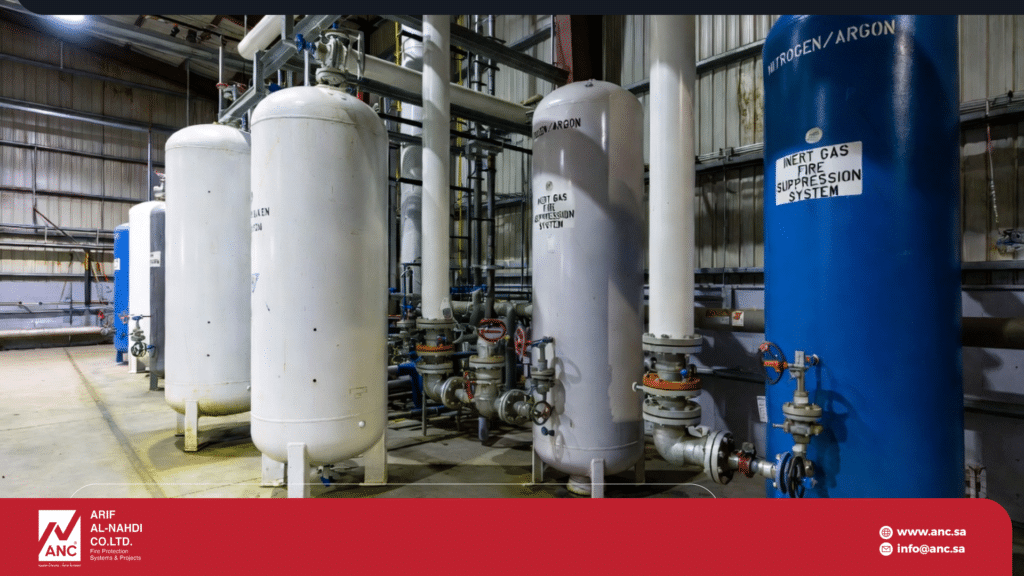
An inert gas fire suppression system uses gases like nitrogen, argon, or blends to reduce oxygen concentration.
Key characteristics:
- Maintains oxygen at safe levels for occupants (when properly designed)
- No chemical residue
- Requires larger storage space
Common in:
- Large data halls
- Industrial control rooms
CO2 Fire Suppression System
A co2 fire suppression system extinguishes fire by rapidly displacing oxygen.
Key characteristics:
- Highly effective for industrial hazards
- Fast suppression
Important:
- Not suitable for occupied spaces due to life safety risks
- Governed by NFPA 12
Typical applications:
- Machinery spaces
- Chemical processing plants
How Clean Agent Fire Suppression Systems Work
A clean agent fire suppression system follows a precise operational sequence:
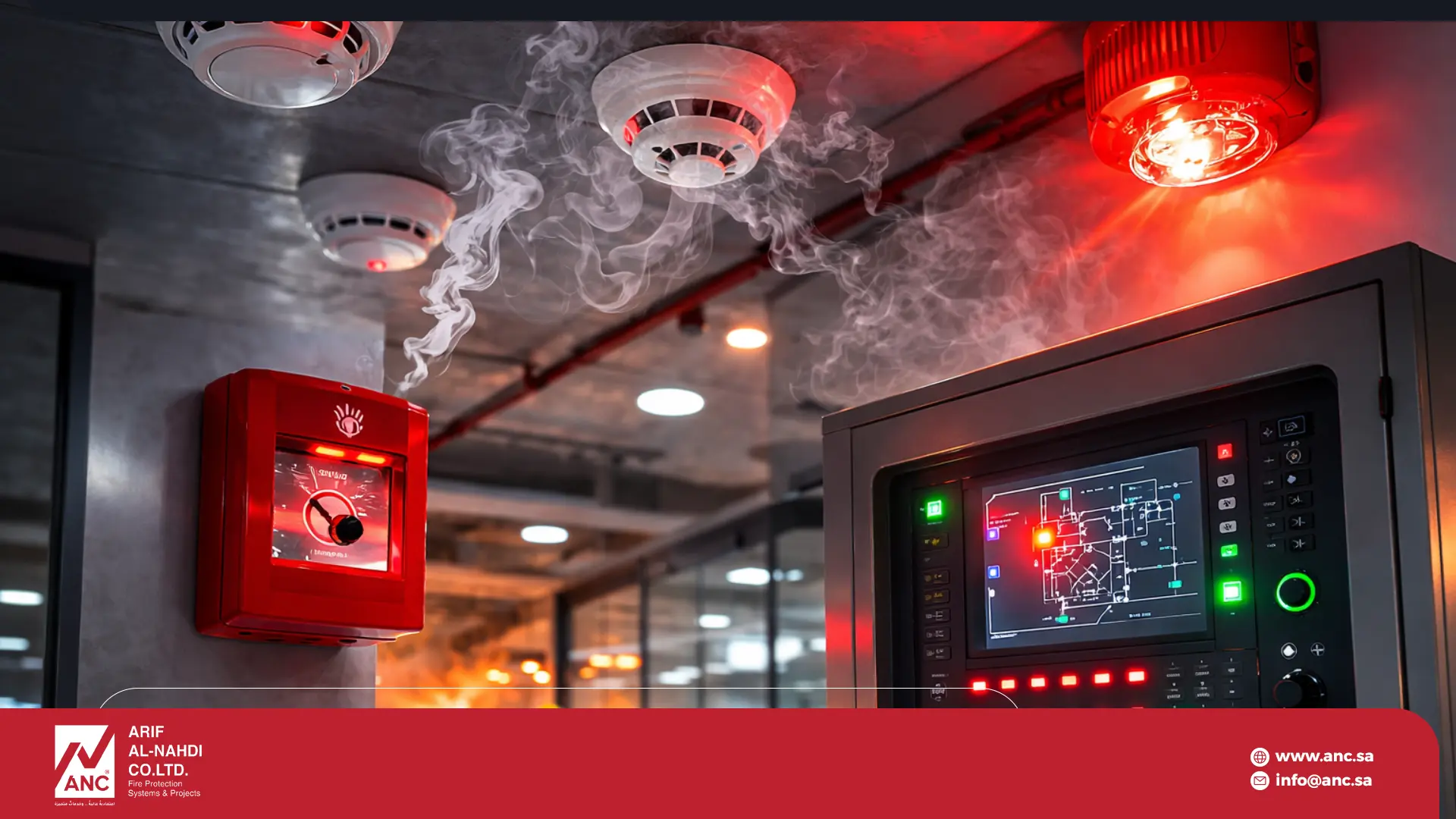
- Fire detection (smoke, heat, or flame)
- Signal sent to control panel
- Pre-discharge alarm and warning
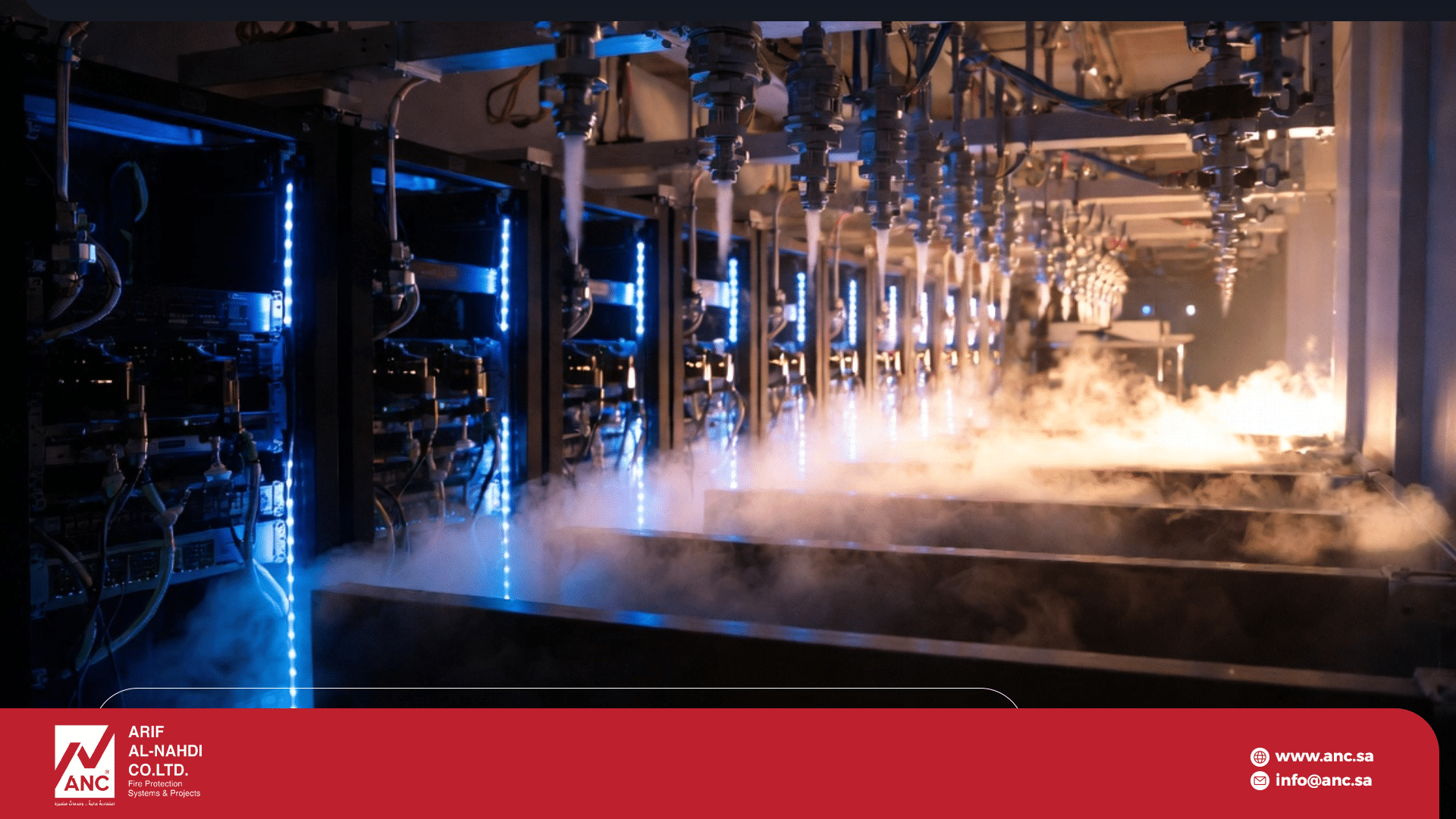
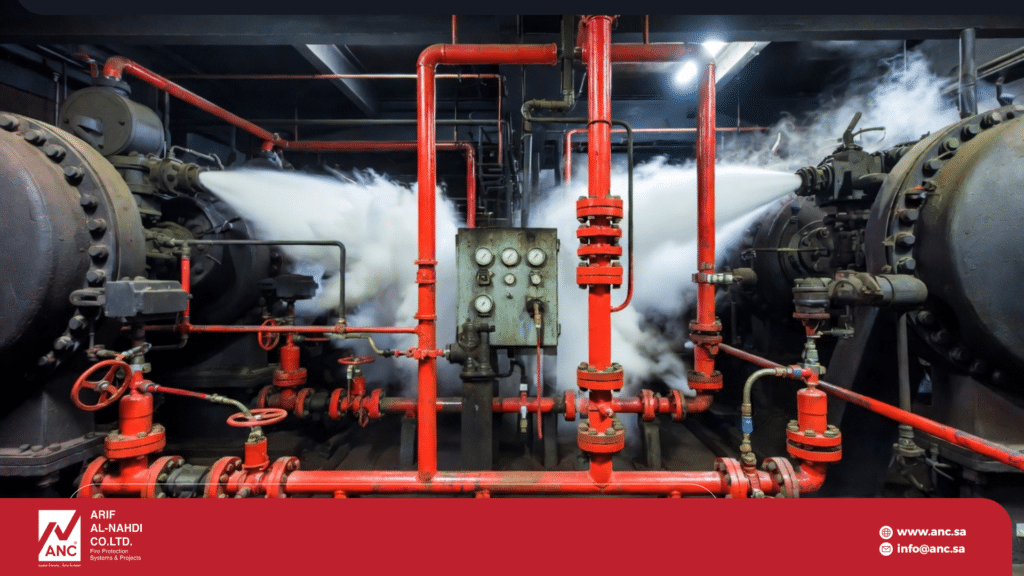
- Agent release through nozzles
- Fire suppressed within seconds
A critical factor is enclosure integrity, ensuring the agent maintains proper concentration to extinguish the fire.
Also Read: Fire Hydrant System: Types, Parts, Installation & NFPA Standards
Key Components of a Clean Agent Fire Suppression System
Detection Devices
Detect fire conditions using smoke, heat, or flame sensors.
Control Panel
Acts as the system’s brain, processing signals and triggering discharge.
Agent Storage Cylinders
Store clean agents under pressure for rapid release.
Distribution Network
Pipes, valves, and nozzles deliver the agent evenly across the protected space.
Manual Release & Safety Controls
Include manual activation, abort switches, and alarms for safety.
FM200 vs Novec 1230 vs Inert Gas Systems
| Criteria | FM200 | Novec 1230 | Inert Gas |
|---|---|---|---|
| Suppression Method | Heat absorption | Heat absorption | Oxygen reduction |
| Environmental Impact | Moderate | Lower | Minimal |
| Storage Space | Compact | Compact | Larger |
| Occupied Spaces | Yes | Yes | Yes (designed properly) |
| Typical Use | Data centers | Green projects | Large facilities |
There is no one-size-fits-all solution—selection depends on your facility requirements.
How to Choose the Right Clean Agent Fire Suppression System
Choosing the right clean agent fire suppression system requires engineering evaluation.
Key factors include:
- Type of facility and fire risk
- Occupancy and life safety requirements
- Room size and enclosure tightness
- Environmental considerations
- AHJ requirements
Request a customized system design based on your facility needs from ANC today.
Also Read: Fire Systems in Buildings: Types, Design & Maintenance Guide
Quick Checklist Before Selecting a System
Use this checklist to guide your decision:
- What type of facility is being protected?
- Is the space occupied?
- What equipment needs protection?
- Are there environmental regulations?
- Is this a new project or retrofit?
- Do you need supply, installation, or maintenance?
Common Mistakes to Avoid
Avoid these common issues:
- Selecting a system without proper risk assessment
- Ignoring enclosure integrity requirements
- Poor installation or nozzle placement
- Lack of regular inspection and testing
- Overlooking occupant safety
Inspection, Testing, and Maintenance Requirements
Ongoing maintenance is essential for system reliability.
Key activities include:
- Inspecting cylinders and pressure levels
- Testing detection and control systems
- Verifying alarms and release mechanisms
- Periodic servicing
Standards to follow:
- NFPA 2001
- NFPA 25
A clean agent fire suppression system is a critical investment for protecting sensitive environments and ensuring operational continuity. Whether you choose an fm200 fire suppression system, novec fire suppression system, or inert gas fire suppression system, the key lies in proper selection, design, and maintenance.
There is no universal solution—each system must align with your facility’s risks, compliance requirements, and operational priorities.
Ready to protect your facility? Contact ANC & Request a quote or expert consultation today in Saudi Arabia.
FAQs About Clean Agent Fire Suppression Systems
1- What is clean agent suppression?
A fire protection method using gaseous agents that extinguish fires without residue or damage to sensitive equipment.
2- What is FM200?
FM200 is a clean agent gas (HFC-227ea) that suppresses fire by absorbing heat, commonly used in data centers.
3- What is Novec 1230?
Novec 1230 (FK-5-1-12) is a clean agent fluid known for heat absorption and lower environmental impact.
4- What is FK-5-1-12?
FK-5-1-12 is the chemical designation of Novec 1230 used in clean agent fire suppression systems.
5- What is CO2 fire suppression?
CO2 fire suppression systems extinguish fire by reducing oxygen levels and are typically used in industrial environments but are not safe for occupied spaces.
6- What is the difference between FM200 and Novec 1230?
Both systems suppress fire through heat absorption, but Novec 1230 is often selected for environmental considerations, while FM200 is widely used in existing installations.
7- What are inert gas fire suppression systems?
Inert gas systems use gases such as nitrogen or argon to reduce oxygen concentration and suppress fire without using chemical agents.