
In high-risk environments such as oil & gas facilities, fuel storage areas, and chemical plants, fire incidents involving flammable liquids can escalate rapidly and cause catastrophic losses. Traditional water-based systems are often not sufficient in these scenarios, as they may spread the fuel rather than suppress the fire.
This is where foam fire fighting systems become critical. These systems are specifically designed to control and extinguish fires involving flammable liquids by forming a protective foam blanket that prevents re-ignition.
This guide explains how foam systems work, their main types, the role of foam pumps, and how to select the right system for your facility.
What Is a Foam Fire Protection System?
A foam fire protection system is a fire suppression system that combines water, foam concentrate, and air to create a foam blanket that suppresses fire.
This foam works through three main mechanisms:
- Cooling the fire
- Separating fuel from oxygen
- Preventing vapor release
Also referred to as foam system fire protection or fire protection foam system, these systems are specifically designed for Class B fires involving flammable liquids such as fuel, oil, and chemicals.
They are commonly used in:
- Oil & gas facilities
- Fuel storage tanks
- Chemical plants
- Industrial processing areas
Why Foam Fire Protection Systems Are Essential
Foam fire fighting systems are essential in environments where flammable liquid fires pose a significant risk.
Key benefits include:
- High effectiveness for hydrocarbon and chemical fires
- Formation of a stable foam blanket over fuel surfaces
- Rapid reduction of fire intensity
- Prevention of re-ignition
In industrial sectors across KSA, these systems are critical for maintaining safety compliance and minimizing operational downtime.
However, performance depends on:
- Proper foam type selection
- Correct system design
- Suitable application method
Request a site assessment from ANC (Arif Al-Nahdi) to ensure your system is properly engineered.
Types of Foam Fire Protection Systems
Low Expansion Foam Systems
Low expansion systems produce dense foam with minimal air content.
They are typically used for:
- Fuel storage tanks
- Bund areas
- Spill protection
These systems are highly effective at spreading across liquid surfaces and forming a stable foam layer.
Medium Expansion Foam Systems
Medium expansion foam provides a balance between foam volume and density.
Common applications include:
- Industrial processing areas
- Moderate hazard environments
High Expansion Foam Systems
High expansion systems generate large volumes of foam with high air content.
They are commonly used in:
- Warehouses
- Aircraft hangars
- Tunnels
These systems can quickly fill enclosed spaces and suppress fire effectively.
AFFF and Specialized Foam Types
AFFF (Aqueous Film Forming Foam) is widely used for hydrocarbon fires due to its fast-spreading properties.
Different foam concentrates are selected based on:
- Fuel type
- Risk level
- Application requirements
Also Read: Clean Agent Fire Suppression: FM200, Novec 1230 & Inert Gas Systems
How Foam Fire Protection Systems Work
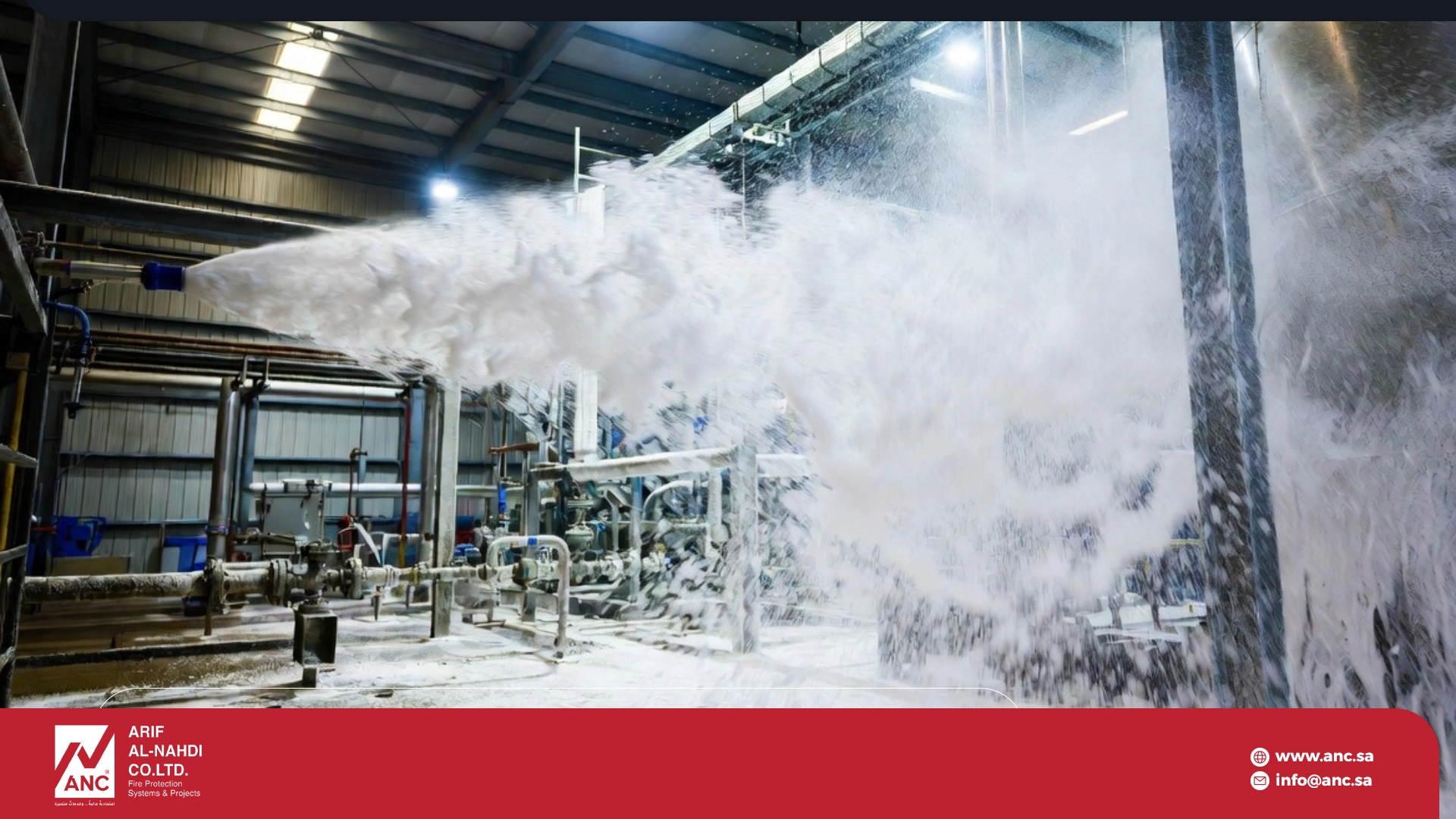
A foam fire suppression system operates through a controlled process:
- Foam concentrate is mixed with water
- A foam solution is created
- Air is introduced to expand the foam
- Foam is discharged through specialized devices
The foam forms a blanket over the fuel surface, suppressing vapors and preventing re-ignition.
System effectiveness depends heavily on proper proportioning and application.
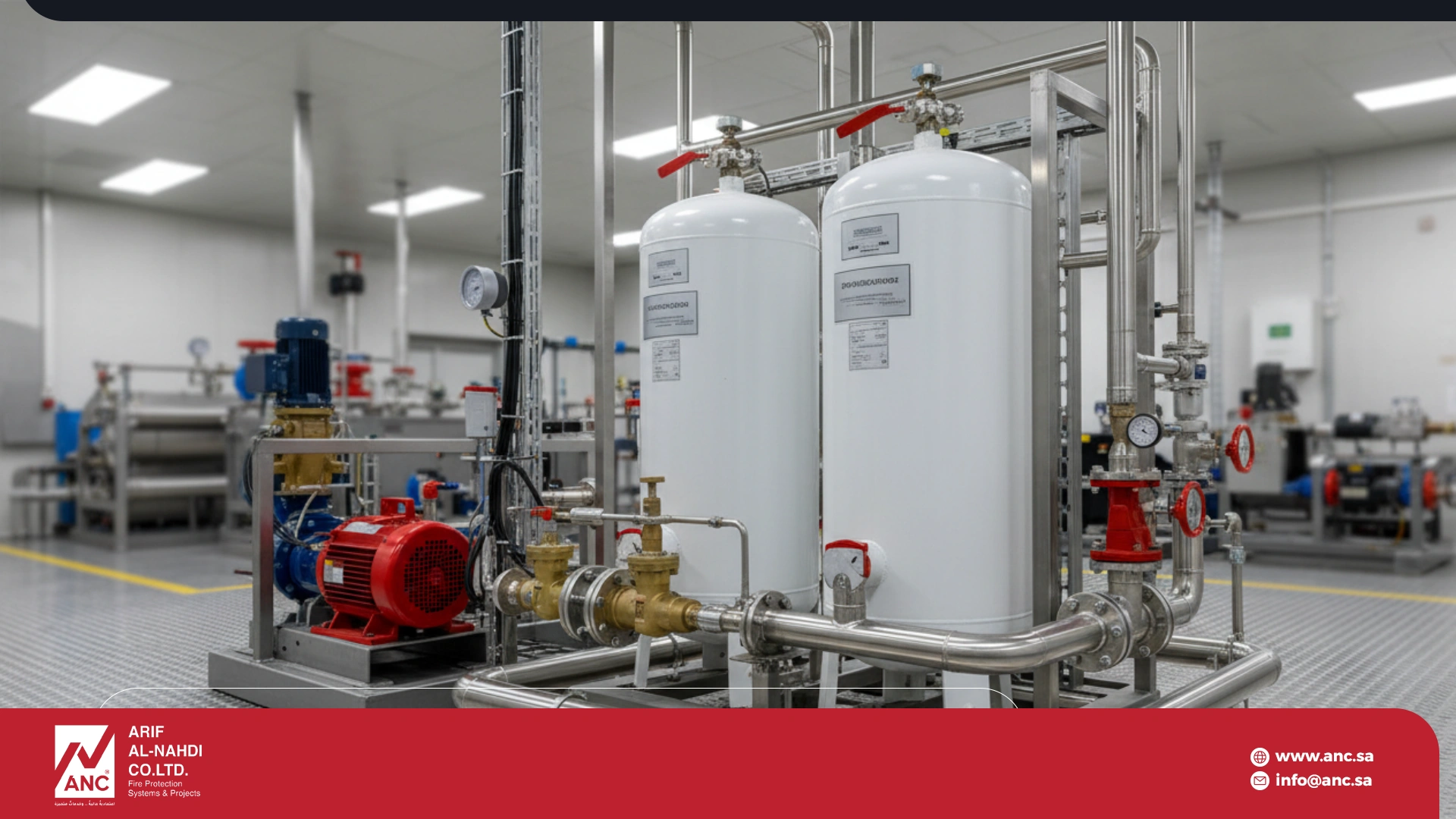
Key Components of a Foam Fire Protection System
Foam Concentrate Storage
Storage tanks or containers hold the foam concentrate safely until needed.
Foam Proportioning System
This system ensures the correct mixing ratio between foam concentrate and water.
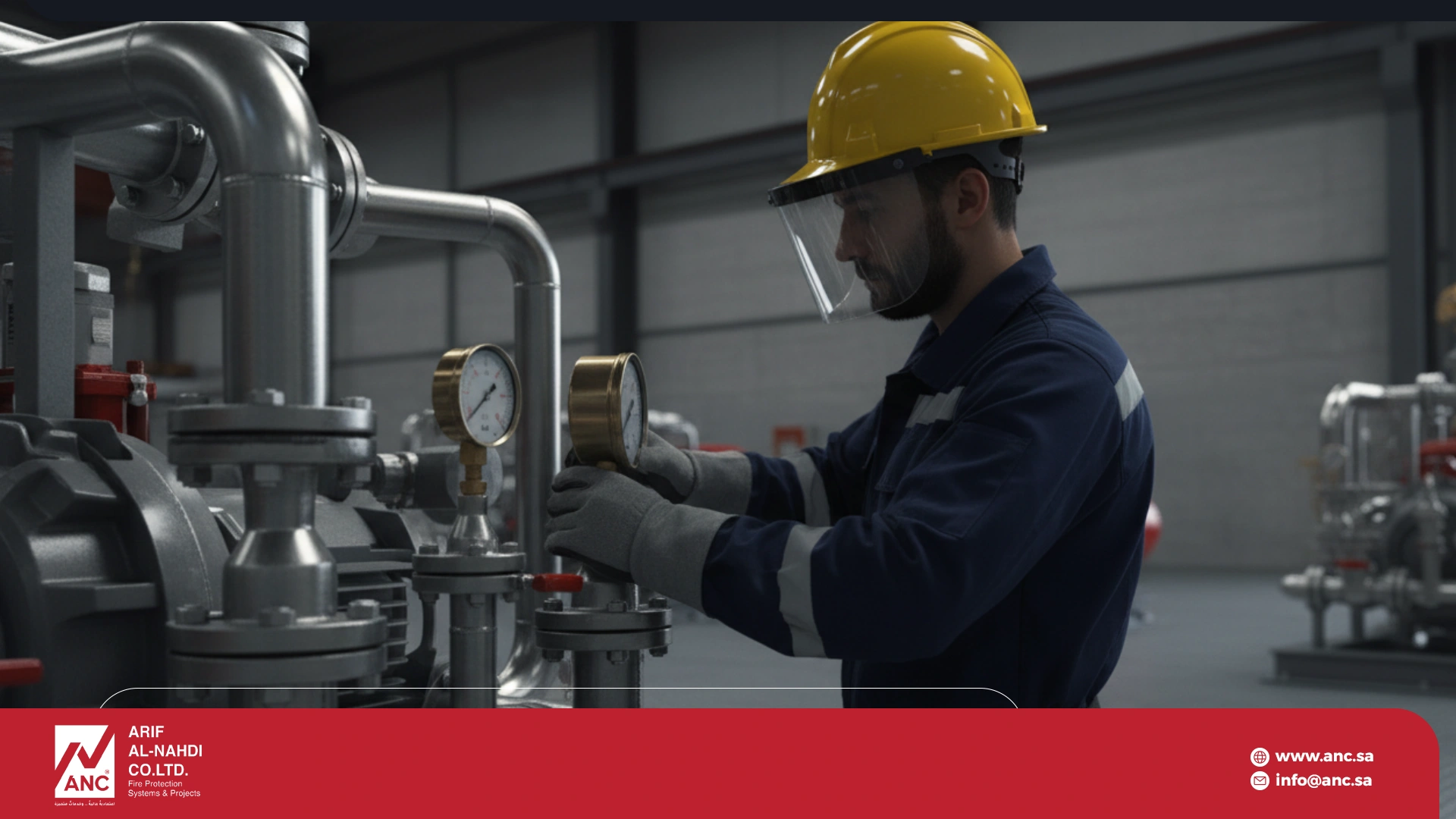
Foam Pump (Foam Pump Fire Protection System)
The foam pump fire protection system plays a critical role in delivering foam solution at the required pressure and flow.
Pump selection depends on:
- System size
- Hazard type
- Required coverage
Distribution System
Includes piping, valves, and network components that deliver foam across the protected area.
Discharge Devices
Devices such as foam monitors, sprinklers, and chambers apply foam directly to the hazard.
Foam Fire Protection System Applications
A foam fire protection system is widely used in high-risk industries across Saudi Arabia:
- Oil & gas facilities
- Fuel storage terminals
- Aircraft hangars
- Refineries
- Chemical plants
- Loading and unloading terminals
Each application requires a tailored system design based on risk level and operational requirements.
Also Read: Fire Sprinkler System: Types, Installation & Design Guide
Foam vs Water-Based Fire Protection Systems
| Criteria | Foam Systems | Water-Based Systems |
|---|---|---|
| Fire Type | Flammable liquids | General fires |
| Effectiveness | High for fuel fires | Limited for liquids |
| Re-ignition Prevention | Yes | No |
| Application Areas | Industrial hazards | Buildings & offices |
Foam fire fighting systems are preferred for liquid fuel fires, while water systems are more suitable for general fire protection.
How to Choose the Right Foam Fire Protection System
Selecting the right foam fire protection system requires proper hazard analysis and engineering evaluation.
Key factors include:
- Type of fuel or chemical hazard
- Size of the protected area
- Required application rate
- Environmental considerations
- Regulatory requirements in KSA
At ANC (Arif Al-Nahdi), system selection is typically aligned with international standards and local authority requirements.
Request a customized solution based on your project specifications.
Quick Checklist Before Selecting a Foam System
- What type of flammable liquid is present?
- What is the size of the hazard area?
- Is the system for storage or process protection?
- What type of foam concentrate is required?
- Do you need a fixed or mobile system?
- Is this a new project or retrofit?
Common Mistakes to Avoid
- Using the wrong foam type for the hazard
- Incorrect foam proportioning
- Poor system design or coverage
- Lack of maintenance and testing
- Ignoring required application rates
These issues can significantly reduce system effectiveness.
Inspection, Testing, and Maintenance Requirements
Proper maintenance is essential to ensure system reliability.
Key activities include:
- Inspecting foam concentrate condition
- Testing proportioning systems
- Checking pump performance
- Cleaning and flushing systems
- Conducting periodic functional testing
A foam fire protection system is a critical solution for protecting facilities exposed to flammable liquid risks. From oil & gas to aviation and industrial sectors in Saudi Arabia (KSA), these systems play a vital role in fire safety and operational continuity.
Whether you are implementing a new system or upgrading an existing one, selecting the right foam type, pump configuration, and system design is essential.
At ANC, businesses can access tailored fire protection solutions designed to meet both international standards and local requirements.
Request a quote or expert consultation today to ensure your facility is fully protected.
FAQs About Foam Fire Suppression System:
1- What is foam fire protection?
Foam fire protection is a system that uses foam to suppress fires by forming a blanket over flammable liquids and preventing re-ignition.
2- What are the types of foam?
Low expansion, medium expansion, high expansion foam, and AFFF are the most common types.
3- What is a foam pump in fire protection?
A foam pump delivers foam solution at the required pressure and flow for effective fire suppression.
4- Where are foam fire protection systems used?
They are used in oil & gas, fuel storage, aviation, chemical plants, and industrial facilities.
5- What is the difference between foam and water-based systems?
Foam systems are designed for flammable liquid fires, while water systems are used for general fire protection.