

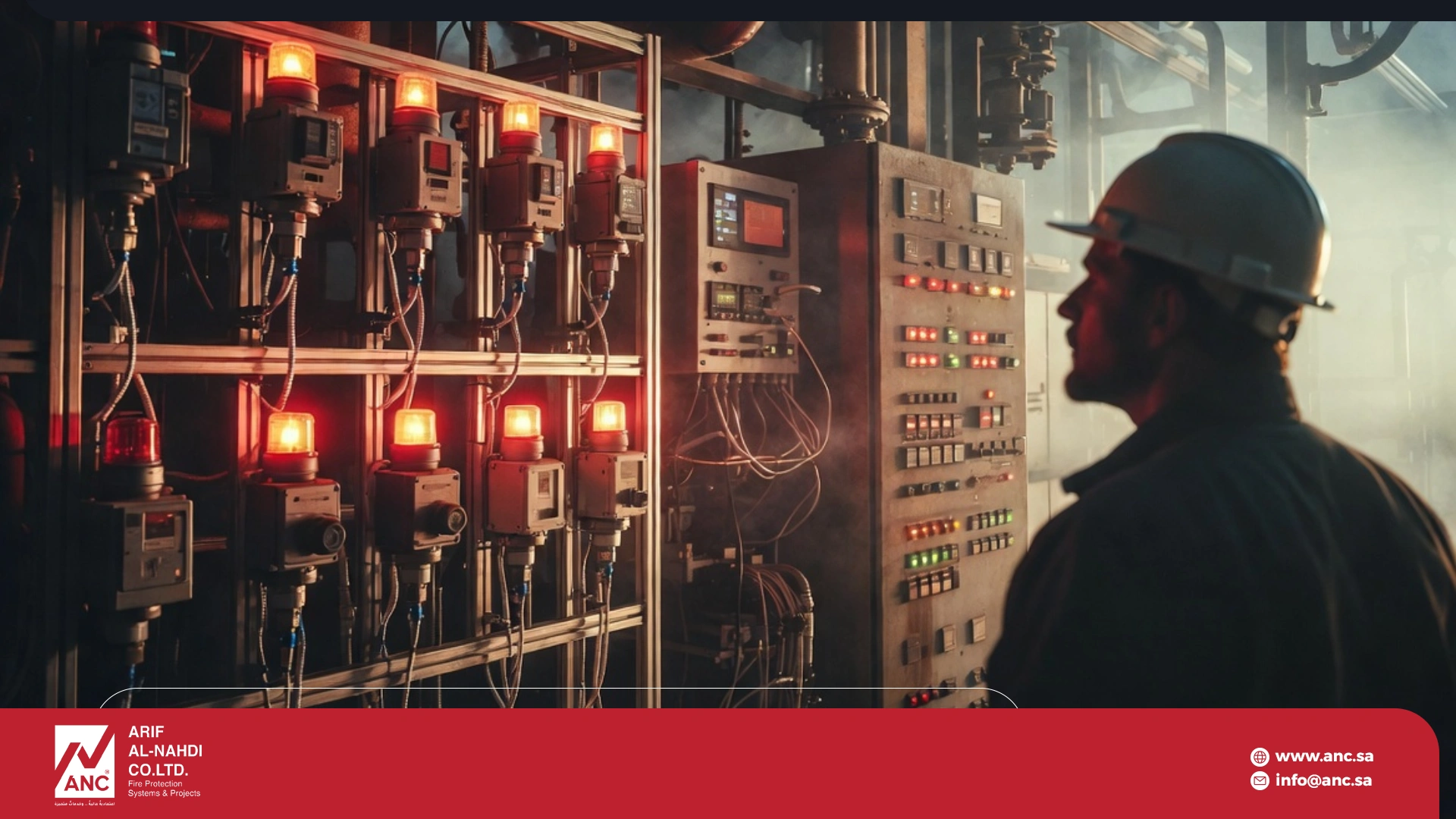
In high-risk environments such as oil & gas facilities and industrial plants, undetected gas leaks or fire incidents can lead to severe safety hazards, operational shutdowns, and environmental damage. These risks are especially critical in sectors across Saudi Arabia where industrial operations are large-scale and continuous.
This guide explains how fire and gas detection systems work, their components, applications in oil & gas, and how to select the right system for your facility!
What Is a Fire and Gas Detection System?
A fire and gas detection system (also known as a fire & gas system) is an integrated safety system designed to detect fire, smoke, and hazardous gases and initiate alarms or automated safety responses.
These systems combine multiple detection technologies into a centralized control platform to ensure real-time monitoring and rapid response.
They are commonly used in:
- Oil and gas facilities
- Petrochemical plants
- Industrial processing units
- Power generation plants
A properly designed fire & gas detection system plays a critical role in protecting people, assets, and operations.
Why Fire and Gas Detection Systems Are Critical for Industrial Safety
A safety fire and gas detection system is essential in hazardous environments where flammable gases or fire risks are present.
Key roles include:
- Detecting gas leaks before ignition
- Identifying fire at early stages
- Triggering alarms and emergency shutdown systems
- Supporting evacuation and emergency response
Early detection significantly reduces the risk of major incidents and operational disruptions.
However, system effectiveness depends on:
- Proper system design
- Correct detector selection and placement
- Integration with other safety systems
Request a site assessment from Arif Al-Nahdi to ensure your system meets safety and compliance requirements in KSA.
How Fire and Gas Detection Systems Work
A fire and gas detection system operates through continuous monitoring and automated response:
- Sensors continuously monitor the environment
- Detection of gas concentration, smoke, heat, or flame
- Signals are transmitted to the control panel
- Alarms are activated
- Automated actions may be triggered (shutdown or suppression systems)
These systems are designed for real-time operation, ensuring immediate response in critical situations.
Also Read: Clean Agent Fire Suppression: FM200, Novec 1230 & Inert Gas Systems
Types of Detection in Fire and Gas Systems
Gas Detection Systems
Gas detectors identify hazardous gases such as methane, hydrogen sulfide, and carbon monoxide.
They can be:
- Fixed systems for continuous monitoring
- Portable detectors for personnel safety
These are essential in fire and gas detection system in oil and gas applications.
Flame Detection Systems
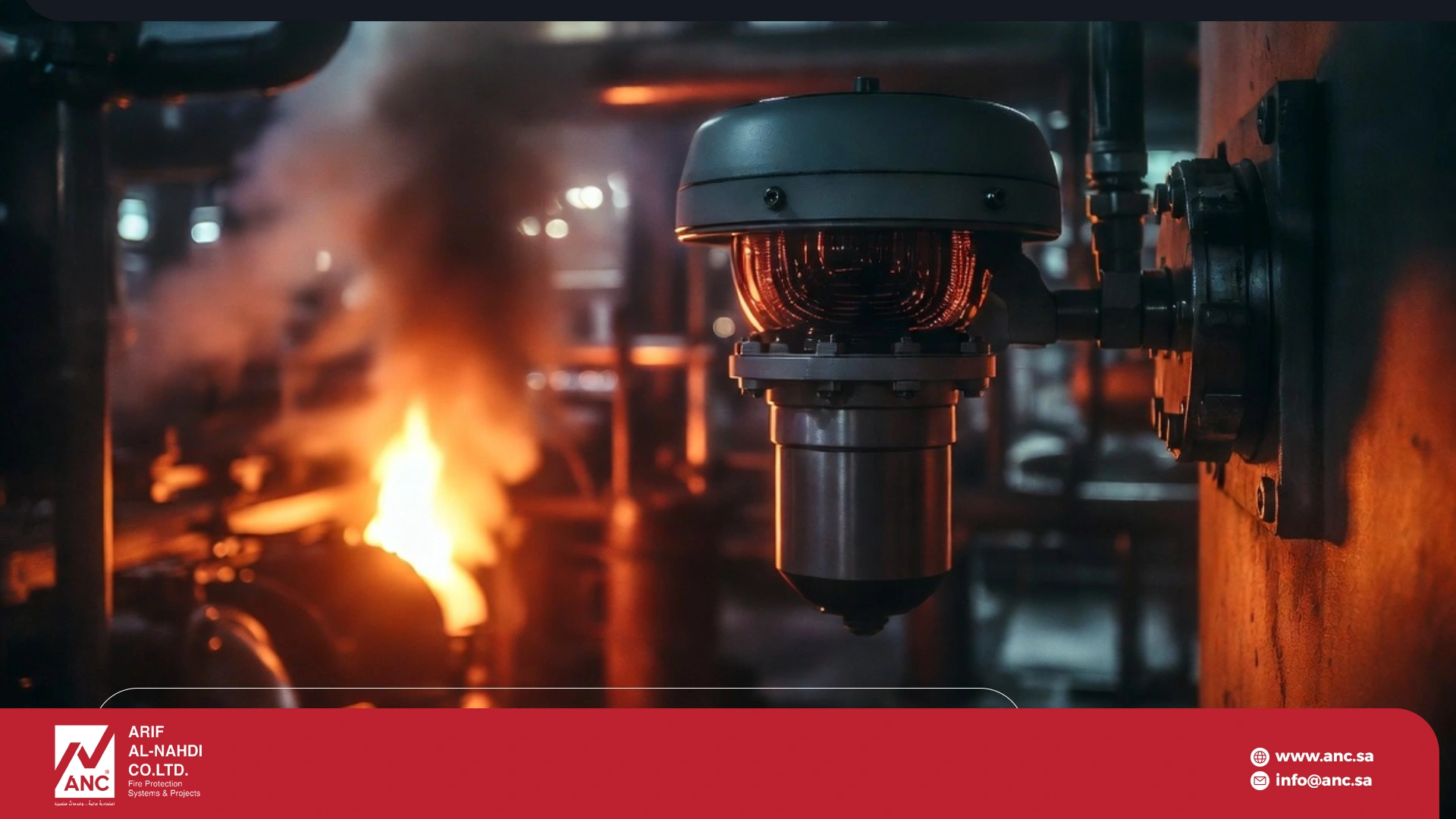
Flame detectors use optical technologies (UV/IR) to detect fire quickly, even in open or high-risk environments.
Smoke Detection Systems
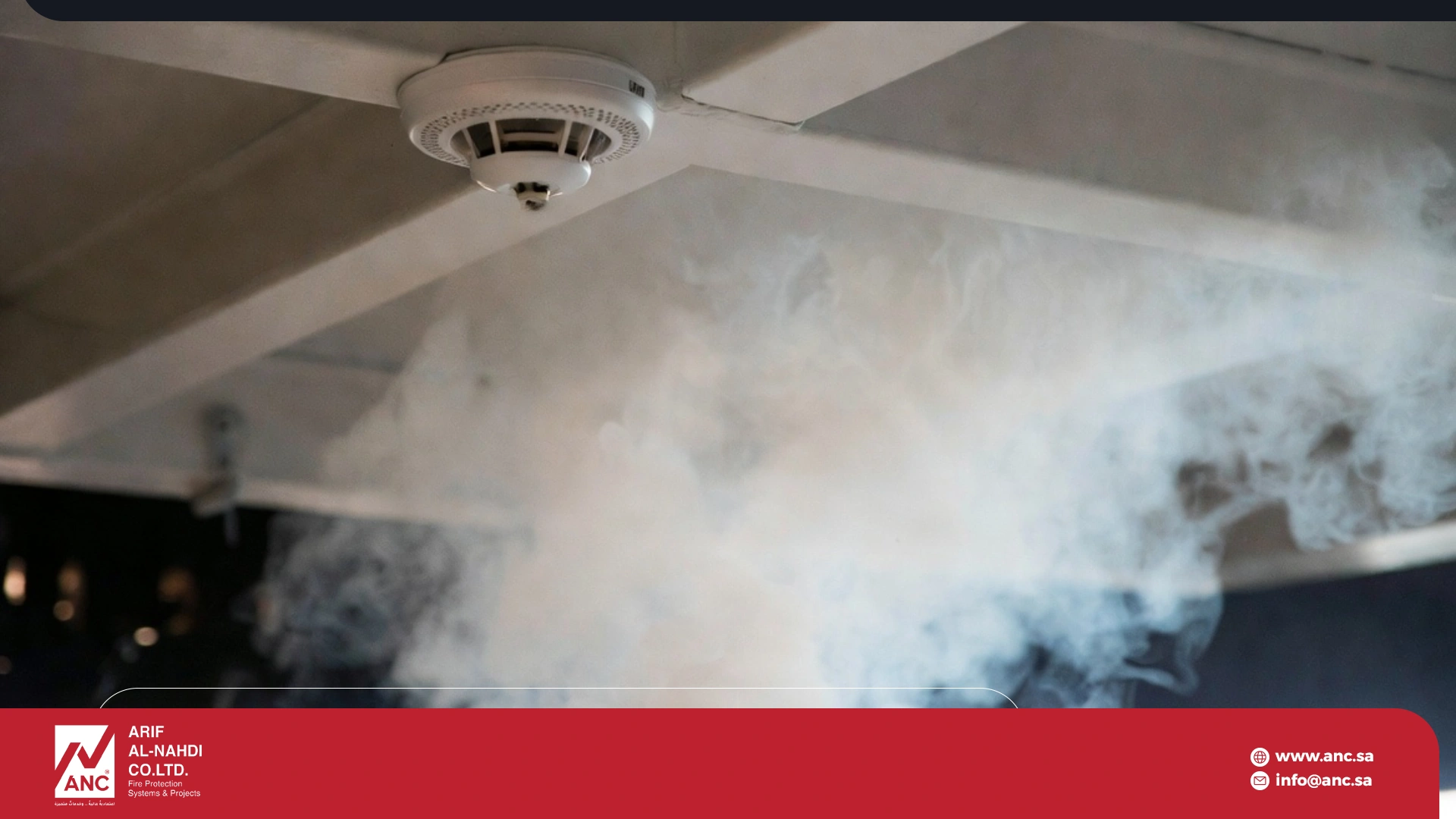
Smoke detectors are used in enclosed areas to detect early-stage fires.
Heat Detection Systems
Heat detectors respond to temperature changes and are suitable for harsh environments where smoke detection may not be reliable.
Key Components of a Fire and Gas Detection System
Detectors and Sensors
Include gas detectors, flame detectors, smoke detectors, and heat sensors.
Control Panel (F&G Panel)
The central unit that processes signals and coordinates system response.
Alarm and Notification Systems
Audible and visual alarms that alert personnel.
Communication and Integration Systems
Integration with shutdown systems, fire suppression systems, and building management systems.
Power Supply and Backup Systems
Ensure continuous operation even during power failure.
Fire and Gas Detection System in Oil and Gas Industry
A fire and gas detection system in oil and gas is critical across upstream, midstream, and downstream operations.
Typical applications include:
- Refineries
- Offshore platforms
- Storage terminals
- Processing facilities
In these environments, detecting gas leaks and fire hazards early is essential due to the presence of explosive atmospheres.
System design must consider:
- Hazardous area classification
- Environmental conditions
- Operational risks
Fire and Gas Detection Systems in Saudi Arabia
The demand for fire and gas detection systems in Saudi Arabia continues to grow due to expanding industrial and energy sectors.
In KSA, systems must comply with:
- Local regulations and authority requirements
- International safety standards
- Project-specific specifications
Companies like ANC (Arif Al-Nahdi) support businesses by providing tailored fire & gas system solutions aligned with both local and international expectations.
Also Read: Foam Fire Protection System: Types, Pumps & Applications
How to Choose the Right Fire and Gas Detection System
Selecting the right fire and gas detection system requires a detailed hazard assessment and engineering evaluation.
Key factors include:
- Type of facility and risk level
- Types of gases and fire hazards present
- Environmental conditions (temperature, dust, humidity)
- Required detection coverage
- Integration with other safety systems
System selection should always align with recognized safety standards and project requirements.
Request a customized solution based on your facility needs in Saudi Arabia.
Quick Checklist Before Selecting an F&G System
- What hazards need to be detected (gas, flame, smoke, heat)?
- What types of gases are present?
- Is the environment classified as hazardous?
- What level of integration is required?
- Is the project new or retrofit?
- What is the required scope (supply, installation, maintenance)?
Common Mistakes to Avoid
- Incorrect detector selection
- Poor detector placement
- Lack of integration with safety systems
- Ignoring environmental conditions
- Lack of regular maintenance and calibration
These issues can lead to delayed detection and increased operational risk.
Inspection, Testing, and Maintenance Requirements
Regular maintenance is essential to ensure system reliability.
Key activities include:
- Calibration of gas detectors
- Functional testing of detectors and alarms
- Inspection of control panels
- Verification of system integration
- Periodic servicing
A fire and gas detection system is a critical component of safety in oil & gas and industrial environments. In Saudi Arabia (KSA), where industrial operations are complex and high-risk, these systems play a vital role in protecting people, assets, and continuity of operations.
From early hazard detection to automated response, a properly designed fire & gas detection system significantly reduces risk and enhances safety performance.
At ANC (Arif Al-Nahdi), businesses can access advanced, tailored safety solutions designed to meet both local regulations and international standards.