

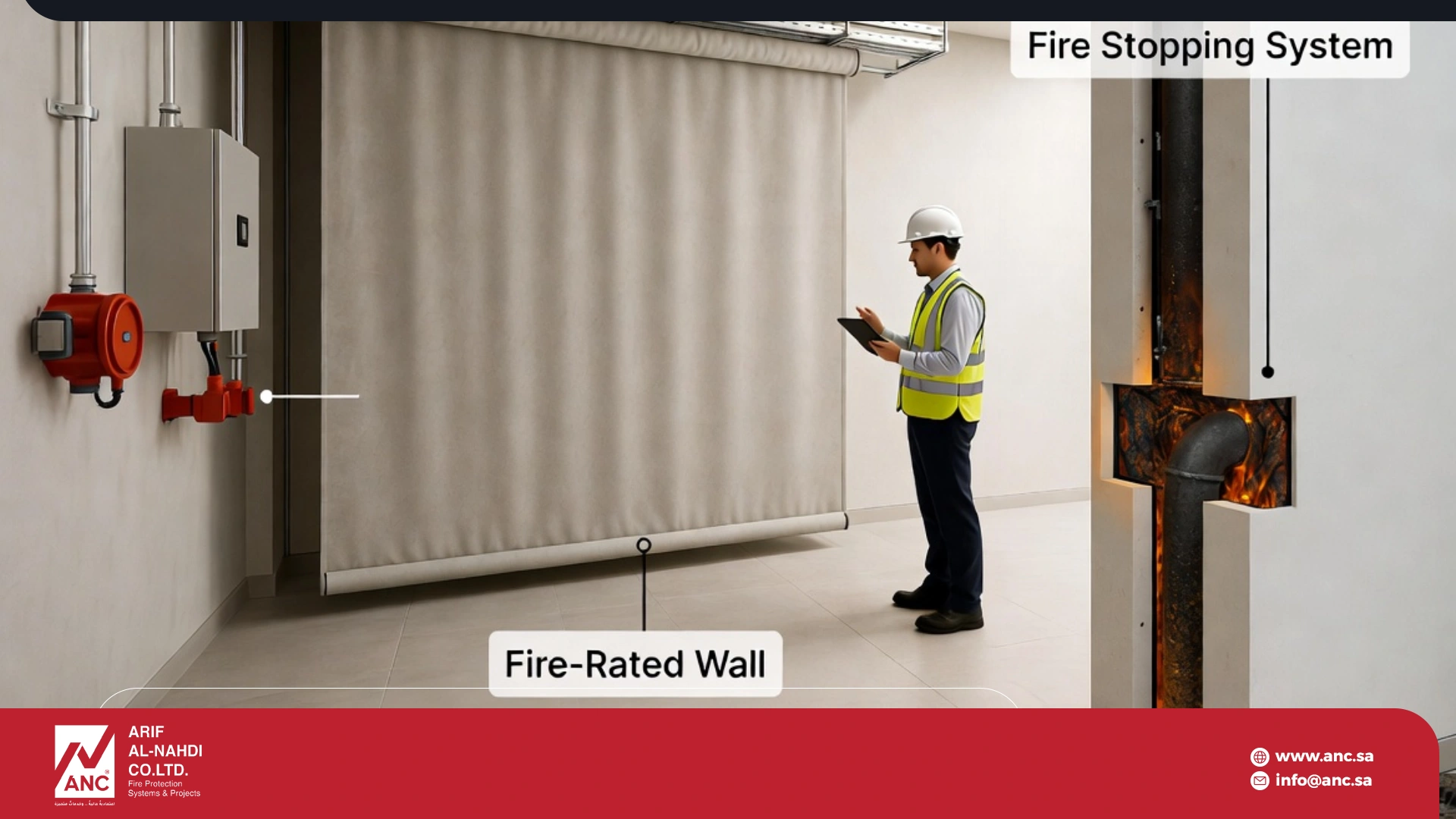
In modern buildings and industrial facilities, fire safety is not only about detection and suppression—it is also about containment. Fires can spread rapidly through openings, ceilings, walls, and service penetrations if not properly controlled, leading to severe damage and safety risks.
This guide explains fire curtain systems, fire separation systems, and fire stopping systems, how they work, their differences, and how they are applied in real projects.
What Is a Fire Curtain System?
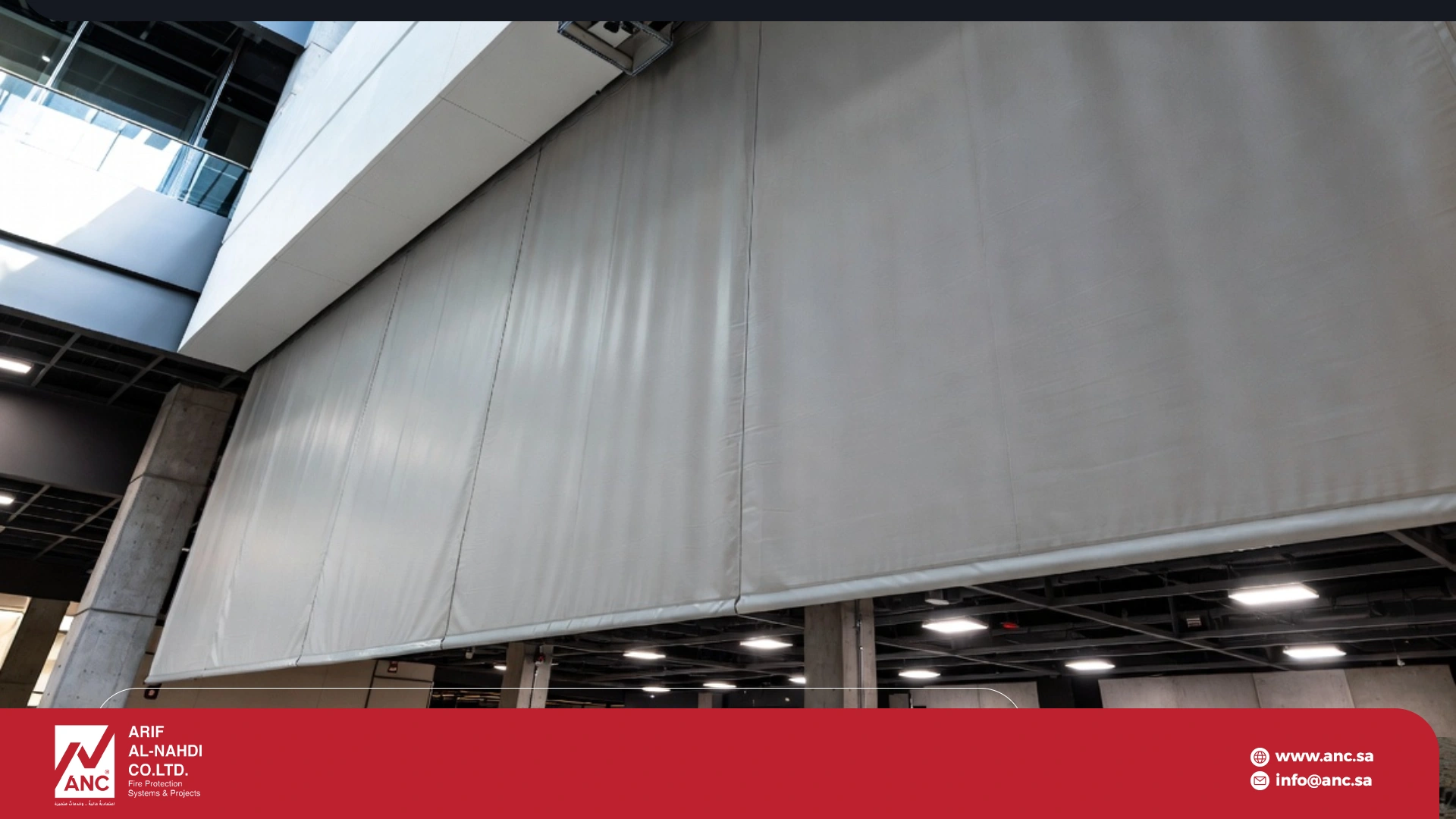
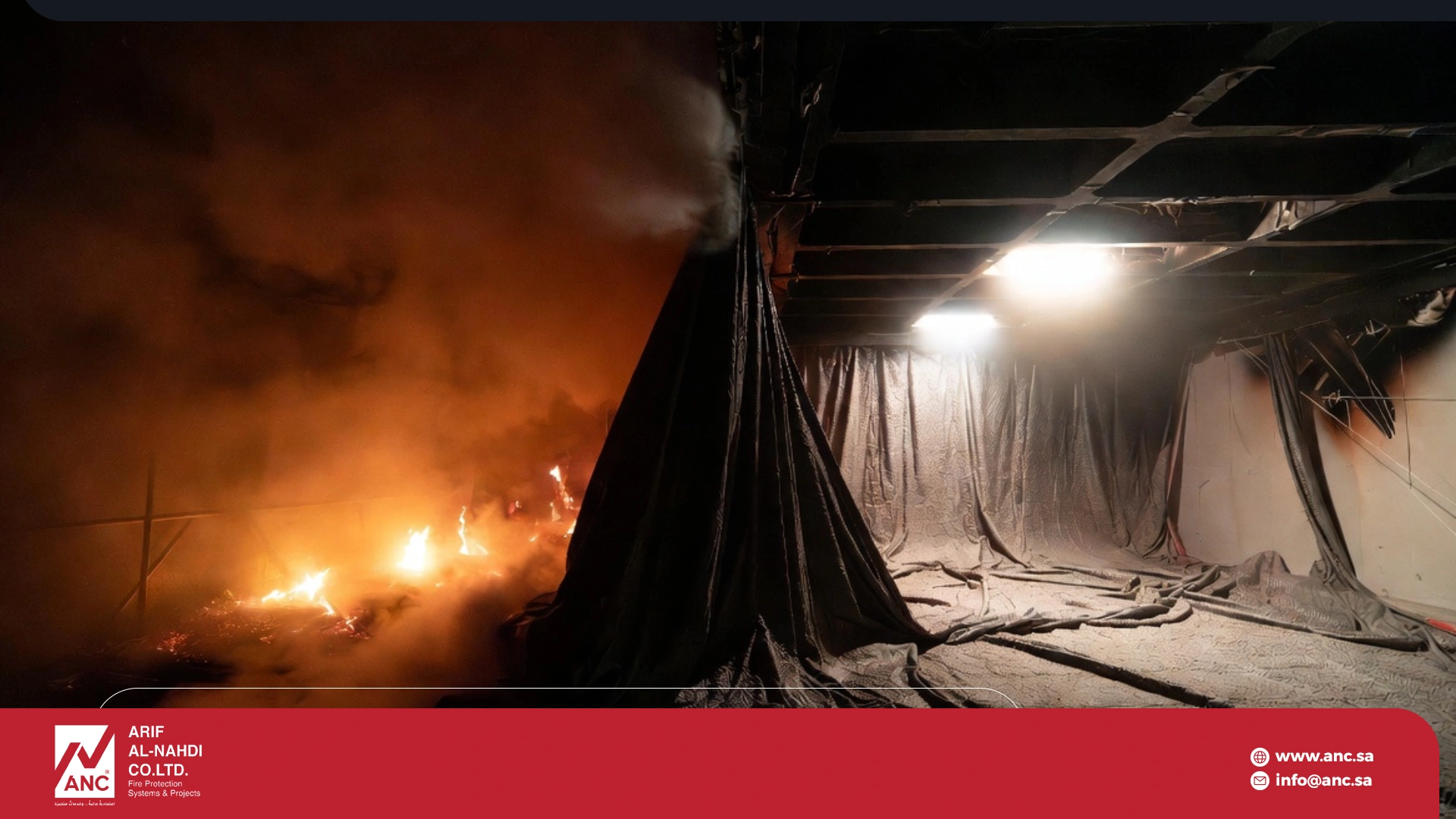
A fire curtain system is a passive fire protection solution made from fire-resistant fabric or specialized materials that automatically deploy during a fire to create a protective barrier.
These systems are typically installed in areas where traditional fire-rated walls are not practical, such as:
- Atriums
- Large open spaces
- Corridors
- Commercial areas
Fire curtains are activated by fire detection systems and are designed to:
- Contain fire within a specific zone
- Limit smoke spread
- Protect escape routes
Their ability to deploy automatically makes them highly effective in modern architectural designs where openness is required without compromising safety.
Why Passive Fire Protection Systems Are Essential
A comprehensive fire prevention system must include both active and passive protection strategies.
While active systems (such as alarms and suppression) detect and fight fires, passive systems work continuously to contain them.
Key benefits of passive fire protection include:
- Preventing fire and smoke spread
- Protecting structural integrity
- Supporting safe evacuation
- Reducing damage to adjacent areas
In projects across KSA, passive systems are essential to meet safety standards and ensure long-term reliability.
System effectiveness depends on:
- Proper design
- Correct installation
- Compliance with fire safety regulations
Request a site assessment from Al-Nahdi to ensure your system meets project requirements.
Fire Separation Systems Explained
A fire separation system refers to fire-rated walls, floors, and barriers used to divide a building into compartments.
These systems are designed to:
- Contain fire within a defined area
- Prevent fire spread to adjacent spaces
- Provide time for evacuation and emergency response
Typical elements include:
- Fire-rated walls and partitions
- Fire doors and barriers
- Compartmentation strategies
Fire separation systems are widely used in:
- Hospitals
- Commercial buildings
- Industrial facilities
They are a fundamental part of building safety design in Saudi Arabia.
Fire Stopping Systems Explained
A fire stopping system (or fire stop system) is used to seal openings and penetrations in fire-rated walls and floors.
These penetrations are typically created by:
- Pipes
- Electrical cables
- HVAC ducts
Fire stopping systems prevent fire and smoke from passing through these openings, maintaining the integrity of fire-rated barriers.
Common fire stopping materials include:
- Fire-resistant sealants
- Firestop collars
- Wraps and compounds
Proper fire stopping is critical to ensure that compartmentation systems perform as intended.
Also Read: Fire and Gas Detection System for Oil & Gas and Industrial Facilities
Fire Curtain vs Fire Separation vs Fire Stopping
| Criteria | Fire Curtain System | Fire Separation System | Fire Stopping System |
|---|---|---|---|
| Function | Deployable barrier | Permanent compartment | Sealing penetrations |
| Application | Open spaces | Walls & floors | Service openings |
| Installation | Automated system | Structural design | Sealing materials |
| Role | Dynamic containment | Fire compartmentation | Maintain barrier integrity |
These systems are not alternatives—they are complementary and work together within a complete fire protection strategy.
How Fire Curtains and Passive Barriers Work Together
A fire curtain system works alongside fire separation and fire stopping systems to create a complete passive protection solution.
Together, they achieve:
- Compartmentation through fire-rated walls
- Automatic barrier deployment using fire curtains
- Sealing of penetrations using fire stopping
When integrated with fire detection systems, these solutions significantly enhance building safety by limiting fire spread and supporting evacuation.
Applications in Buildings and Industrial Facilities
A fire curtain system and related passive protection systems are widely used across different sectors in Saudi Arabia:
- Commercial buildings and shopping malls
- Hospitals and healthcare facilities
- Airports and transportation hubs
- Industrial plants and warehouses
- Data centers and critical infrastructure
System selection depends on:
- Building design
- Risk level
- Regulatory requirements in KSA
How to Choose the Right Passive Fire Protection System
Selecting the right system requires a clear understanding of project requirements and fire safety design.
Key factors include:
- Building layout and compartmentation strategy
- Type of openings and penetrations
- Required fire resistance rating
- Occupancy and evacuation plans
- Compliance with local and international standards
At ANC, system selection is aligned with both engineering requirements and regulatory expectations in Saudi Arabia.
Request a customized solution based on your project needs.
Also Read: Foam Fire Protection System: Types, Pumps & Applications
Quick Checklist Before Selecting a System
- Where are fire-rated barriers required?
- Are there large openings requiring fire curtains?
- What penetrations require fire stopping?
- What fire rating is needed?
- Is the project new or retrofit?
- Are systems integrated with fire detection?
Common Mistakes to Avoid
- Improper sealing of penetrations
- Using incorrect firestop materials
- Poor installation of fire curtains
- Lack of coordination between systems
- Ignoring inspection and maintenance requirements
These mistakes can compromise overall fire protection performance.
Inspection, Testing, and Maintenance Requirements
Regular maintenance is essential to ensure system reliability.
Key practices include:
- Inspecting fire curtains and barriers
- Checking firestop materials and seals
- Testing automatic deployment systems
- Verifying compliance with safety standards
Maintenance should follow recognized standards and project specifications.
Standards and Codes for Passive Fire Protection
Passive fire protection systems must comply with recognized fire prevention system standards and building codes.
These include:
- NFPA guidelines for fire protection
- Local building codes and regulations in Saudi Arabia
- Project-specific safety requirements
A fire curtain system, along with fire separation and fire stopping systems, forms the backbone of passive fire protection in modern buildings.
At Arif Al-Nahdi, businesses and developers can access tailored passive fire protection solutions designed to meet both local regulations and international standards.
Request a quote or expert consultation today to ensure your project is fully protected.