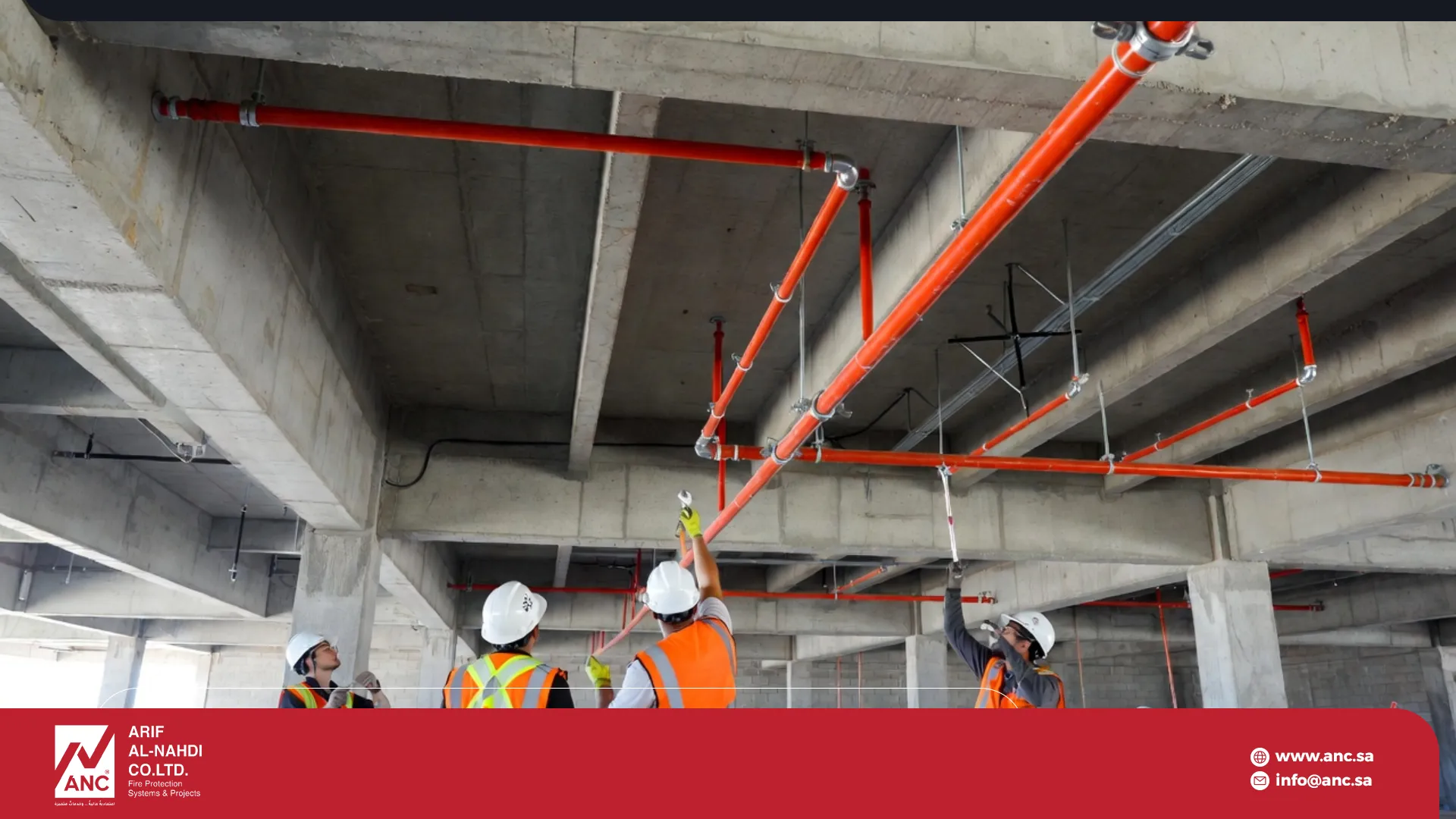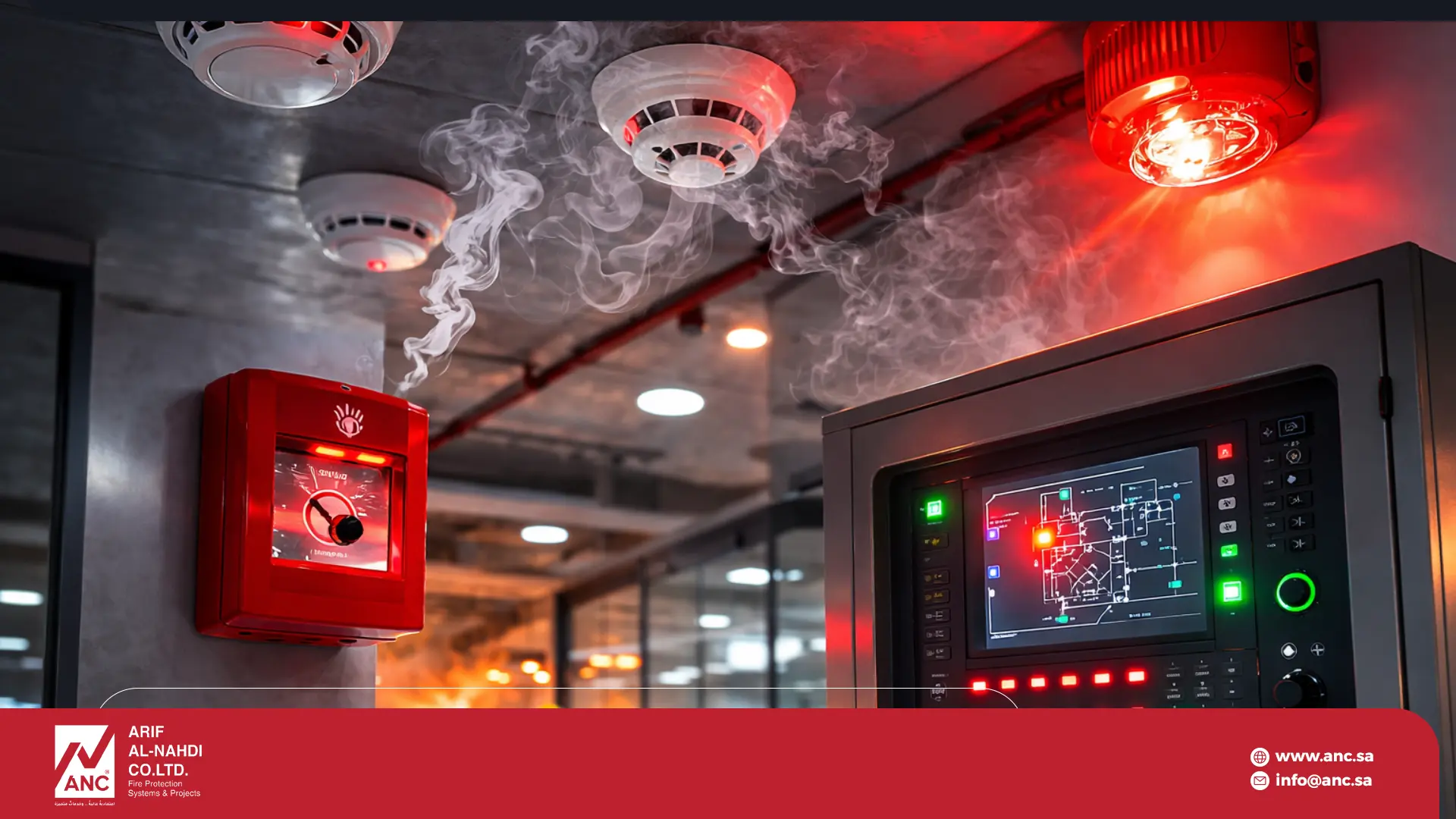

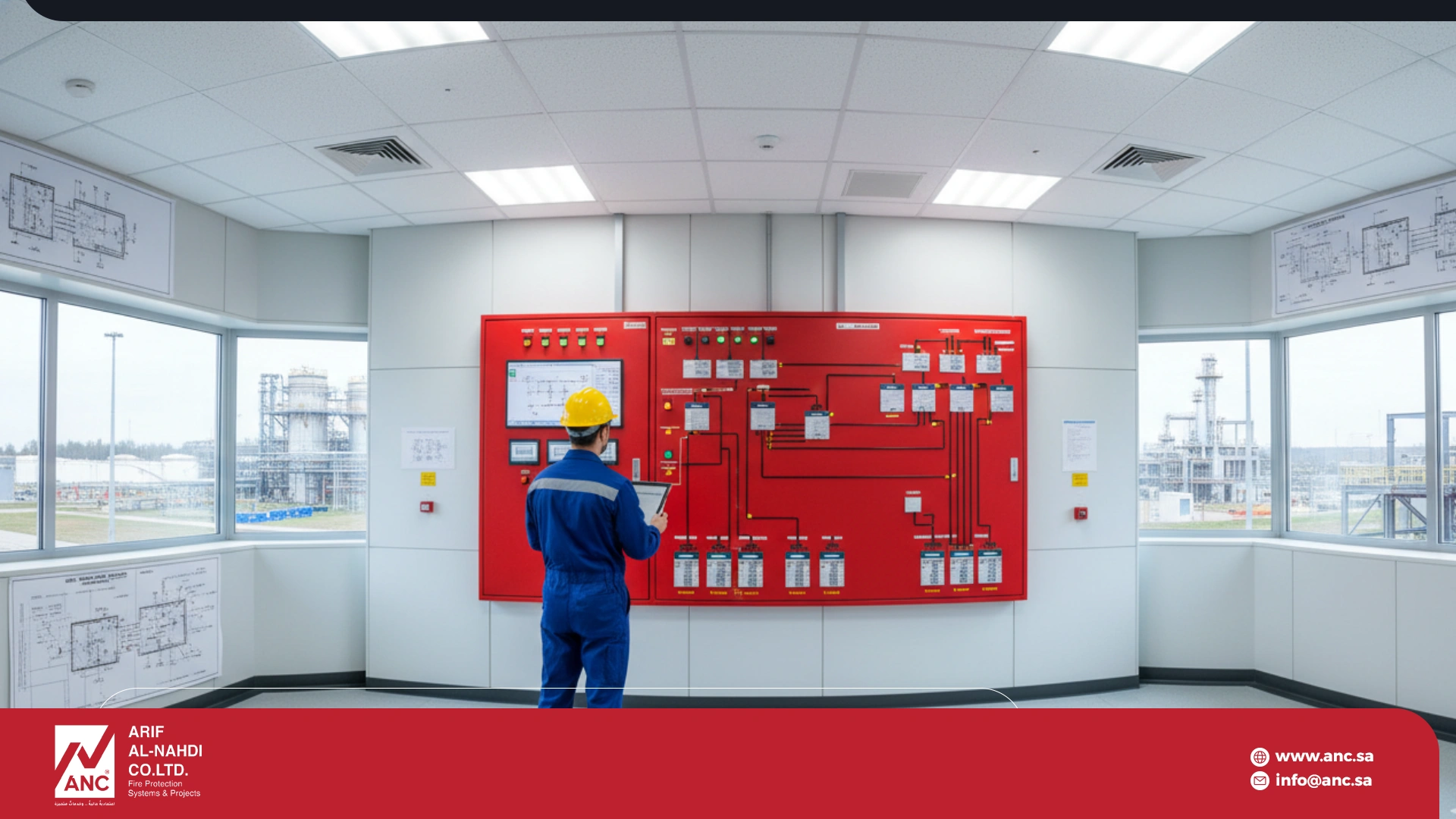
A fire panel system acts as the core of this coordination. It connects detection devices, alarms, and suppression systems into one unified platform that can monitor, analyze, and respond in real time.
Across Saudi Arabia, organizations are increasingly investing in integrated fire control and monitoring solutions to meet safety regulations and protect critical assets. At ANC, these systems are often part of comprehensive fire protection strategies tailored to complex project requirements.
This guide explains how fire panel systems work, their types, components, and advanced solutions like FireTrace and FirePro.
What Is a Fire Panel System?
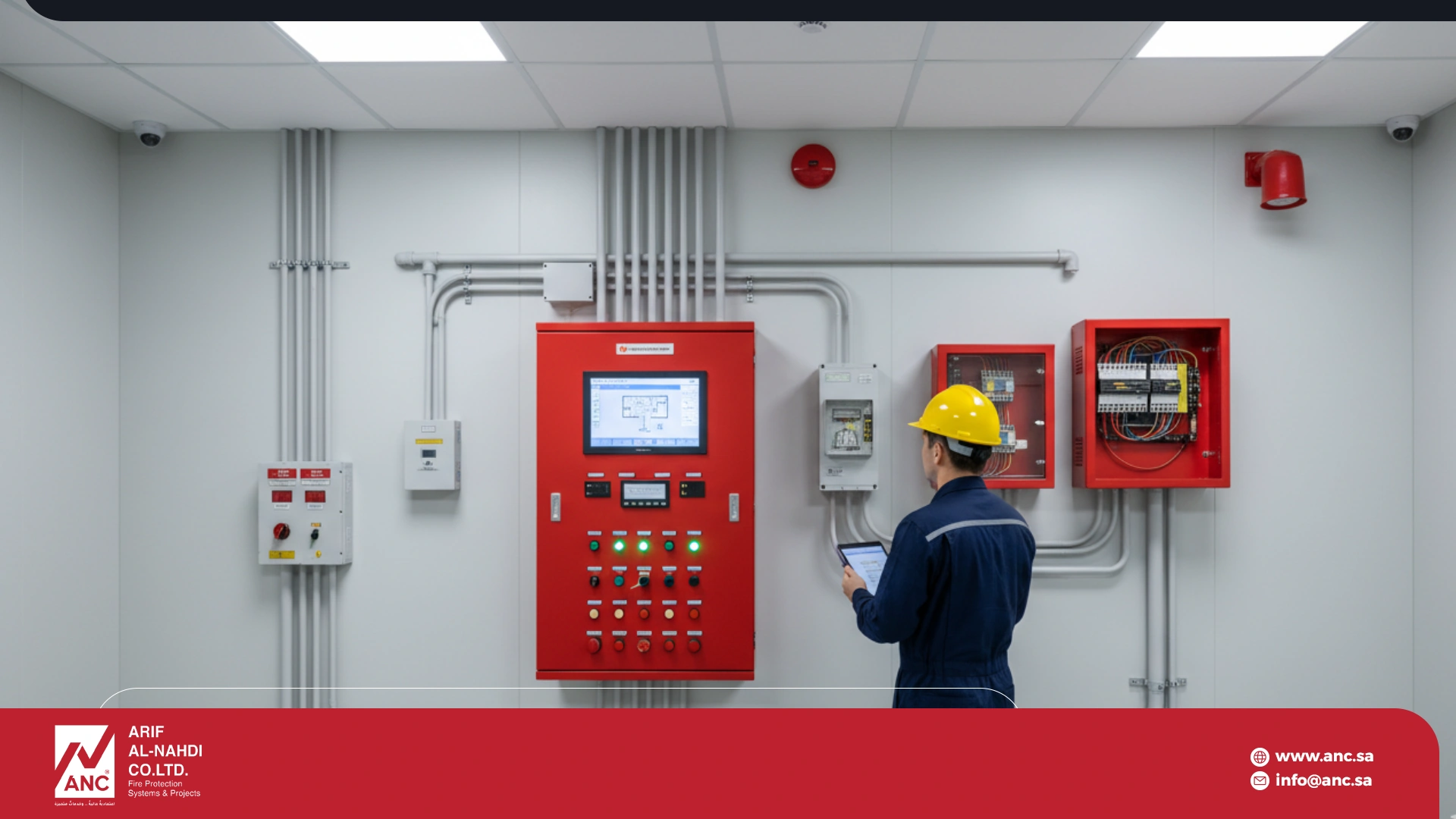
A fire panel system—often referred to as a fire control system—is the central unit that receives signals from detection devices and triggers alarms or automated safety responses.
Think of it as the decision-making hub of your fire protection system. It continuously processes inputs from across the building and determines the appropriate action during a fire event.
These systems are commonly installed in environments such as:
- Commercial buildings and malls
- Industrial facilities and factories
- Data centers and IT infrastructure
- Hospitals and critical facilities
What makes the fire panel essential is its ability to ensure that all connected systems respond in a coordinated and timely manner.
Why Fire Panel Systems Are Critical for Fire Safety
A fire panel system plays a vital role in reducing risk by enabling early detection and immediate action.
In real-world scenarios, the system does much more than triggering alarms. It creates a chain of automated responses that protect both people and assets.
Its role can be summarized in four key functions:
- Monitoring fire and system conditions continuously
- Activating alarms and notifying occupants
- Controlling suppression and safety systems
- Supporting emergency response procedures
Without this centralized coordination, fire protection systems may operate in isolation, reducing their overall effectiveness.
How Fire Panel Systems Work
A fire panel system operates through a structured and continuous process that ensures rapid response.
The sequence typically follows these steps:
- A detector (smoke, heat, or flame) senses a hazard
- The signal is transmitted instantly to the control panel
- The panel analyzes the signal based on programmed logic
- Alarm systems are activated
- Output signals trigger suppression, shutdown, or ventilation systems
What distinguishes modern systems is their ability to continue monitoring after activation, adapting responses based on changing conditions inside the facility.
Types of Fire Panel Systems
Conventional Fire Panels
Conventional systems divide a building into zones, allowing operators to identify the general location of a fire.
They are typically used in simpler projects where:
- The layout is straightforward
- Detailed detection is not required
- Cost efficiency is a priority
Addressable Fire Panels
Addressable systems provide a higher level of precision by identifying the exact device that triggered the alarm.
This improves:
- Response speed
- Maintenance efficiency
- Fault detection accuracy
Intelligent Fire Panels
In complex facilities, intelligent panels offer advanced capabilities such as diagnostics, system integration, and real-time monitoring.
These systems are designed for environments where safety, scalability, and control are critical.
Also Read: Fire Fighting Foam System: Types, Monitors & Applications
Fire Control Systems Explained
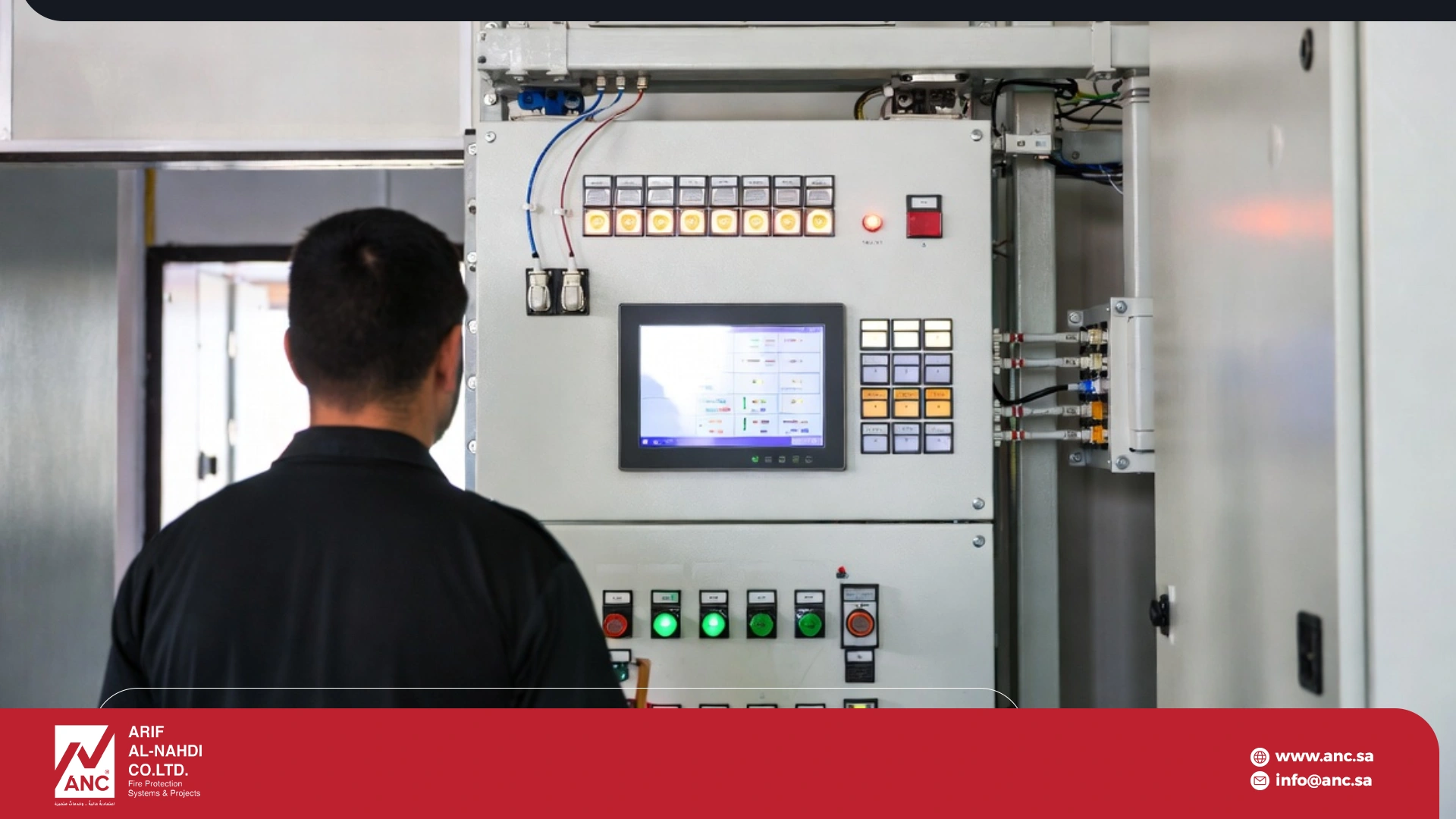
A fire control system is responsible for executing actions during a fire event.
While the fire panel detects and processes the event, the control system ensures that the correct actions are implemented across the facility.
In practical applications, this may include:
- Activating fire suppression systems
- Controlling smoke ventilation
- Shutting down equipment or fuel supply
- Managing elevators and access systems
This level of automation is essential in large-scale facilities across KSA, where manual intervention alone is not sufficient.
Fire Monitoring Systems Explained
A fire monitor system focuses on providing continuous visibility over fire protection systems rather than direct control.
In large or critical facilities, monitoring systems are often connected to centralized control rooms, where operators can track system status in real time.
Instead of reacting after a failure, monitoring allows teams to act proactively.
Typical capabilities include:
- Real-time alarm tracking
- Fault detection and alerts
- System performance monitoring
This improves operational safety and ensures compliance with fire safety requirements.
Advanced Fire Protection Solutions
FireTrace Systems
A fire trace system is designed to detect and suppress fire directly at its source, particularly in enclosed or critical equipment.
It is commonly used in applications such as:
- Electrical panels
- Machinery compartments
- Control cabinets
The key advantage is rapid, localized response without the need for complex infrastructure.
FirePro Aerosol Systems
A fire pro system uses aerosol-based technology to interrupt the combustion process.
These systems are particularly effective in enclosed spaces where traditional suppression methods may not be practical.
They are widely used in:
- Electrical enclosures
- Engine compartments
- Sensitive equipment areas
Key Components of a Fire Panel System
A fire panel system is structured as an integrated network of components working together.
Instead of viewing them as separate parts, it helps to understand them as layers within a system:
- Detection layer: smoke, heat, and flame detectors
- Control layer: the main fire panel unit
- Notification layer: alarms, strobes, annunciators
- Execution layer: outputs connected to suppression and control systems
- Integration layer: communication with external systems
This layered structure ensures reliability, scalability, and efficient response.
Applications of Fire Panel Systems
A fire panel system is used across a wide range of industries and building types in Saudi Arabia.
Typical applications include:
- Commercial buildings and shopping malls
- Industrial plants and manufacturing facilities
- Data centers and IT infrastructure
- Hospitals and healthcare facilities
- Airports and transportation hubs
Each application requires a different system configuration depending on risk level and operational complexity.
Also Read: Fire Extinguishing System with Water: Components & Design Guide
How to Choose the Right Fire Panel System
Choosing the right fire panel system is not about selecting a product—it is about designing a solution that fits your facility.
Several factors must be evaluated together, including:
- Facility size and complexity
- Required level of detection accuracy
- Integration with other fire protection systems
- Future scalability and expansion
- Compliance with regulations in KSA
A well-designed system ensures both safety and long-term reliability.
Request a customized solution from Al-Nahdi based on your project requirements.
Quick Checklist Before Selecting a System
Before selecting a system, make sure you have clear answers to the following:
- What type of facility is being protected?
- Do you need a conventional or addressable system?
- What level of monitoring is required?
- Are suppression systems integrated?
- Is the project new or retrofit?
- What are the regulatory requirements in KSA?
Common Mistakes to Avoid
Even well-intended designs can fail if common mistakes are not addressed.
The most frequent issues include:
- Selecting a panel that does not match facility size
- Poor integration between systems
- Incorrect detector placement
- Lack of regular maintenance
- Ignoring future scalability
These mistakes can significantly reduce system effectiveness.
Inspection, Testing, and Maintenance Requirements
A fire panel system requires continuous maintenance to ensure reliable performance.
Key maintenance activities include:
- Regular system testing
- Inspection of detectors and wiring
- Verification of alarms and outputs
- Software updates and diagnostics
- Periodic servicing
Maintenance should always follow recognized fire safety standards and project specifications.
Standards and Codes for Fire Panel Systems
A fire panel system must comply with recognized fire safety standards to ensure proper performance.
These include:
- NFPA guidelines for fire alarm and control systems
- Local regulations in Saudi Arabia (KSA)
- Project-specific safety requirements
A fire panel system is the backbone of modern fire protection, enabling detection, control, and monitoring within a single integrated platform. In KSA, these systems are essential for ensuring safety, compliance, and operational continuity.
At ANC (Arif Al-Nahdi), tailored fire panel and monitoring solutions are designed to meet the needs of complex projects across industries.
Request a quote or expert consultation today to ensure your facility is fully protected.
FAQs About Fire Panel System
1- What is a fire panel system?
A fire panel system is a central control unit that receives signals from detectors and activates alarms and fire protection systems.
2- What is a fire control system?
A fire control system manages actions during a fire event, such as activating suppression systems and controlling building functions.
3- What is a fire monitor system?
A fire monitoring system continuously supervises fire protection systems and alerts operators to alarms or faults.
4- What is FireTrace?
FireTrace is an automatic fire detection and suppression system designed for protecting enclosed equipment and critical assets.
5- What is FirePro aerosol?
FirePro is an aerosol-based fire suppression system that interrupts the combustion process and is used in enclosed spaces.