
Modern residential compounds are among the environments that most require advanced fire protection systems, due to the large number of units and the variety of their uses between villas and residential apartments. With increasing population density and the rise in the number of electrical devices and heat sources inside homes, fire protection systems have become an essential element that cannot be overlooked in any residential project.
In this article, you will learn about the comprehensive guide to protecting residential compounds from fire, as well as the best fire protection solutions for villas and apartments provided by specialized companies in this field. We will also explain how integrated systems—from fire alarm systems to fire pumps and automatic sprinklers—help reduce losses and ensure the safety of residents.
We will also highlight the role of Arif Al Nahdi Company (ANC) in providing locally and internationally certified fire protection systems that meet the needs of residential compounds in Saudi Arabia, along with installation and periodic maintenance services to ensure the highest levels of safety and rapid response in emergencies.
The Importance of Fire Protection in Residential Compounds
Protecting residential compounds from fire hazards is a fundamental part of safe design and operation. Integrated fire protection systems help prevent disasters that may threaten residents’ lives and cause severe property damage.
Since modern compounds contain a large number of villas and apartments with intensive daily use, any failure in the fire protection system can lead to rapid fire spread within the building or between adjacent residential units.
Therefore, implementing fire protection systems is no longer just a regulatory requirement but a technical and humanitarian necessity that ensures safety and continuity in residential environments.
1. Potential Risks in Residential Compounds
Residential compounds are complex environments with numerous units and facilities, increasing the likelihood of fires and their rapid spread.
The most common risks include:
- Unsafe or outdated electrical wiring that may cause short circuits.
- Multiple electrical appliances in each unit such as air conditioners, ovens, and heaters.
- Storing flammable materials inside homes or parking areas such as fuel and cleaning products.
- Lack of safety awareness among some residents, leading to delayed reporting or improper handling of fire incidents.
- Absence of effective fire detection and suppression systems in some older or smaller compounds, increasing the extent of losses.
2. Legal and Human Responsibility
Protecting lives and property within residential compounds is not a choice — it is a legal and humanitarian duty.
- Saudi regulations and Civil Defense standards require the installation of certified fire alarm and suppression systems in all residential buildings.
- Compound owners and developers bear full legal responsibility in case of damage resulting from negligence or lack of fire protection.
- On a humanitarian level, providing a safe living environment is one of the core pillars of quality of life, ensuring families feel secure and minimizing human and material losses during emergencies.
From this standpoint, Arif Al Nahdi Company (ANC) plays a key role in supporting residential compounds by providing integrated fire protection systems that meet local and international standards, offering complete fire safety for villas and apartments across the Kingdom.
Fire Detection Systems in Residential Compounds
1. Fire Alarm Systems
Fire alarm systems serve as the first line of defense in any residential compound, enabling early fire detection and alerting residents immediately before the situation escalates. These systems rely on a set of detectors such as smoke, heat, and flame detectors, which operate automatically when any fire indicators are detected.
The signals are sent directly to a central control panel, which then issues audible and visual alarms to alert residents and safety teams.
In some advanced systems, the alarm is linked to the Civil Defense network or smart monitoring applications for remote tracking and rapid response.
2. Detector Placement
The proper placement of detectors inside residential compounds is crucial to ensure system effectiveness. Detectors should be installed in high-risk areas such as kitchens, corridors, electrical rooms, and generator rooms, in addition to common areas like entrances and elevators.
Global standards such as NFPA 72 recommend having a smoke detector in every bedroom and hallway, while maintaining safe distances between detectors to avoid any delay in fire detection.
Audible and visual alarm devices must also be distributed in a way that ensures the alert reaches all residents as quickly as possible.
At Arif Al Nahdi Company (ANC), we provide advanced fire detection and alarm systems approved by NFPA and SASO, specifically designed for villas and residential apartments in modern compounds, along with installation, testing, and periodic maintenance services to ensure reliable performance and immediate response at all times.
Fire Suppression Systems Suitable for Residential Compounds
1. Fire Pumps
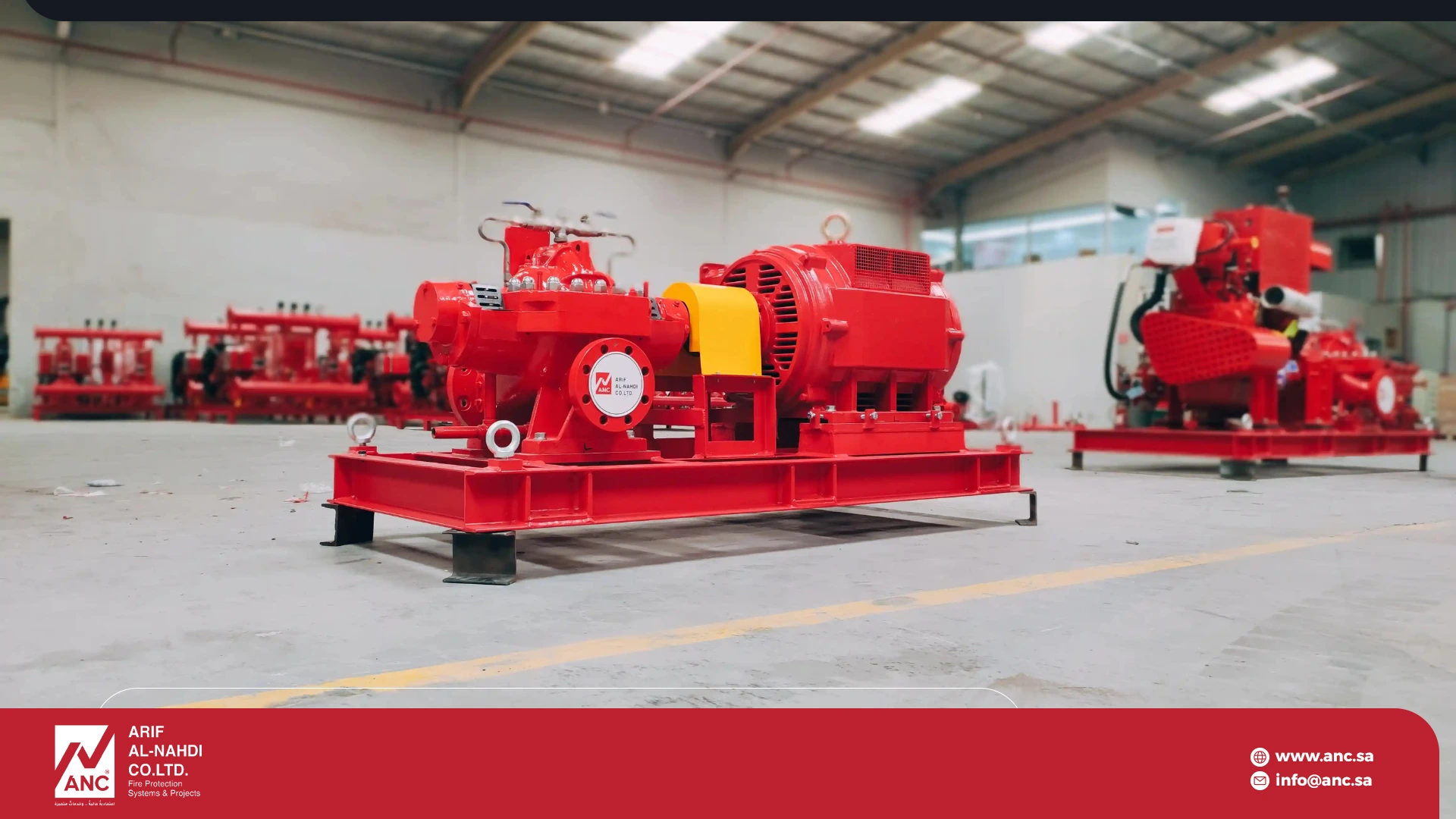
Fire pumps are the core component of fire suppression systems within residential compounds, ensuring adequate water flow and pressure through the sprinkler and piping network.
They come in various types—electric, diesel, or hybrid—and are selected based on the size of the compound, number of floors, and water source.
The pump activates automatically when system pressure drops, providing a constant and reliable water supply to the fire protection system.
Pumps must be installed in a dedicated, insulated pump room that complies with NFPA 20 standards to ensure protection and ease of maintenance.
2. Gas Fire Suppression Systems (FM-200, CO₂)
Gas-based fire suppression systems are used in areas containing electrical equipment or sensitive assets where water cannot be used, such as control rooms, server rooms, and generator rooms.
FM-200 extinguishes fires by absorbing heat and inhibiting flame propagation without leaving any residue, while CO₂ is used to displace oxygen in small, enclosed spaces.
These systems are fast, clean, and highly effective, suppressing fires within seconds—making them ideal for luxury villas and smart residential compounds.
At ANC, we provide integrated fire suppression solutions including fire pumps, automatic sprinkler systems, and gas extinguishing systems, all tailored to the needs of villas and residential compounds across the Kingdom. Our professional installation and maintenance services ensure reliable operation and continuous performance at all times.
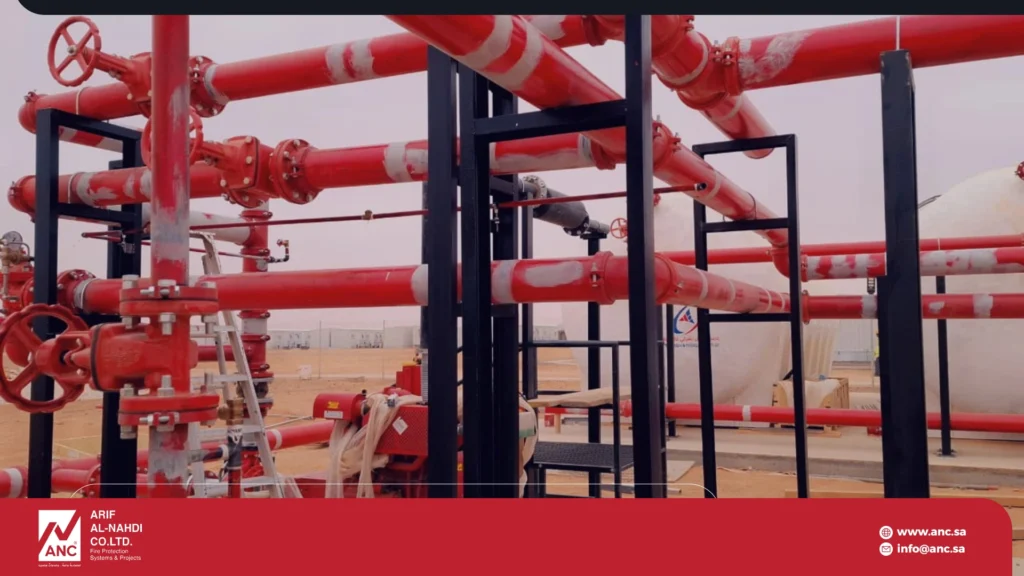
Integrating Detection and Suppression Systems for Comprehensive Fire Protection in Residential Compounds
Relying on a single system for fire protection does not provide the required level of safety in residential compounds—especially those that contain dozens or even hundreds of units. Therefore, combining both fire detection and suppression systems is the optimal approach to ensure a rapid and comprehensive response in the event of a fire.
When smoke or heat is detected through early warning systems, an immediate signal is sent to the fire suppression system to activate sprinklers or release gas in the designated areas. This integration guarantees smart fire control before flames spread, giving residents enough time for safe evacuation without panic or disorder.
Today’s advanced systems—such as those provided by Arif Al Nahdi Company (ANC)—enable seamless linking between fire alarms, suppression units, and central control panels, making fire response automatic, fast, and highly accurate.
This level of integration is what distinguishes modern protection systems in villas and smart residential compounds, where technological speed merges with real-time response to safeguard lives and property.
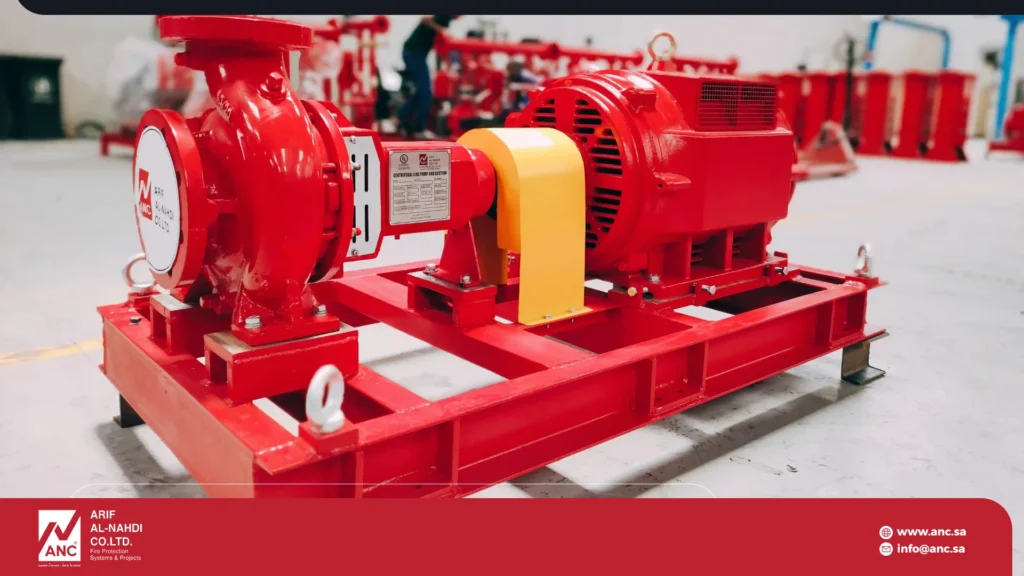
The Importance of Regular Maintenance for Fire Protection and Suppression Systems
Regular fire system maintenance is essential to ensure that all components operate efficiently at all times. Even the most advanced systems can experience failures, blockages, or reduced performance over time, which may limit their effectiveness during emergencies.
Routine maintenance includes inspecting fire pumps, detectors, alarm systems, and control panels to verify their immediate response when needed. It also involves checking water pressure, battery health, and electrical connections.
According to NFPA standards, monthly and quarterly testing is required, including actual system operation to confirm that every component performs as intended. Neglecting these procedures can lead to a loss of system reliability during a fire—making regular maintenance not just a technical requirement but a crucial safety measure that protects lives and property.
Arif Al Nahdi Company (ANC) provides comprehensive preventive maintenance programs that include inspection, testing, and performance documentation to ensure your fire system operates at maximum efficiency.
The Importance of Training Residents and Staff on Fire Safety Systems
Even with advanced fire protection systems, the human factor plays a critical role in reducing losses and ensuring rapid response during emergencies. Training residents and staff on how to use fire extinguishers, handle alarm devices, and follow evacuation plans is a necessity that cannot be overlooked.
Training helps to:
- Increase preventive awareness among all residents on how to react when the alarm is triggered.
- Avoid common mistakes such as attempting to extinguish large fires alone.
Implementing organized evacuation plans ensures that residents can safely exit the building within the first critical minutes of a fire.

Tips to Maintain Safety in Residential Compounds
Ensuring the safety of residential compounds is not limited to installing fire protection systems—it also requires ongoing management and preventive awareness from both residents and administrators.
Here are practical tips that help reduce fire risks and ensure a safer residential environment:
- Regular inspection of electrical systems: Ensure wiring and electrical connections are in good condition and avoid overloading outlets with multiple devices, as electrical faults are the most common cause of residential fires.
- Avoid storing flammable materials inside homes or hallways: Items like chemicals, paints, or fuel should be stored in designated areas away from heat sources.
- Commit to maintaining fire alarm and suppression systems: Conduct monthly tests for alarm systems and sprinklers to confirm readiness, and do not delay any technical repairs when noticing faults.
- Provide a clear and posted evacuation plan for residents: Evacuation maps should be placed on every floor, and residents should be trained on safe exit routes in case of fire.
- Install smoke detectors in all rooms and hallways: Early fire detection makes a significant difference in response time and saves lives.
- Train staff on how to use fire extinguishers: Especially security and maintenance personnel, to ensure quick intervention before the fire spreads.
- Work with a specialized fire safety provider: Such as Arif Al Nahdi Company (ANC), which offers regular maintenance and inspection programs along with tailored advisory services for residential compounds to ensure compliance with Civil Defense requirements and international standards.
By following these ongoing preventive measures, any residential compound can achieve a high level of safety and emergency readiness, ensuring protection of lives and property around the clock.
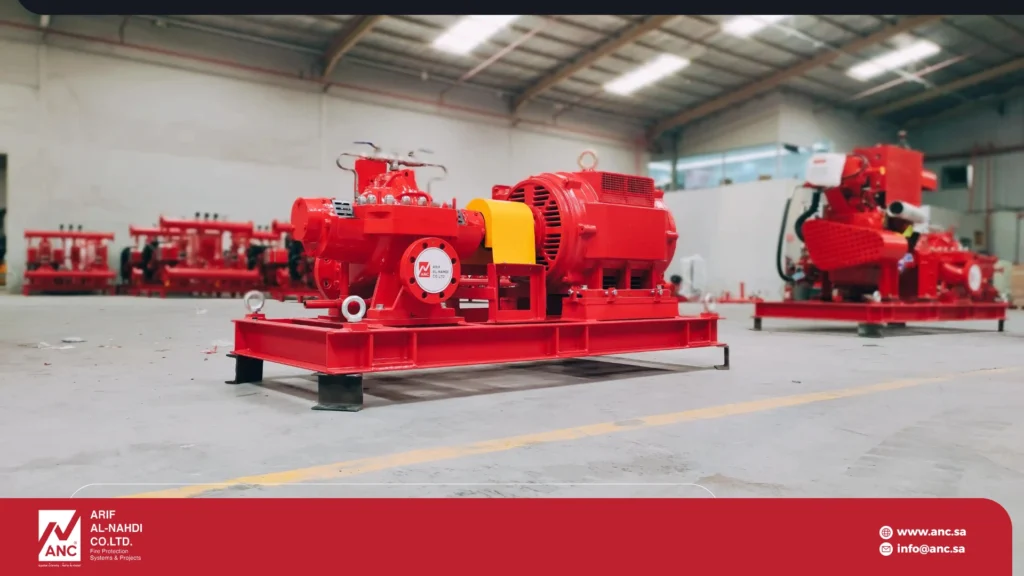
Arif Al Nahdi ANC — The Best Fire Systems & Fire Pumps Company in Saudi Arabia
Arif Al Nahdi Company (ANC) is one of the leading providers of fire systems and fire pumps in the Kingdom of Saudi Arabia, thanks to its extensive experience and commitment to the highest local and international safety and quality standards.
1. Technical Expertise & World-Class Standards
The company has a strong track record in supplying, installing, and maintaining all types of fire protection systems, including early warning systems, electric and diesel fire pumps, gas suppression systems, water-based firefighting systems, and automatic sprinkler systems.
All ANC products are certified by NFPA, UL/FM, and SASO, making them a trusted choice for industrial, commercial, and residential projects across the Kingdom.
2. Integrated Solutions for All Sectors
ANC provides customized fire protection solutions for a wide range of facilities, such as:
- Residential compounds, villas, and apartments.
- Schools, universities, and hospitals.
- Factories, warehouses, and oil & gas projects.
Every system is carefully designed based on the client’s needs and the nature of the facility, ensuring efficient performance and rapid response during emergencies.
3. Professional Installation & Maintenance Services
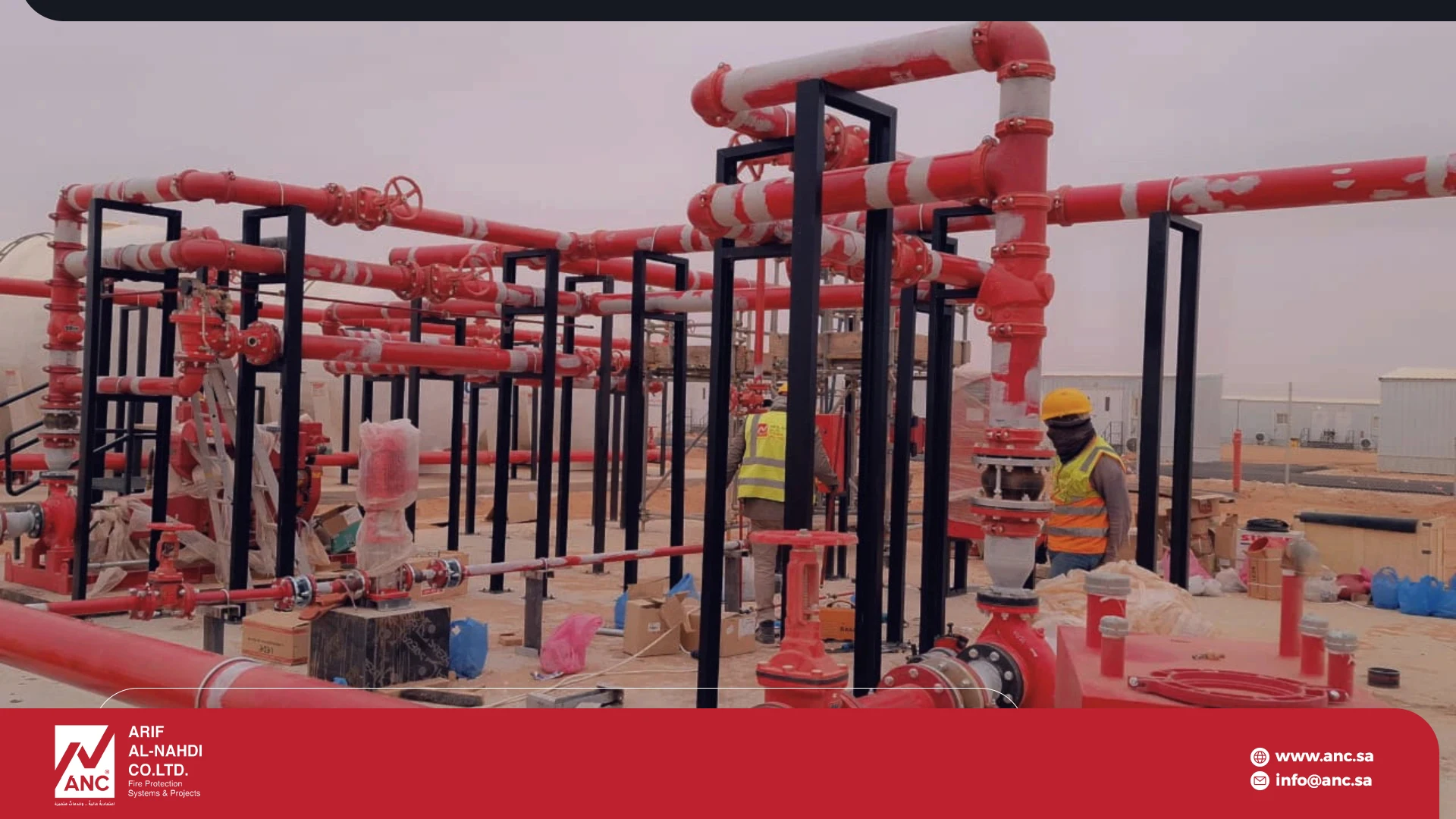
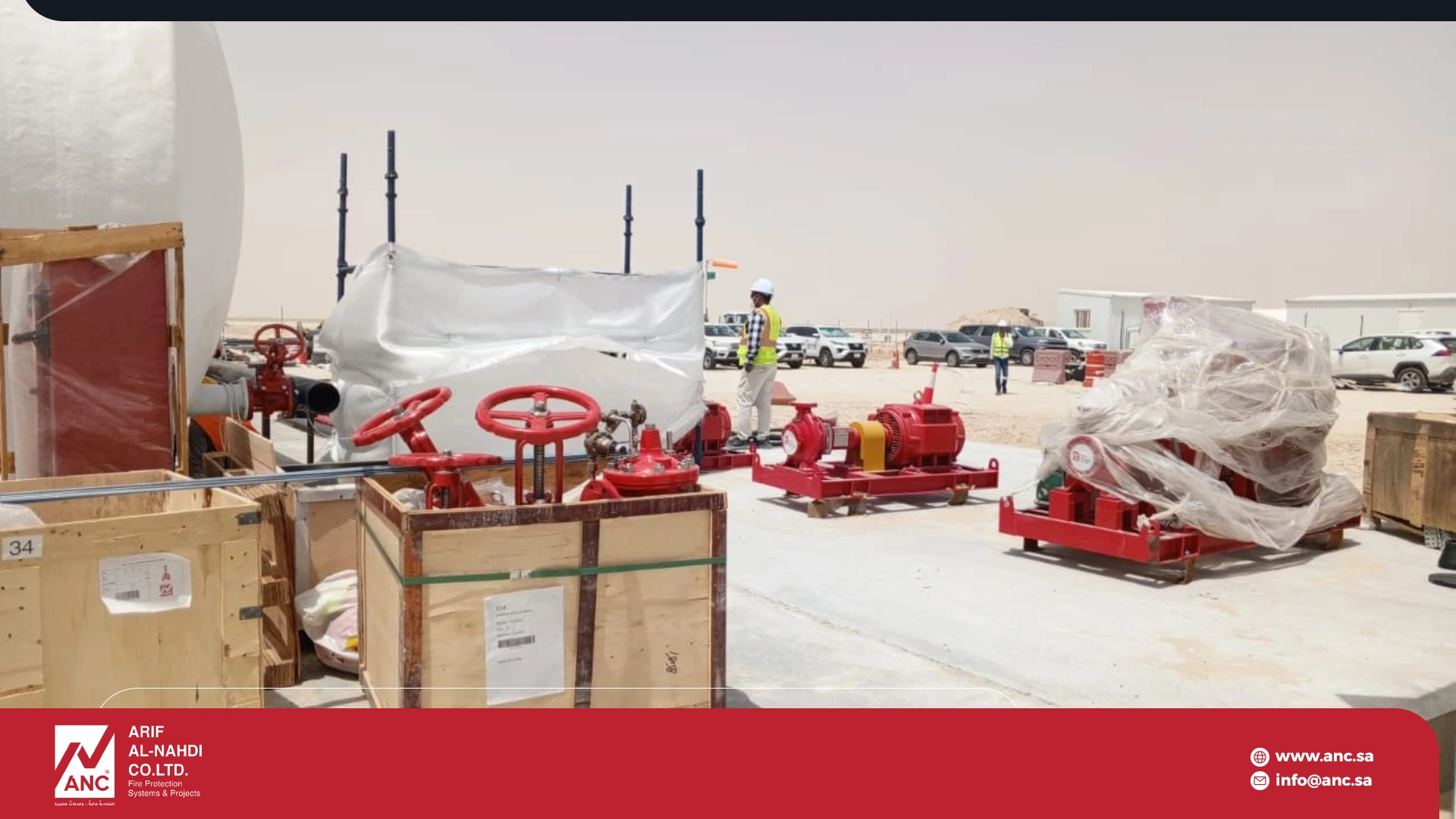
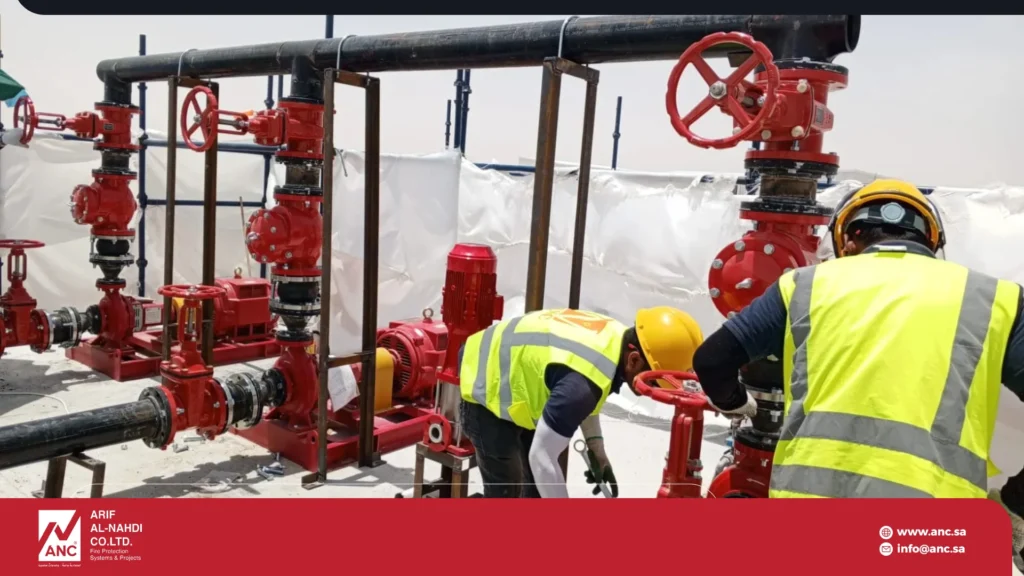
ANC provides a specialized engineering team for field installation and testing of fire systems according to NFPA 20 standards, along with periodic maintenance services to ensure system readiness around the clock.
Services include water flow testing, pump inspections, and preventive maintenance programs to ensure continuous and high-efficiency performance.
4. Trust & Excellence in the Saudi Market
Thanks to our commitment to innovation and high-quality solutions, Aref Al Nahdi ANC has become the trusted partner for many government entities, major contractors, and leading real estate developers in Saudi Arabia.
ANC doesn’t just sell products — it delivers integrated protection solutions designed to safeguard lives and property while ensuring full compliance with Saudi Civil Defense requirements.
If you are looking for the best fire systems and fire pump company in Saudi Arabia, Arif Al Nahdi (ANC) is your ideal choice.
Get a free technical consultation now and let our expert team help you design and install a complete fire protection system tailored to your facility’s needs.
How to Test the Efficiency of a Fire Protection System in Residential Apartments
Testing the efficiency of a fire protection system in residential apartments involves several periodic procedures to ensure the system is always ready for emergency situations.
Below are the most important approved steps:
- Testing alarms and detectors: Smoke and heat detectors must be tested to ensure quick response to smoke or heat rise.
- Inspecting control and alarm panels: Ensure the control panel displays alerts correctly and can activate both audio and visual notifications.
- Running the fire pump periodically: A weekly or monthly operational test should be performed to check pressure, water flow, and immediate response in emergencies.
- Inspecting fire extinguishers: Check the expiration date and pressure level and ensure extinguishers are placed in easily accessible locations.
- Testing the automatic sprinkler system: Make sure there are no blockages in sprinkler heads and no leaks along the piping system.
- Documentation and follow-up: Record inspection results in monthly or quarterly reports according to Saudi Civil Defense requirements and NFPA standards.
What Are the Best Fire Pumps for Residential Compounds?
The best fire pumps for residential compounds depend on the size of the complex and the number of units. Generally, the following types are preferred:
- Electric fire pumps: Suitable for small and medium-sized compounds. They operate quietly, are easy to maintain, and rely on a stable power source.
- Diesel fire pumps: Ideal for large compounds that require an independent emergency system in case of power outages.
- Hybrid pumps (Electric + Diesel): The best solution for ensuring continuity and high reliability during emergencies.
Arif Al Nahdi Company (ANC) recommends using UL/FM-approved fire pumps, as they comply with NFPA 20 standards and provide stable performance even under harsh conditions.
The company also offers installation, commissioning, and periodic maintenance services to ensure the fire pump operates with maximum efficiency within residential compound networks.